
Gold Chain Value Calculator
Check your jewelry value and scrap price today
Find out exactly how much your gold chain is worth right now. Our Gold Chain Value Calculator uses the live market price to give you an instant estimate. You simply enter the weight and select the karat. The tool supports 14K, 18K, and 22K purity levels. It works perfectly for necklaces, bracelets, and scrap jewelry.
Most buyers offer you the melt value rather than the full retail price. This calculator reveals that raw gold value. It also estimates a realistic pawn shop gold chain price. This helps you compare offers accurately before you sell. You can use grams, pennyweight, or troy ounces for your calculation.
- Updated Jun 23, 2026
- Reviewed by: Imad Rehman
Live Gold Price Today by Weight and Karat
Gold prices change every day. Sometimes they change every minute. This live gold price shows the current spot rate so you can calculate with real numbers. You can check the gold price per gram, per troy ounce, or per tola. This helps when you value 14K, 18K, 21K, or 22K gold. Always start with the current price before you calculate gold value, melt value, or scrap payout.
This works for the USA market and global users. Prices update automatically. You do not need to refresh the page.
These rates are based on international spot gold prices converted to your selected currency. Retail jewellery prices may include making charges, shop margins, and taxes.
Calculate Your Gold Chain Value
See the real cash potential of your jewelry in seconds
How Much Is My Gold Chain Worth?
Your gold chain value summary will appear here after calculation.
Enter your chain details to see melt value, resale estimate, gold weight, and the price used.
How much can I sell my gold chain for?
Your selling estimate will appear here after calculation.
How is my gold chain price calculated?
The calculator uses gold weight, karat purity, and gold price per gram.
Gold chain value can change because buyers may retest the karat, reweigh the chain, deduct clasps or stones, and offer less than melt value for profit and refining costs.
How Do You Read Your Gold Chain Value Results?
The calculator gives you three specific numbers. It is important to know what each one means. The melt value is different from the retail price. You need to understand this difference clearly. This knowledge helps you negotiate effectively with pawn shops or buyers.
What Does Melt Value Mean?
Melt value shows the price of the raw gold inside your chain. It excludes the costs for labor, design, or brand name. It is simply the pure gold weight multiplied by the live spot price.
Your chain is likely an alloy. For instance, 14K gold is only 58.5% pure. Melt value pays only for that specific portion. Refiners melt the jewelry to reclaim this metal. Therefore, this is the base material value.
But why is the store price much higher?
What Does Retail Value Include?
Retail value is the total price you see on a price tag at a jewelry store. It includes the cost of the gold plus charges for labor, design, and the jeweler’s profit.
Stores must cover their overhead costs. They pay for rent, employees, and marketing. They add a “markup” to the raw gold price to pay for these. This is why a new chain costs much more than its melt value. You are paying for a finished, wearable product.
So, why is the dealer offer usually lower than both?
Why Are Dealer Offers Lower?
Dealer offers are lower because buyers deduct a margin to ensure they make a profit. They typically pay between 60% and 80% of the gold’s melt value.
Pawn shops and cash-for-gold stores are businesses. They have operating costs like rent and staff. They cannot pay the full spot price. They need to resell the item or send it to a refinery. This requires time and money. Therefore, they offer you a percentage of the total value. This is the “scrap price.” It gives you instant cash but at a discount.
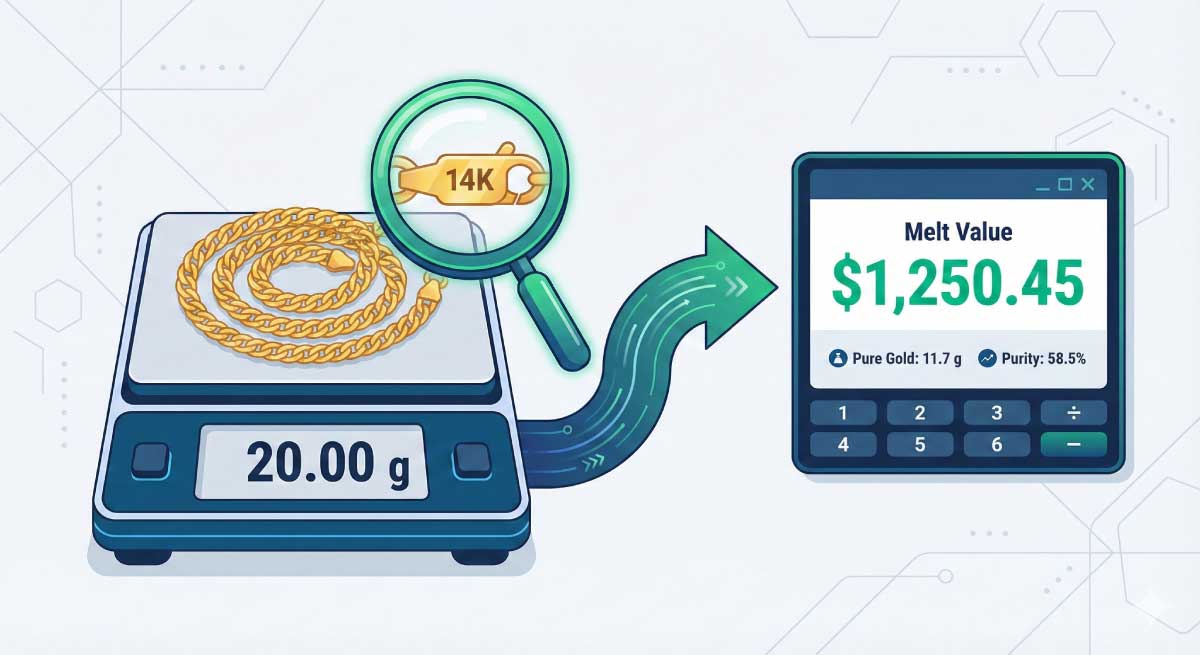
See below for a real example of how these numbers look.
Test the Calculator With Real Examples
Use the examples below to test the calculator logic. Enter the values exactly as shown to understand how weight and purity affect your result.
Example 1: 14K Gold Chain (Standard Value)
Use this to Check: value of a common necklace.
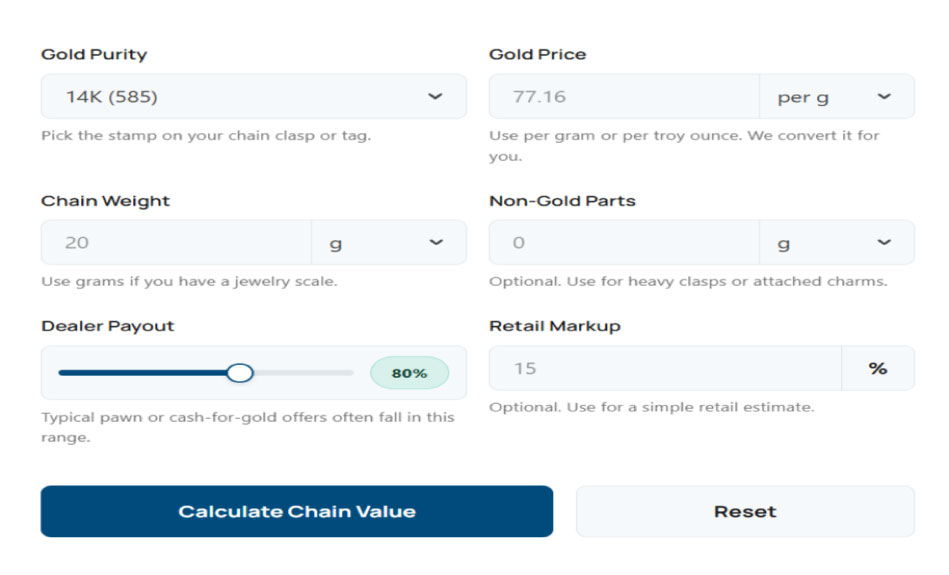
- Gold Purity: 14K (585)
- Gold Price: 77.16 (Enter current price)
- Chain Weight: 20 g
- Dealer Payout: 80%
What you should see:
- Melt Value: Based on ~11.7 grams of pure gold.
- Dealer Offer: A cash offer lower than the melt value (approx. 20% less).
- Pure Gold: The calculator automatically extracts the 58.5% gold content.
Example 2: 22K Gold Chain (High Purity Investment)
Use this to check a high-value chain using Tola units.
- Gold Purity: 22K (916)
- Chain Weight: 2 tola
- Retail Markup: 15% (Optional)
What you should see:
- Converted Weight: The result shows weight converted to ~23.3 grams.
- Melt Value: significantly higher than the 14K example due to 91.6% purity.
- Retail Estimate: A value higher than the melt price, reflecting store costs.
Want to sell your gold or check jewelry value? Try these calculators.
Calculate gold value instantly using live prices. Check melt value, jewelry worth, scrap payouts, purity, weight, and karat with our gold calculator.
Try calculatorCalculate 14K gold chain weight in grams instantly. Enter length and width to estimate solid or hollow chain mass before you buy or sell.
Try calculatorUse our 18K Gold Price Calculator to find true jewelry value instantly. Get live rates per gram, ounce, and total melt value in seconds.
Try calculatorUse our 22K Gold Price Calculator to find jewelry value instantly. Get live rates per gram, total melt value, and scrap estimates in seconds.
Try calculatorCalculate melt value and retail price instantly. Our free Gold Jewelry Calculator shows real dealer cash offers for 10K, 14K, & 24K items.
Try calculatorFree Gold Karat Calculator: Convert karat to fineness stamps like 585 & 750. Check purity % and gold weight fast.
Try calculatorHow the Gold Chain Value Calculator Works Step by Step
This section explains exactly how the tool calculates your result. It helps you understand the math behind the value. You can follow these steps with your own jewelry.
Enter Chain Weight and Unit
First, you type in the total weight of your chain. You can choose grams, tola, or pennyweight. The calculator instantly converts your input into grams. This standardizes the weight for accuracy.
Select the Gold Purity
Next, you pick the karat stamp marked on your chain, such as 14K or 18K. Each karat represents a specific percentage of pure gold. The calculator uses this percentage to separate the gold content from the alloy metals.
Deduct Non-Gold Parts
If your chain has gemstones or a heavy non-gold clasp, you can enter that weight. The tool subtracts this amount from the total. This ensures you only calculate the value of the actual gold.
Calculate Melt Value
The calculator multiplies the pure gold weight by the live gold price per gram. This reveals the "Melt Value." This is the raw market value of the metal inside your jewelry.
Estimate Dealer Payout
Finally, if you are selling, the tool applies a "Dealer Payout" percentage. This adjusts the melt value to show a realistic cash offer. This matches what you might see at a pawn shop or scrap dealer.
Quick Formula Used
Gold Chain Value = Weight × Purity Factor × Price per Gram
Why This Process Is Accurate
- Converts units: All weights convert instantly to grams.
- Standardizes price: The live price normalizes to price per gram.
- Separates purity: The karat percentage is applied before the value.
- Updates instantly: Each step recalculates in real time.
This method matches how gold is priced in real markets. It also reflects exactly how jewelers and pawn shops calculate the scrap gold value.
Try It Yourself
- Enter your chain weight in the calculator.
- Select your 14K or 18K purity.
- Adjust the “Dealer Payout” slider.
Gold Chain Value Formula and Variables
This section explains how we calculate your result. You see the exact formula behind the melt value and dealer offer. We use real inputs you enter. This helps you trust the numbers and verify the value of your jewelry before you sell.
We always start with the live gold price. Then the calculator converts your chain weight into grams. It applies the purity percentage. Finally, it adjusts for dealer fees or retail markup. Every step stays transparent so you can check it yourself.
Gold Chain Value Formula
This formula powers the calculator. You use it to find the raw value of the gold inside your chain.
Gold Chain Value Formula
Gold Chain Value = (Weight – Non-Gold) × Purity Factor × Price per Gram
This formula uses four specific variables. Each one comes directly from your input.
Variable 1: Chain Weight
Weight is the most important factor. You can enter weight in grams, tola, or pennyweight. The calculator converts your unit into grams automatically. This removes guesswork. It ensures every calculation uses the same standard base unit.
Example:
- 20 grams stays 20 grams.
- 2 tola converts to 23.32 grams.
Variable 2: Gold Purity (Karat)
Purity shows how much real gold is inside your chain. Pure gold is 24K. However, chains are usually alloys like 14K or 18K.
Each karat has a fixed purity factor:
- 24K = 0.999 (99.9% Gold)
- 22K = 0.916 (91.6% Gold)
- 18K = 0.750 (75.0% Gold)
- 14K = 0.585 (58.5% Gold)
The calculator applies this factor to your weight. This gives the pure gold weight only.
Variable 3: Gold Price Per Gram
The gold price starts from the global spot market. It is usually quoted per troy ounce. Our tool converts it into a price per gram.
Example:
- Spot price = $2,400 per troy ounce.
- 1 troy ounce = 31.103 grams.
- Price per gram = $77.16.
This value feeds all gold value calculations.
Variable 4: Dealer & Retail Adjustments
The final step adjusts the value for the real world.
- Dealer Payout: Multiplies the value by a percentage (e.g., 80%) to show a cash offer.
- Retail Markup: Adds a percentage to estimate store pricing.
Example Calculation You Can Test
Use this exact input to test the calculator. This helps you verify that the tool works correctly for your jewelry.
Given:
- Spot price: $2,400 per troy ounce
- Item: 14K Gold Chain
- Weight: 10 grams
- Purity: 14K (58.5%)
Calculation:
					Price per gram: $2,400 ÷ 31.103 = $77.16

Pure gold weight: 10 g × 0.585 = 5.85 grams

Gold value: 5.85 g × $77.16
Result:
- Total Gold Value = $451.40
You should see this same number in the Melt Value result panel.
Why This Formula Matters
This formula shows the real market value of your chain. It does not include making charges or brand fees. It reflects the gold content only. Because of this, the result is the “baseline” price. Pawn shops will offer less than this amount. Retail stores will charge more. You now know the true value before you sell or compare prices.
Gold Value Benchmarks and Meaning
Your gold chain value isn’t just a single number. It tells you different things depending on your goal. A scrap buyer pays one price, while a jewelry store charges another. You need to know which value applies to your situation. Here is a quick breakdown to help you understand your results and make the right decision.
| Result Type | Label | What It Represents | Typical Use | Notes |
|---|---|---|---|---|
| Spot Price | Market Rate | Global trading price for 24K gold. | Tracking market trends. | Not the price for jewelry. |
| Melt Value | Raw Value | Value of the pure gold inside the chain. | Selling as scrap gold. | Ignores design and brand. |
| Retail Value | Store Price | Melt value plus labor and markup. | Insurance or replacement cost. | Includes jeweler's profit. |
| Dealer Offer | Cash Payout | The actual money a buyer pays you. | Pawn shops or Cash-for-Gold. | Usually 60%–80% of melt. |
| Pure Gold Weight | Gold Content | Actual weight of 24K gold in the item. | Calculating true value. | Depends on the karat (e.g., 14K). |
Important: Actual payouts vary by dealer, location, and market demand. Always compare offers before selling gold.
How to Read This Table With the Calculator
First, check the live price in the calculator inputs. Then enter your chain weight and karat.
Now compare:
- Melt value vs. Retail value
- Melt value vs. Dealer offer
- Total weight vs. Pure gold weight
This shows exactly where the value changes. It helps you see where you might lose money during a sale.
What This Means For You
If a dealer offer is close to the melt value, it is a fair deal. If it is far lower, you should find another buyer. If you are insuring a necklace, use the retail value. If you are selling an old broken chain, focus on the dealer payout. This table turns the raw numbers into a smart decision.
Quick Example Using the Calculator
Inputs:
- Chain weight: 10 grams
- Purity: 14K
- Spot price: $2,400 per troy ounce
Results you will see:
- Melt value based on 5.85g of pure gold.
- Dealer offer (approx. 20% less).
- Retail estimate (higher than melt).
Now check the table above. You can instantly see why the cash offer is lower than the store price.
Insights and Smart Recommendations
Knowing the numbers is important. Knowing how to use them is even better. Here are three expert tips to help you get the most value from your gold chain.
When Selling Makes Sense
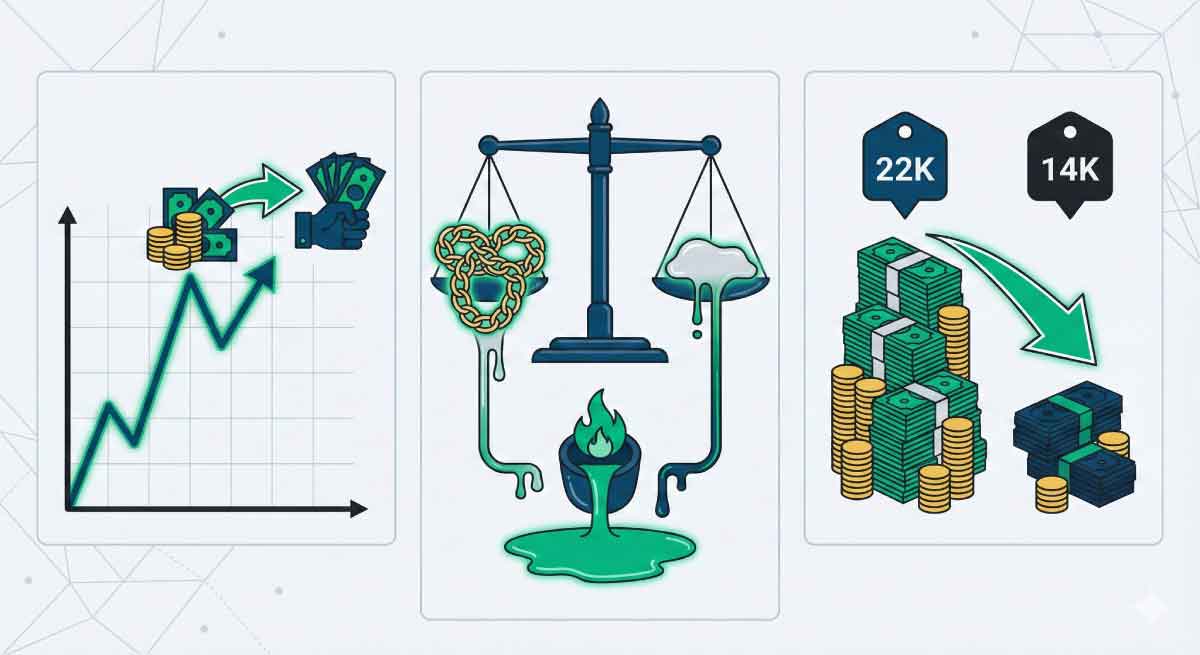
Sell when the spot price is high. Gold prices fluctuate daily. Check the live chart. If the price is near an all-time high, your scrap value increases instantly. Selling broken or outdated chains during a market peak maximizes your cash return.
Why Design Does Not Change Melt Value
Buyers who melt gold do not care about the design. Whether your chain is a complex rope style or a simple link, the melt value stays the same. The refiner only pays for the pure gold weight. If your chain is a luxury brand (like Tiffany or Cartier), sell it to a jewelry collector, not a scrap dealer.
How Purity Affects Your Payout
Higher purity means more cash. A 22K chain (91.6% gold) is worth much more per gram than a 10K chain (41.7% gold). However, 22K gold is soft and scratches easily. If you are buying to wear daily, 14K or 18K offers a better balance of durability and value. If you are buying for investment, choose higher purity.
Use these tools to double-check your numbers before selling or buying.
Gold 11
Calculate precise scrap worth with the Gold Melt Value Calculator. Supports 24K-10K, refining fees, and live spot prices. Get your net payout result now.
Try calculatorUse the Gold Price Calculator by Weight to find the true value of your jewelry or scrap. Supports grams, tola, ozt, and all purities.…
Try calculatorUse our free Gold Price Per Gram Calculator for live values. Check 14K, 18K, 22K & 24K rates instantly based on real-time spot prices.…
Try calculatorConvert gold weight instantly. Accurate grams, troy ounces (ozt), and tola calculator for jewelry and scrap dealers.
Try calculatorGet an instant cash estimate with our free Scrap Gold Calculator. See real dealer payouts, deduct fees, and value 10K, 14K, or 18K gold…
Try calculatorCommon Mistakes to Avoid
Calculating your gold value is simple, but small errors can lead to big disappointments. Avoid these three common traps to get an accurate result.
- Confusing Chain Weight with Pure Gold Weight Your scale weighs the entire chain. However, the buyer only pays for the pure gold inside. A 20-gram 14K chain contains only 11.7 grams of gold. Do not expect to be paid for the full weight of the alloy.
- Assuming Retail Value Equals Cash Offer The price you paid at the store covers design, labor, and brand markup. A pawn shop or refiner only pays for the scrap metal. Never expect a cash offer to match the original retail price tag.
- Using the Wrong Karat Selection Selecting the wrong purity changes the value drastically. An 18K chain is worth 75% more than a 10K chain of the same weight. Always check the stamp on your clasp before you calculate.

Frequently Asked Questions (FAQs)
How much is my gold chain worth today?
Your gold chain’s worth depends on its weight, karat purity, and the live gold price. To calculate it, multiply your chain’s weight in grams by its purity percentage (e.g., 0.585 for 14K), then multiply that result by the current price of gold per gram.
Most dealers pay the “melt value,” which is strictly for the gold content. They usually deduct 20% to 40% as their profit margin, so expect a cash offer lower than the market spot price.
How do I calculate the gold chain melt value?
To calculate melt value, first convert your chain’s weight into grams. Next, multiply the weight by its purity decimal (e.g., use 0.75 for 18K). Finally, multiply that pure gold weight by the live spot price per gram.
This formula gives you the raw market value of the metal. It ignores design, brand, or gemstones. This is the baseline number used by refiners and scrap buyers to determine their payout offers.
Are pawn shop gold prices lower than the market?
Yes, pawn shop offers are always lower than the market spot price. Pawn shops act as resellers, so they typically pay between 40% and 70% of the gold’s melt value. This large margin covers their operating costs, such as rent, storage, and the risk of reselling the item.
A dedicated precious metals refiner or a specialized online gold buyer often pays a higher percentage (80%–95%) than a general local pawn shop. It is smart to get multiple quotes before selling.
Does chain style affect gold value?
No, chain style does not affect the melt value or scrap price. Refiners only pay for the pure gold weight, treating a complex rope chain the same as a simple curb chain. However, style does affect the retail value if you sell to a jewelry collector instead of a scrap dealer.
Intricate designs, antique pieces, or luxury brands (like Cartier) can command a premium above the gold weight. If your chain is a rare designer piece, you should get a professional appraisal rather than selling it for scrap.
How much is a 14K gold chain worth per gram?
As of late 2025, 14K gold is worth approximately $85.00 per gram (based on a spot price of ~$4,500/oz). However, because prices fluctuate daily, you should calculate it yourself: Current Spot Price per Gram × 0.585. This formula reveals the value of the 58.5% pure gold inside the alloy.
Remember that this is the market rate. If you sell to a dealer, they will typically offer 20%–30% less than this figure (around $60–$68 per gram) to cover their refining costs and profit margin.
Is the gold chain value based on retail or melt?
It depends on whether you are buying or selling. If you are selling to a pawn shop or refiner, the value is always based on melt value (pure gold content only). If you are buying a new chain or insuring one, the value is based on retail value, which includes labor, design fees, and markup.
Retail prices are often 200% to 300% higher than the melt value. Always use the melt value as your baseline when negotiating a sale to ensure you get a fair price for the raw metal.
Questions?
We had love to hear from you! Whether you are reporting an issue, suggesting a new calculator, or exploring collaboration opportunities — we are here to help. Every message helps us make 100calc smarter, faster, and more helpful for everyone.
Why People Trust 100calc
At 100calc.com, we focus on accuracy, speed, and trust. Every calculator we create is designed to give reliable, instant, and easy-to-understand results you can truly depend on.