
Free Grade Calculators: Find Final, GPA & Test Scores Fast
A grade calculator helps you find your final or average grade using your scores and weights. You enter your marks and see your result instantly. It works for school, college, and university grading systems.
A grade calculator helps you calculate your final, average, or weighted grade using your assignments, quizzes, and exams. This page includes tools like final grade calculator, average grade calculator, and grade curve calculator. You can use these tools for high school, college, or university grading systems. Instead of guessing your results, you can enter your marks and get your exact grade in seconds. Many students use a grade calculator before exams to know what score they need. It also helps teachers track progress and review class performance across semesters.
- Fast grade estimates
- Works for school and college
- Updated grading logic
Browse Grades Calculators
Grade calculators help you calculate your final, average, or weighted grade using your scores and assignments. You can choose a tool based on your needs, such as a final grade calculator or semester grade calculator. This section lists all grade calculators in one place for quick access.
Grades 7
Use our easy average grade calculator to find your exact class percentage. You can instantly compute weighted scores and predict your final exam grade.
Try calculatorStop guessing your semester average today. Use our final grade calculator to find exactly what test score you need to pass. Calculate your safe…
Try calculatorUse our free easy grade calculator to find exact test percentages and letter grades. It perfectly supports half points, custom scales, and teacher charts.
Try calculatorYour grade may be higher than you think. Use this Grade Curve Calculator to test 5 curve methods and see your adjusted score instantly…
Try calculatorStop guessing your exam scores. Use our free Marks Percentage Calculator to find your exact academic grade. Instantly convert your marks to CGPA today.
Try calculatorStop guessing your class grade. Our unweighted grade calculator finds your straight average instantly. Convert percentages to a 4.0 GPA scale. Try it now!
Try calculatorStop guessing your class average! Use our free weighted grade calculator to instantly factor in extra credit, points, and see exactly what you need…
Try calculatorWhy This Matters for Students
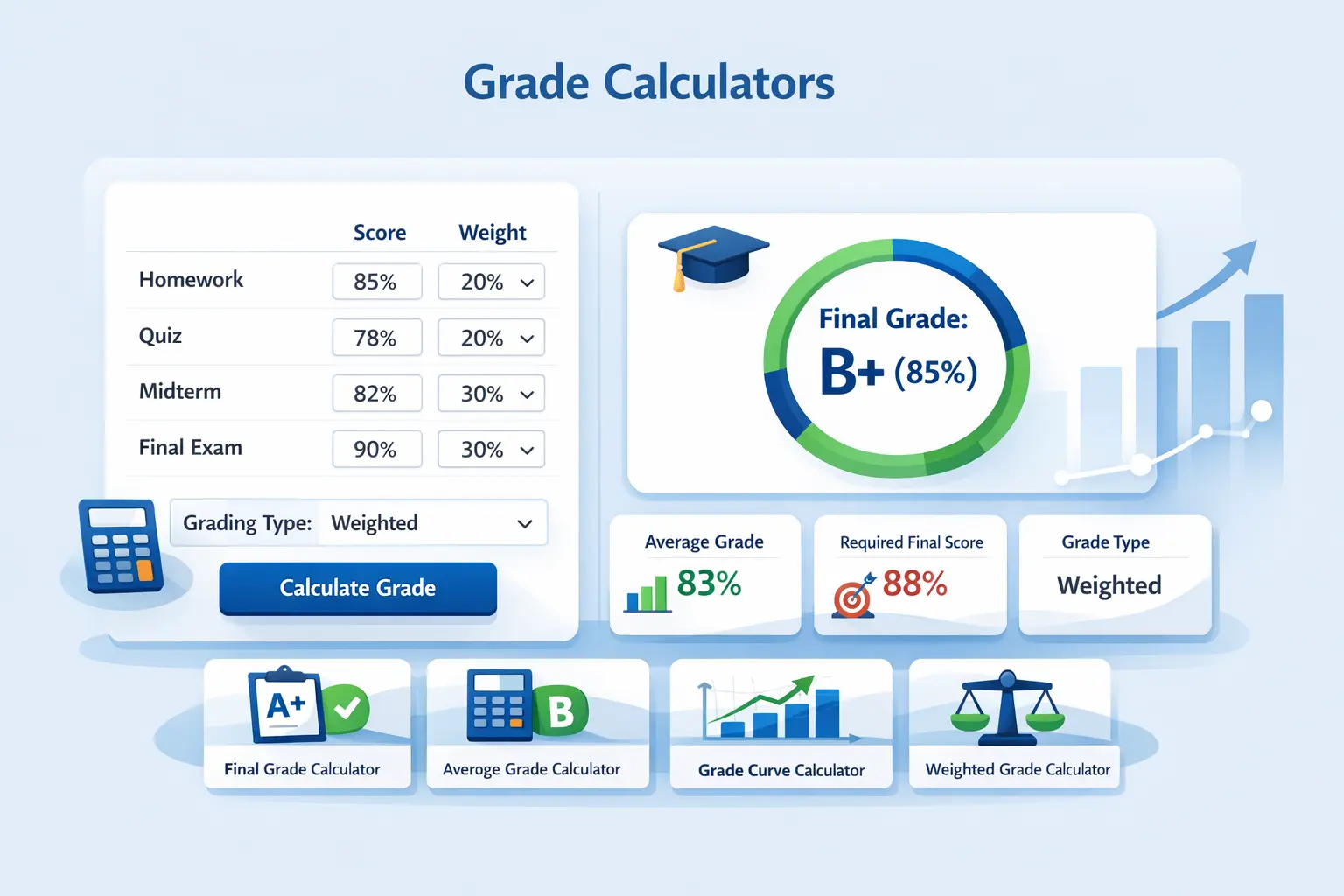
Grade calculators do more than just calculate. They help you make decisions. For example, if your final grade calculator shows you need 88% on the exam, you can plan your study time better. If your assignment grade calculator shows a low score impact, you can focus on high weight exams instead. Because of this, students who use grade calculators often perform better. They understand their numbers early and adjust before it is too late.
What You Can Do With Grade Calculators
Grade calculators help you plan your results before exams. They show how scores affect your final grade. You can test different scenarios and adjust your strategy. This makes tools like a final grade calculator, semester grade calculator, and what if grade calculator very useful for students.
Popular Tasks Students Perform
Students use grade calculators to answer real questions about their performance. These tools remove guesswork and give clear results fast.
- Calculate the score needed on your final exam
- Track your semester grade progress step by step
- Estimate assignment and quiz impact on your grade
- Apply grade curves using a grade curve calculator
- Convert marks into percentage using a marks percentage calculator
- Predict future grades before exams using a what if grade calculator
These tasks help you stay in control. You can adjust your study plan early instead of reacting late.
Common Inputs Used in Grade Calculators
Most grade calculators use simple inputs. Because of this, anyone can use them without confusion.
- Assignment scores or percentages
- Exam marks or raw points
- Weight percentages for each component
- Total marks or maximum score
- Passing grade or target grade
- Grade scale such as letter grades or percentage
When you enter these inputs, the calculator shows your result instantly. This works for high school, college, and university grade calculators.
How Our Grade Calculators Work
Our grade calculators use common academic formulas to estimate results from scores, weights, and marks. These tools help you calculate final grades, average grades, and weighted grades in seconds. They work for school, college, and university grading systems.
Where the Formulas Come From
The formulas in our grade calculators follow common grading methods used in classrooms and academic policies. Most tools use weighted averages, percentage formulas, or simple score totals. For example, a final grade calculator combines your current grade with your final exam weight. A weighted grade calculator gives more value to assignments or exams with higher percentages.
How Often We Update
We review each grade calculator regularly. We update tools when grading systems change or when students need clearer results. We also improve calculators when we find better ways to match common school and university grading rules.
What Can Affect Accuracy
Accuracy depends on the numbers you enter. Wrong weights, missing scores, or mixed grading formats can change the result. For example, entering a percentage in a letter-grade tool can create a wrong answer. So, always use the same grading format that your course follows.
Why Students Use These Tools
Students use grade calculators to check progress before exams. They also use them to test what-if scenarios and see how a future quiz, midterm, or final exam may affect the course result. This makes tools like a final grade calculator, assignment grade calculator, and semester grade calculator useful for quick planning.
Important note: Results from a grade calculator are estimates based on your inputs. Final grades can still vary because teachers may use custom rules, extra credit, or class-specific grading policies. For important academic decisions, confirm the grading system with your teacher, professor, or institution.
Frequently Asked Questions (FAQs)
What is a grade calculator?
A grade calculator is a tool that helps you calculate your academic score using assignments, exams, and weight percentages. It shows your current or final grade instantly. Students use grade calculators to track progress and plan better before exams.
It works for school, college, and university grading systems. You can use it as a final grade calculator, average grade calculator, or weighted grade calculator.
How do grade calculators work?
Grade calculators use simple formulas to combine your scores and weights. Each score is multiplied by its weight. Then all values are added to find your final or average grade. This method matches how schools calculate grades. So, tools like a semester grade calculator or assignment grade calculator give quick and clear results.
Are grade calculators accurate?
Yes, grade calculators are accurate when you enter correct data. They follow the same formulas used in school and university grading systems. So, your result will match expected outcomes in most cases. However, grading rules can vary. Some teachers may add extra credit or curves. Always check your course policy if results seem different.
What is a final grade calculator?
A final grade calculator shows the score you need on your final exam to reach your target grade. You enter your current grade and exam weight. Then the tool calculates the required score instantly. Students use this tool before exams to plan study goals. It helps you focus on what matters most.
Can I calculate grades without weights?
Yes, you can calculate grades without weights using a simple grade calculator. This method treats all assignments and tests equally. It calculates the average of all scores. This works well for courses that do not use weighted grading. However, for accurate results in most classes, a weighted grade calculator is better.
What grade do kids start using calculators?
Most students start using calculators around middle school, often in grades 6 to 8. At this stage, math becomes more complex. Students begin working with percentages, averages, and basic formulas. Because of this, tools like grade calculators also become useful. They help students understand how their scores affect their grades.
What grade do kids use calculators in school?
Students use calculators more often in middle school and high school. In earlier grades, teachers focus on basic math skills. Later, students use calculators for more advanced problems. At the same time, grade calculators become helpful. Students use them to track grades and prepare for exams.
How do grade calculators help students improve grades?
Grade calculators help students see how each assignment or exam affects their final grade. They can test different score scenarios and set clear targets. Because of this, students can focus on high-impact tasks. This improves planning and increases chances of reaching their desired grade.
Questions?
We had love to hear from you! Whether you are reporting an issue, suggesting a new calculator, or exploring collaboration opportunities — we are here to help. Every message helps us make 100calc smarter, faster, and more helpful for everyone.
Why People Trust 100calc
At 100calc.com, we focus on accuracy, speed, and trust. Every calculator we create is designed to give reliable, instant, and easy-to-understand results you can truly depend on.
Ready to Calculate?
Stop guessing your results and take control of your academic performance today. With these grade calculators, you can instantly check your final grade, test different score scenarios, and plan your next move with confidence. Whether you need a final grade calculator, semester grade calculator, or assignment grade calculator, each tool gives you clear and fast results. This helps you stay ahead before exams and avoid last-minute surprises. You can adjust inputs, explore what-if outcomes, and focus on high-impact areas that improve your score. Start now and see exactly where you stand.