Steps To Miles Calculator

The Steps To Miles Calculator converts your step count into a precise distance. The tool uses your height and gender to calculate your exact stride length. Most tools use a generic average. Consequently, they often provide wrong results. Our tool adjusts the math based on your anatomy. You can track your daily walking distance accurately.

Knowing your distance motivates you to walk farther. Steps serve as a great metric. However, seeing “5 Miles” feels more tangible than “10,000 Steps.” Our calculator converts your pedometer data instantly. It creates a personalized distance report. Therefore, you can set better goals for weight loss or marathon training. Use this tool to verify your fitness app data.

Steps To Miles Calculator: Calculate Your Walking Distance Now

Select Average, Manual Input, or Height-Based. Male or Female (Adjusts height multiplier). Appears when “Height based” is selected. Appears when “Stride length” is selected. Total count from your device. Distance in Miles, Distance in Kilometers, Stride Used.


375 Views

What Your Steps To Miles Result Means

Your result displays the total walking distance accurately. The number represents how far you traveled based on your selected method. We show the result in both Miles and Kilometers clearly. Therefore, you can use the data for US or International tracking needs.

Stride length drives the entire calculation. A longer stride covers more ground per step naturally. Consequently, selecting the “Height Based” method usually provides the best accuracy. We display the exact stride length used in the breakdown box below. Comparing this number to your actual step helps you refine your future tracking precision.

Height acts as a biological lever. Tall people possess longer legs. Therefore, they swing farther with each step than shorter people. Our calculator adjusts for this biomechanical advantage automatically. Knowing your actual distance helps you validate your calorie burn goals effectively.

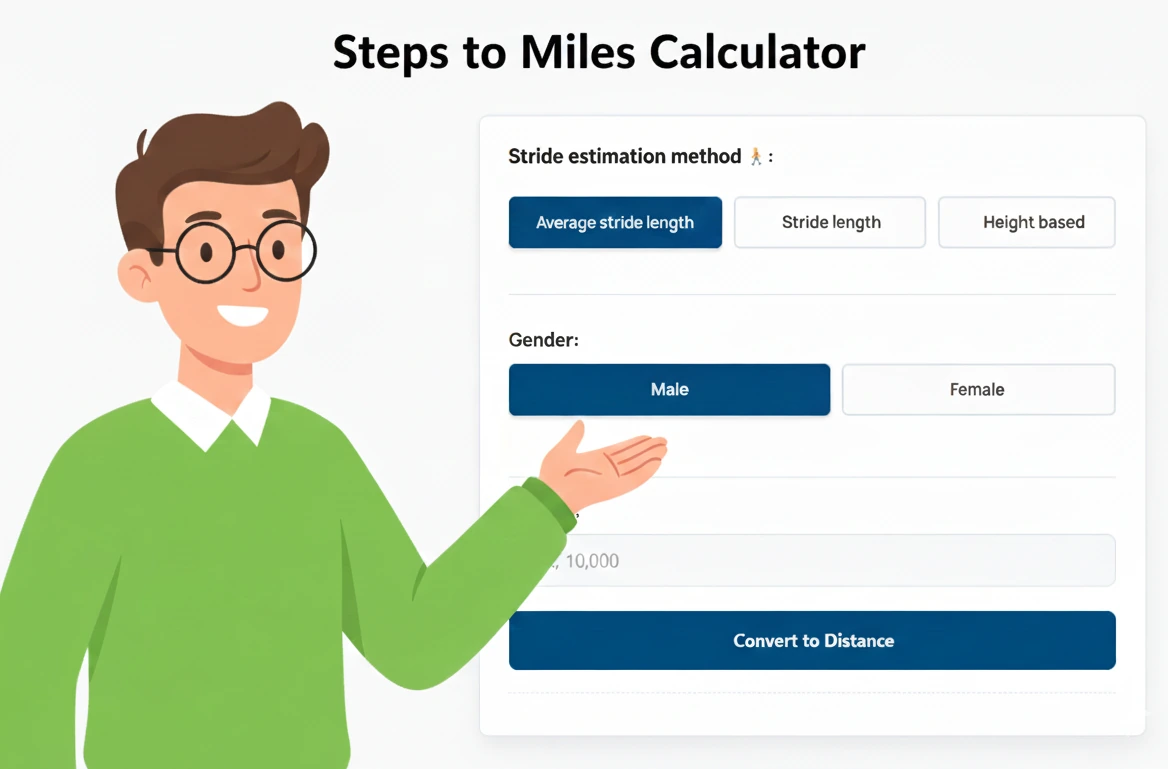
A friendly, modern illustration of a young man with glasses gesturing towards a Steps to Miles Calculator user interface, featuring options for stride estimation (average, custom, height-based), gender selection, number of steps input, and a 'Convert to Distance' button.

Quick example to check the math

Input: You select “Height Based” for a 6’0″ Male. You walked 10,000 steps.

Calculated Output: You traveled approximately 4.70 Miles (7.56 km).

Analysis: Your height creates a stride of roughly 30 inches. Consequently, you cover nearly 5 miles. A shorter person taking 10,000 steps would only reach about 4.2 miles.

Explore More Calculators

Steps to Calories Calculator Featured

Use our Steps to Calories Calculator to convert steps to calories instantly. This walking calorie calculator adjusts for height and speed to ensure accuracy.

Try calculator
Cycling Calorie Calculator

Use our Cycling Calorie Calculator to estimate your energy burn. Get accurate results based on weight, speed, and bike type for your fitness goals.

Try calculator
Rucking Calories Calculator

Use our Rucking Calories Calculator for 100% accurate results. Track your burn based on weight, pack load, and pace. Plan your fitness hike now.

Try calculator
Snowboard Size Calculator

Use our expert Snowboard Size Calculator to find your ideal board length and waist width. Get custom results based on weight and boot size…

Try calculator

How to Use the Steps To Miles Calculator

You can get precise results by following these five steps. Our tool adapts to your preferred method for maximum accuracy. Follow the instructions below to generate your report.

Choose Estimation Method

First, select your calculation style. The "Stride estimation method" offers three choices. "Average" uses a standard 30-inch stride for quick estimates. "Stride Length" allows you to enter a measured step. "Height Based" calculates stride from your anatomy for the best precision.

Select Gender

Next, click your gender. Men and women possess different leg-to-height ratios naturally. Therefore, the calculator adjusts the math based on biological norms. Correct selection ensures the "Height Based" result remains accurate.

Enter Body Details

Then, input your specific data. Enter your feet and inches if you chose "Height Based." Alternatively, type the exact inch count for "Stride Length." Accurate inputs prevent calculation errors effectively.

Add Step Count

Afterward, enter your activity number. Type the total count from your pedometer into the "Steps" field. You can enter a single walk count or a full daily total.

Convert to Distance

Finally, generate your results. Click the "Convert to Distance" button. You will see total Miles and Kilometers instantly. Review the breakdown to understand the specific stride logic used.

Example for testing

Try these sample numbers:

  • Method: Height-Based
  • Gender: Female
  • Height: 5 ft in
  • Steps: 10,000

Result →You walked approximately 4.17 Miles.

Now, enter your own numbers and check how far you went today.

How the Steps To Miles Formula Works (Complete Breakdown)

Understanding the calculation helps you trust your data. The formula connects your step count to real-world distance. We offer three distinct formulas based on your selection. Therefore, the results match your specific needs perfectly.

Steps To Miles Formula

We believe in complete transparency. Our calculator uses specific logic for each method.

Formula:

				
					1. Average Method:
Miles = (Steps x 30 inches) ÷ 63,360
This calculation assumes a global average stride of 30 inches.
2. Manual Stride Method:
Miles =(Steps x Input Stride) ÷ 63,360
The tool uses your exact custom input.
3. Height-Based Method:
Stride (in) = Height (in) x Gender Factor
Miles = (Steps x Calculated Stride) ÷ 63,360


Gender Factors:

  • Male: 0.415 x Height
  • Female: 0.413 x Height

Example:

				
					If you select "Height Based" for a 6'0" Male (72 inches) and walk 10,000 steps:
72 inches x 0.415 = 29.88 inches (Stride)
(10,000 29.88) x 63,360 = 4.72 Miles


Your total distance is 4.72 Miles. Fitness experts consider this nearly a complete daily activity goal.

Micro Note:

The average American walks 3,000 to 4,000 steps daily. Such activity equals roughly 1.5 to 2 miles. Health experts recommend increasing the count to 5 miles (10,000 steps) for optimal heart health.

Key Inputs Used in the Steps To Miles Calculator

Every distance calculation depends on three specific inputs. These inputs help you measure your mileage accurately. You can plan your walking routine effectively by entering real numbers for gender, height, and steps.

Gender Factor

Gender changes the multiplier. Men typically have a factor of 0.415. Women usually have a factor of 0.413. These numbers come from anthropometric studies. Using them makes the tool more accurate than a fixed average.

Height Input

Height acts as the main lever. A tall person has a longer leg swing. Consequently, they gain free distance with every step. Ignoring height leads to significant errors over long distances.

Step Count

Step count acts as the volume variable. It represents the total repetitions of your stride. A higher count multiplies your distance linearly. Accurate pedometer data ensures the final mileage reflects your actual effort.

Another Example Calculation (Step-by-Step)

Let’s see how the calculator works using a real example. The breakdown shows how your height changes the final math.

Given:

  • Method: Height-Based
  • Gender: Male (0.415 factor)
  • Height: 5′10″ (70 inches)
  • Steps: 5,000

Calculation:

				
					First, we find the stride length.
70 inches×0.415=29.05 inches
Next, we calculate the total distance.
5,000 steps×29.05 inches=145,250 inches
Finally, we convert to miles.
145,250÷63,360=2.29 Miles


Result:

  • Distance: 2.29 Miles

  • Metric: 3.69 km

Meaning:

 You walked over 2 miles. That equals about 40 minutes of walking. Therefore, you are nearly halfway to the daily 5-mile goal.

Result Benchmarks and Ranges

Your distance tells a story about your activity. Fitness coaches track mileage to measure endurance. The table below helps you evaluate your status.

Daily Distance Benchmarks
Step CountAvg Distance (Miles)Activity StatusWhy It Matters
< 2,500< 1.1 MilesSedentaryMinimal movement impacts health.
5,000≈ 2.3 MilesModerateGood baseline for beginners.
8,000≈ 3.7 MilesActiveMeets most daily cardio needs.
10,000+≈ 4.6 MilesHigh ActiveGold standard for weight control.

Note: Distances are approximate based on an average stride. Taller individuals will cover more ground for the same step count.

Interpretation

The final number confirms your total mileage. It combines your step count with your specific stride data. We calculate the total inches first. Then, we convert that figure into miles and kilometers instantly. Therefore, you see a result that matches real-world GPS data closely.

Pro Tip:

Focus on weekly distance over daily steps. Aim for 20 to 25 miles per week for optimal health. Tracking miles often feels more rewarding than tracking raw steps. It connects your effort to a tangible map distance.

Tips & Planning Based on Your Result

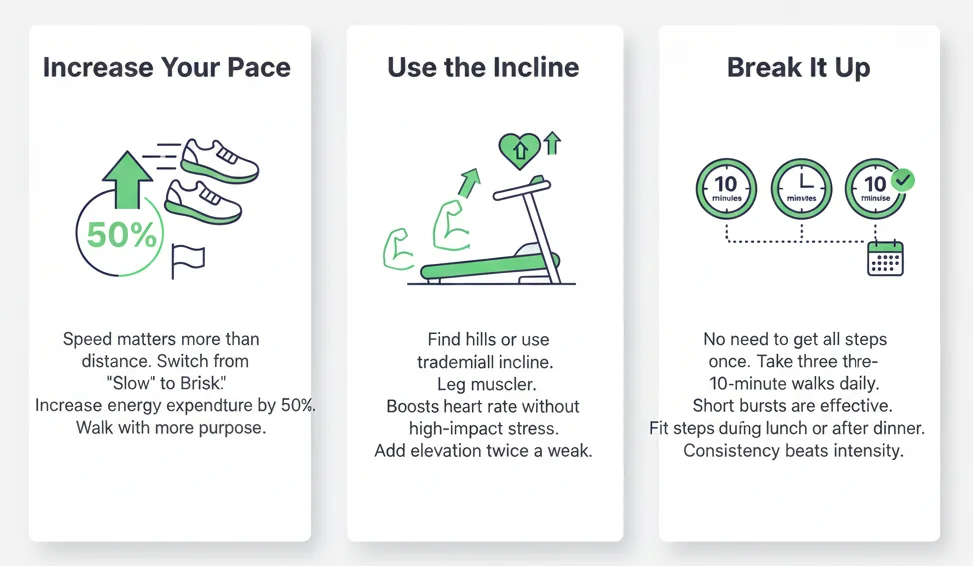
You can increase your mileage easily. Follow these expert tips to get the best results. Small changes add up to big distances over time.

Three visual tips for Increasing Walking Mileage: 'Track Your Weekly Mileage' with a calendar showing 20-25 miles; 'Walk for Time, Not Steps' with a stopwatch indicating 30 minutes for 1.5 miles; and 'Use Longer Strides' with an illustration of extended leg movement.

Track Your Weekly Mileage

Focus on weekly totals rather than daily ones. Aim for 20 to 25 miles per week. This approach reduces stress on busy days significantly. Consequently, you stay consistent without burnout.

Walk for Time

Try walking for a set time instead of counting steps. Walking for 30 minutes typically equals 1.5 miles. Setting a timer is often easier mentally than watching a pedometer. Therefore, use time blocks to build your mileage steadily.

Use Longer Strides

Open up your hips to walk farther. Pushing off your back foot increases stride length slightly. You cover more ground with the same energy expenditure. However, keep the movement natural to avoid injury.

You Might Also Find These Helpful

Fitness 4

No tools published here yet.

Common Mistakes to Avoid When Calculating

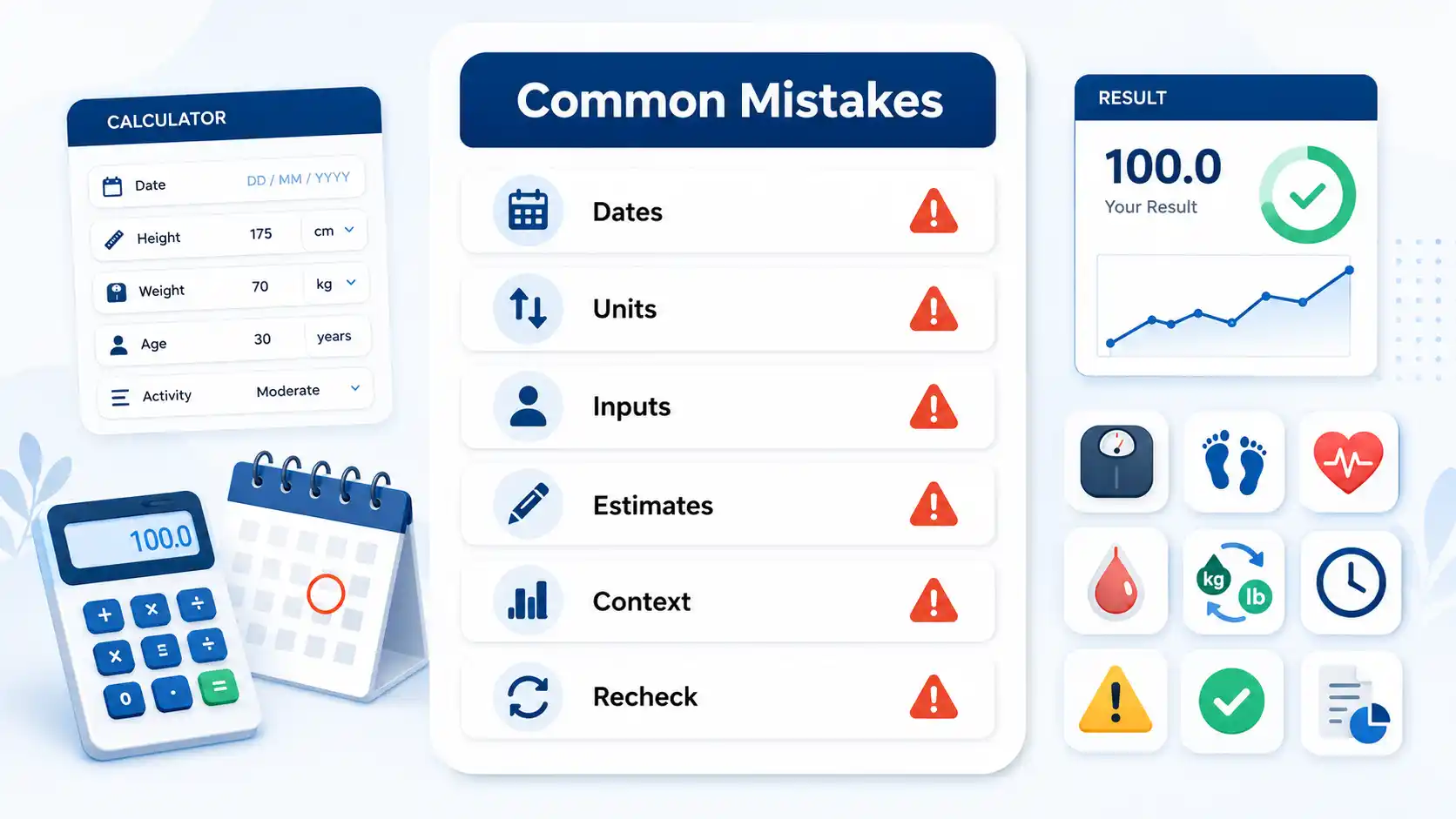
You can get the most accurate results by avoiding these errors. Small details often change the calculation significantly. Pay attention to the following points.

Flat educational infographic showing student checking attendance tracker with icons for common attendance mistakes like missed classes, wrong data entry, and late updates.

Frequently Asked Questions (FAQs)

10,000 steps equals roughly 4.5 to 5 miles. Your height changes the exact number. Taller people cover more distance per step. Therefore, the precise mileage of 10,000 steps depends on your unique stride length.

Not quite. 5,000 steps usually equals about 2.3 to 2.5 miles. You need roughly 6,000 to 6,500 steps to hit the 3-mile mark. Consequently, tracking distance is more accurate than just counting steps.

Yes, 20,000 steps equals approximately 9 to 10 miles. This distance represents a highly active day. Athletes often reach this target during endurance training or long hikes.

7,000 steps converts to about 3.2 to 3.5 miles. Walking this distance daily meets most basic health recommendations. Therefore, hitting 7,000 steps is an excellent goal for general fitness maintenance.

You calculate it by multiplying steps by stride length. Divide the total inches by 63,360 to get miles. Our tool acts as an instant step to a distance converter. It automates the math using your height and gender data.

 Walking a mile takes about 2,000 to 2,250 steps. Running a mile takes only 1,400 to 1,700 steps. Running increases your stride length significantly. Consequently, you cover the same mile with fewer footfalls.

Questions?

We had love to hear from you! Whether you are reporting an issue, suggesting a new calculator, or exploring collaboration opportunities — we are here to help. Every message helps us make 100calc smarter, faster, and more helpful for everyone.

Why People Trust 100calc

At 100calc.com, we focus on accuracy, speed, and trust. Every calculator we create is designed to give reliable, instant, and easy-to-understand results you can truly depend on.