
Reverse Diet Calculator
A Reverse Diet Calculator helps you gradually increase your calorie intake after a long weight-loss phase. Most fitness enthusiasts in the USA use this tool to prevent rapid weight gain. Specifically, it repairs your metabolism by adding small amounts of calories each week. Use your current intake and weight data to find your recovery plan instantly today.
You can stop worrying about the yo-yo effect now. This engine provides a professional schedule to safely reach your maintenance calories. First, you will enter your current physical stats, like age and weight. Second, you will provide your current low-calorie intake. Finally, you will choose a slight weekly increase. Therefore, you can eat more food while keeping your weight stable. Use our tool to plan your metabolic recovery with total confidence.
- Updated Jun 13, 2026
Reverse Diet Calculator: Find Your Ideal Match
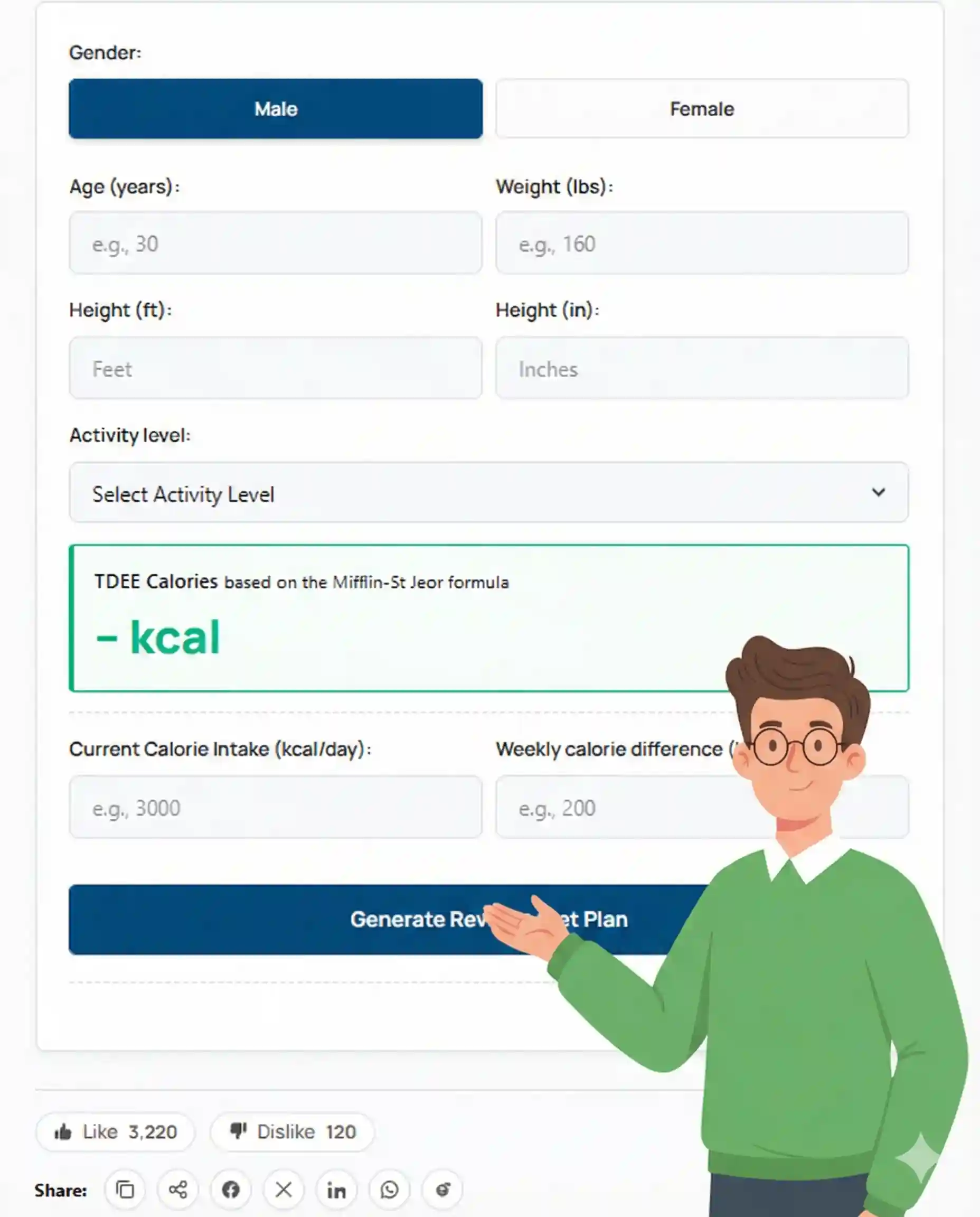
You can find your ideal metabolic recovery plan by using the tool below. Specifically, please enter your accurate physical measurements to get the best results. Our engine processes your data against professional nutrition and sports science standards. You should have your current daily calorie intake and weight ready before starting.
RESULT INTERPRETATION
Your report highlights the precise path to metabolic recovery. These figures help you understand how to eat more food safely. You should look at the TDEE value first. This value represents the total energy your body burns every day. For instance, reaching this number is the final goal of your reverse diet. You can use this data to plan your nutrition for the next several months. Specifically, this target ensures you do not eat more than your body can process.
Understanding the Weekly Schedule
The weekly schedule provides a stable metric for your food intake. Specifically, it accounts for the minor adjustments needed to wake up your metabolism. A lower weekly increase often leads to less fat gain. Consequently, your body can build muscle and stay lean more easily. You should track your weight every morning to ensure your body is responding well to the plan. Therefore, consistent weighing helps you catch any rapid changes early.
Using Your Results for Better Health
You can manage your transition out of a diet more effectively with these precise figures. Accurate tracking helps you avoid the common trap of binge eating. For example, many people eat too much after a diet and regain all the weight they lost. Therefore, you should rely on these facts to balance your energy levels. Also, remember that a stable metabolism leads to the best long-term athletic performance. You should check your results every week to maintain your focus. Consequently, you will achieve your maintenance goals with a healthy, strong body.
Quick example to check the math
You can easily verify your result with a simple calculation. First, calculate your BMR using your physical stats. For a 30-year-old female weighing 150 lbs at 5’5″, the BMR is 1,412 kcal. Second, multiply this number by your activity multiplier. A moderately active person uses a factor of 1.55 to reach a TDEE of 2,188 kcal.
After that, you calculate your weekly progress. Your starting point is your current intake of 1,500 kcal. Finally, you add your chosen weekly increase of 100 kcal. This step brings your Week 1 total to 1,600 kcal. Therefore, you are successfully closing the gap toward your full metabolic potential.
Calculation Summary:
- Base BMR: 1,412 kcal
- TDEE Calculation: 1,412 x 1.55 = 2,188 kcal
- Week 1 Target: 1,500 + 100 = 1,600 kcal
Explore More Calculators
Grams to calories isn't one number. 100g of oil is 884 cal, rice is 130. Use the free grams to calories calculator to get…
Try calculatorUse our Steps to Calories Calculator to convert steps to calories instantly. This walking calorie calculator adjusts for height and speed to ensure accuracy.
Try calculatorUse our Cycling Calorie Calculator to estimate your energy burn. Get accurate results based on weight, speed, and bike type for your fitness goals.
Try calculatorUse our Keto-Mojo GKI Calculator to find your metabolic state. Get accurate results based on glucose and ketone levels for your health goals today.
Try calculatorUse our Rucking Calories Calculator for 100% accurate results. Track your burn based on weight, pack load, and pace. Plan your fitness hike now.
Try calculatorUse our expert Snowboard Size Calculator to find your ideal board length and waist width. Get custom results based on weight and boot size…
Try calculatorHow to Use the Reverse Diet Calculator
You can estimate your metabolic recovery in just a few seconds. Our tool follows a professional sequence to ensure your data is accurate. Please follow these five simple steps to calculate your custom plan.
Input Your Physical Stats
First, you must enter your gender, age, and current body weight. You should be very accurate with these numbers. These traits determine your basal metabolic rate. For instance, your body requires a specific amount of energy to keep your organs functioning. Specifically, this base number is the foundation of your entire plan.
Select Your Activity Level
Second, you will choose how much you move during a typical week. You should select a level that matches your actual exercise habits. This factor helps the tool find your Total Daily Energy Expenditure. Accurate activity data prevents the calculator from giving you too many calories too soon. Therefore, you should be honest about your daily movement.
Enter Current Calorie Intake
Third, you must provide the number of calories you currently eat every day. Enter the average amount you consumed during your weight-loss phase. This number serves as the starting point for your reverse diet. Specifically, it helps the tool calculate the gap between your current diet and your goal. Therefore, tracking your recent meals provides the best data.
Choose Your Weekly Increase
Next, you will select how many calories you want to add each week. You should pick a small amount, like 100 or 150 calories, for the best results. Small increases allow your metabolism to adapt without storing excess fat. Therefore, a slow and steady approach is the most effective for long-term health. Consequently, you will feel more energetic without gaining weight.
Generate Your Reverse Diet Plan
Finally, you will click the blue button to view your custom schedule. The engine instantly analyzes your data against professional nutrition standards. You will see a weekly table showing exactly how much to eat. You can use these facts to reach your maintenance goals today. Use this report to guide your shopping and meal prep for the coming weeks.
Example for testing
You can try these sample numbers to see how the tool works. First, select the Moderate Exercise activity level. Second, enter a current intake of 1,800 kcal and a weekly increase of 150 kcal. These inputs represent a standard adult recovery profile.
Result →Your Week 1 target hits 1,950 kcal. Your current nutrition and metabolic goals work together here. This score provides a balanced fit for your recovery journey. It equals a reliable and stable plan for most fitness conditions.
Now, enter your own numbers and check how close you are to your goal.
How the Reverse Diet Calculator Formula Works (Complete Breakdown)
You should understand how the math determines your metabolic needs. This formula provides a realistic estimate for your calorie recovery. It is totally based on the Mifflin-St Jeor equation. The logic separates physical traits from your personal health goals. This ensures the result is accurate for your specific body type.
The Metabolic Recovery Formula
The calculator starts with a standard metabolic base. Then it applies multipliers based on your unique profile. This method identifies the perfect balance between calorie intake and energy expenditure. Metabolism is how your body turns food into fuel.
Formula:
					TDEE = BMR x Activity Multiplier
Weekly Target = Current Intake + (Weekly Difference x Week Number)
The formula begins by calculating a base number from your height and weight. It uses specific factors for age and gender to find your resting energy level. Finally, the tool adds your weekly calorie increase to your current intake. This calculates your personalized recovery schedule.
Example:
					Imagine a 30-year-old female user. She weighs 150 lbs and stands 5'5" tall. She maintains a moderate activity level.
1: BMR Factor: 1,412 kcal
2: TDEE Factor: 1,412 x 1.55 = 2,188 kcal
3: Current Intake: 1,500 kcal
3: Week 1 Target: 1,500 + 100 = 1,600 kcal
The final result shows she needs several weeks to reach maintenance. Specifically, she will slowly climb from 1,500 to 2,188 calories.
Micro Note:
This calculator estimates the requirements for standard metabolic recovery. Medical conditions or hormonal issues are a different category. Those factors might require a more customized approach from a doctor. Most users should stick to standard increases for their first recovery phase.
Key Inputs Used in the Calculator
Every calculation depends on specific physical inputs. These inputs change how your body processes energy. By entering your real details, you get a custom plan instantly. Professionals use these same factors to build recovery plans for athletes.
Rider Weight
This is a powerful factor for metabolic rate. Weight determines how many calories your body burns at rest. A heavier weight requires more energy to maintain the current mass. Consequently, the tool adjusts your calorie ceiling based on your scale weight.
Activity Level
Your movement affects your daily energy output. Active people have more leverage over their calorie intake. This factor helps the tool find your total daily energy needs. For instance, athletes need more calories than office workers to prevent muscle loss.
Weekly Increase
Your goals for recovery override natural physical odds. A conservative plan needs a smaller calorie increase. Conversely, an aggressive plan uses a larger weekly jump. The number of calories added is the most significant predictor of weight stability. For example, a slow plan adds only 100 calories each week.
Another Example Calculation (Step-by-Step)
Let’s see how the reverse diet calculator works for a different user. This will help you understand how each factor affects your final plan. The calculation follows the same logic used by nutritionists worldwide.
Given:
- Current Status: Post-Diet Recovery
- Maintenance Goal: 2,500 kcal
- Current Intake: 2,000 kcal
- Weekly Difference: 150 kcal
Calculation:
					We apply the weekly difference to the current intake.
2,000 + 150 = 2,150
Result:
Week 1 Target: 2,150 kcal
Week 2 Target: 2,300 kcal
Status: Conservative Recovery
Meaning:
Your first target is about 2,150 calories. This confirms a focus on metabolic health. Pro athletes often see this pattern during the post-competition phase. A result of 2,150 kcal is very safe for avoiding fat gain. Most people of this size would reach their whole goal in about four weeks.
Result Benchmarks and Ranges
Most nutrition experts use these benchmarks to track metabolic adaptation. Therefore, you can trust these numbers for your diet planning. You should use these values to evaluate your current strategy. Also, these figures help you set new goals for the next month. Specifically, you can see how different speeds impact your body weight. Consequently, your tracking becomes more effective when you know the facts. Similarly, you can compare different strategies to see the impact on your health.
| Strategy | Weekly Addition | Category | Typical Goal |
|---|---|---|---|
| Conservative | 50–100 kcal | Safe | Zero fat gain and maximum safety. |
| Moderate | 100–200 kcal | Standard | Steady recovery for most athletes. |
| Aggressive | 200–300 kcal | Fast | Quickly reaching maintenance levels. |
Heads-up: Metabolic recovery varies by person and past dieting history. Always confirm your specific calorie goals with a qualified health professional.
Interpretation
A daily increase of between 100 and 150 calories is standard for average adults. Therefore, this range provides a balanced feel for general metabolic recovery. However, jumps above 300 calories are much heavier on the digestive system. You should prepare a plan that requires more consistent tracking to avoid fat storage. Conversely, conservative dieters should stay within the lower ranges to maintain total control over their weight. Specifically, these levels help you build metabolic strength without the risk of rapid weight gain.
Pro Tip:
You can check your body’s weight rating every morning before eating. For example, a stable weight means your metabolism is handling the extra food well. Confirming your energy levels ensures your plan matches your actual recovery speed. You should always prioritize your scale weight over your hunger levels for the best experience. Furthermore, this consistency helps you identify your actual maintenance level without the guesswork.
Tips & Planning Based on Your Result
You can improve your metabolic health by following these expert tips. Finding the right calorie target is just the first step to a successful recovery. You should apply these insights to choose the best nutrition plan for your specific needs. Specifically, focus on the consistency of your activity and data to achieve the best results.
Prioritize Your Weight Trends Over Your Hunger
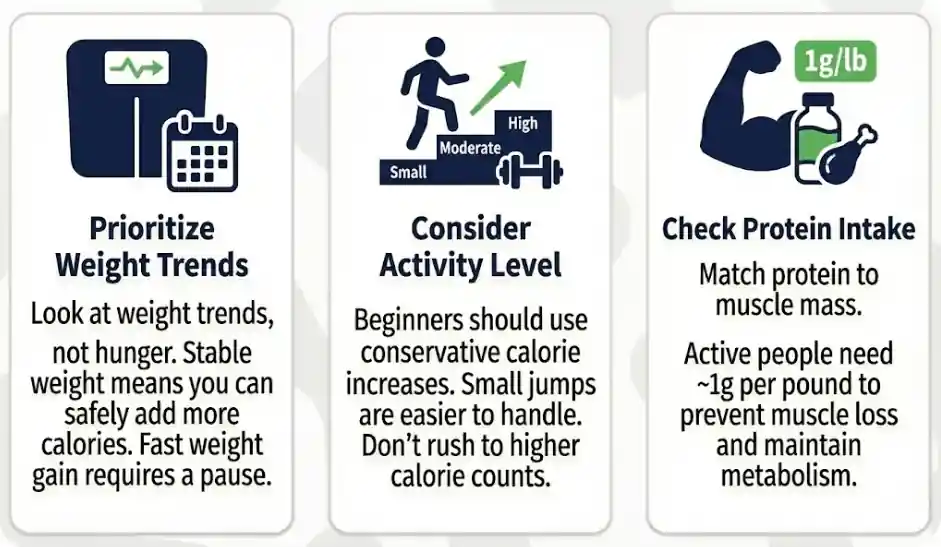
You must look at your weight trends before checking your hunger levels. This is the most essential rule in professional reverse dieting. Your body must adapt to the extra energy without storing it as fat. For example, a person with a stable weight can safely add more calories next week. A body that gains weight too fast requires a longer pause at the current level. Consequently, you will maintain your lean mass while repairing your metabolism.
Consider Your Current Activity Level
Beginners should always stick to the conservative end of their recommended increase. Smaller calorie jumps are much easier for your digestive system to handle. Therefore, you can learn how your body responds without fighting rapid weight gain. You can move to a moderate increase as you gain more metabolic flexibility. A higher calorie count provides better energy for intense workouts. However, you should not rush this transition.
Check Your Protein Intake First
You must match your protein intake to your muscle mass for your safety. This step is mandatory for riders who want to stay lean. Most people who are active in the gym need about 1 gram of protein per pound of body weight. Proper protein levels prevent your body from losing muscle during the transition. Losing muscle can significantly reduce your metabolic rate. Also, a high-protein diet helps you feel full as you gradually increase your total energy.
You Might Also Find These Helpful
Fitness 7
Convert steps to miles instantly with our calculator. This steps to distance converter uses your height and gender for precise walking distance results.
Try calculatorCommon Mistakes to Avoid When Reverse Dieting
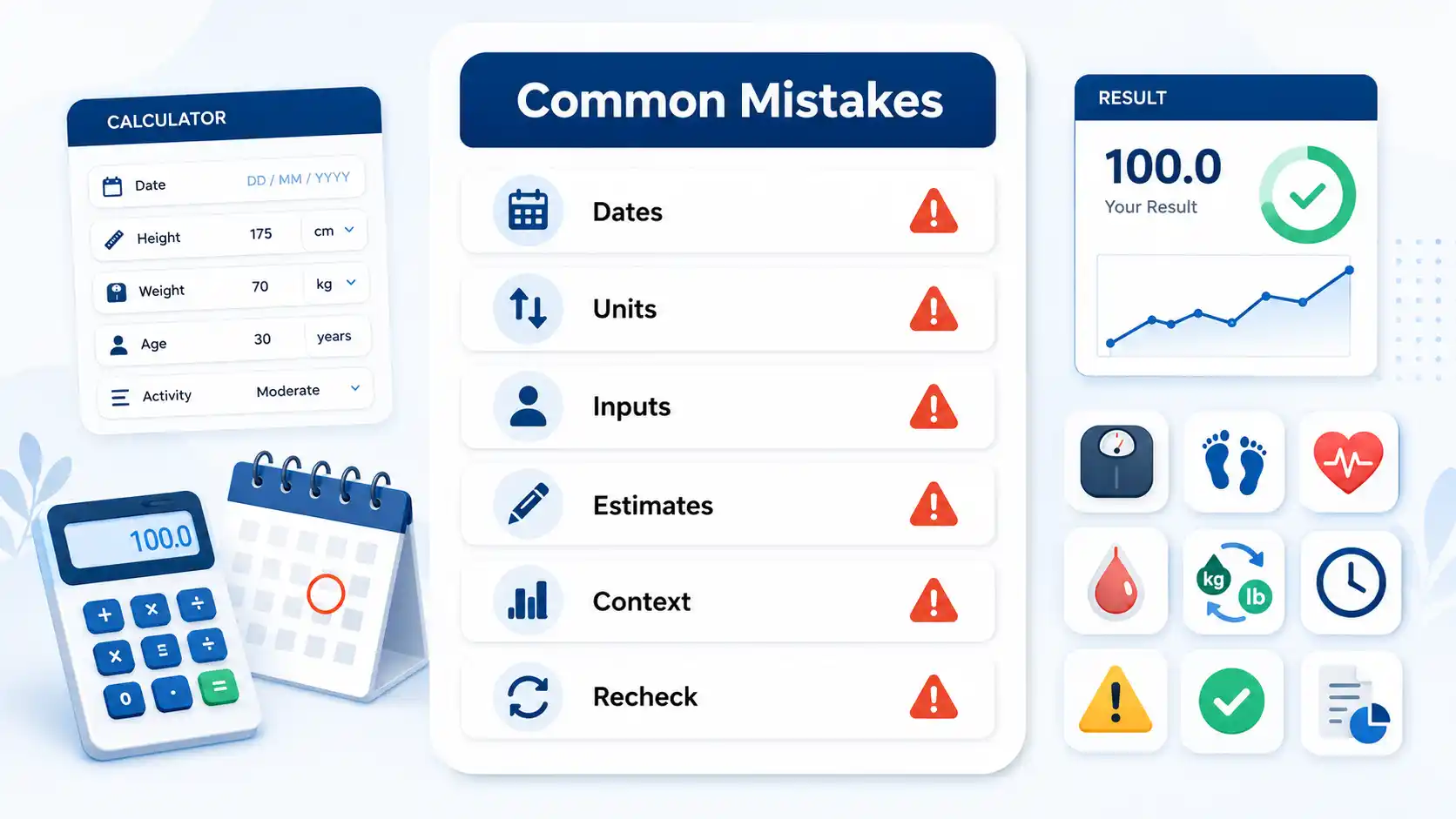
You can avoid many errors by learning from experienced nutritionists. Specifically, simple mistakes often lead to poor metabolic results. You should review these three common errors before you start your plan. Accurate tracking helps you reach your health goals much faster. Consequently, you will maintain your lean physique while eating more food.
- Jumping Straight to Maintenance Levels: Many people stop their diet and immediately eat 1,000 extra calories. This mistake causes instant fat storage because your metabolism is still slow. You should follow a gradual increase to keep your body lean. Specifically, adding small amounts gives your hormones time to adjust. Therefore, a patient-centered approach protects your weight-loss results.
- Ignoring Your Daily Physical Movement: You must keep your activity level consistent during a reverse diet. Specifically, decreasing your steps while increasing food intake will cause rapid weight gain. Consistency is the most important factor for metabolic success. You should continue your exercise routine as you add more fuel to your body. Consequently, the extra calories will support muscle growth instead of fat storage.
- Not Tracking Your Daily Body Weight:You should weigh yourself daily to see the actual trend. A small increase in weight is normal due to water and muscle glycogen. However, a fast spike suggests you are adding calories too quickly. You must use these numbers to adjust your weekly plan. Therefore, daily tracking provides the data you need for total metabolic control.
Frequently Asked Questions (FAQs)
How many calories should I add each week?
Most people should add 100-150 calories per week. Specifically, this small amount prevents your body from storing excess fat. It is large enough to see a real difference in your energy levels. You can adjust this number based on your specific weight trends. Therefore, you should be patient to ensure long-term success.
Is reverse dieting better than a cheat day?
Yes, reverse dieting is much better for your metabolism than a cheat day. A cheat day often leads to binge eating and guilt. Specifically, a reverse diet provides a controlled and professional way to eat more. Therefore, it leads to better health and mental clarity. Consequently, you build a sustainable lifestyle instead of a temporary fix.
Will I gain weight during a reverse diet?
You might see a small increase of one or two pounds. Actually, this is usually just water weight and extra food in your system. It does not represent a significant increase in body fat. Most users find that their weight stays stable as their metabolism speeds up. You should focus on how your clothes fit, not just the scale.
How long does a reverse diet usually last?
A reverse diet typically lasts between six and twelve weeks. The duration depends on the gap between your diet and your maintenance level. Specifically, a larger calorie gap requires more time to bridge safely. You should follow the plan until you reach your TDEE target. Therefore, the timeline is unique to your specific physical needs.
Can I build muscle while reverse dieting?
Yes, you can build muscle during this transition phase. Specifically, the extra calories provide the fuel needed for intense gym sessions. Your body is in a prime state to use nutrients for muscle repair. Consequently, many people see improvements in their strength and physique. You should continue to eat enough protein to support this growth.
Should I stop cardio during a reverse diet?
You should not abruptly stop your cardio routine. Specifically, a sudden drop in activity will lower your TDEE. This change makes it harder to add calories without gaining fat. You should slowly reduce cardio if your goal is to spend less time in the gym. Therefore, gradual changes are always best for metabolic stability.
What should I do if my weight spikes?
You should hold your current calories for another week if your weight spikes. Specifically, a spike of more than three pounds suggests your body needs time to adapt. Do not drop your calories back to diet levels. Instead, wait for your weight to stabilize before adding more food. This strategy ensures you maintain control over your metabolic health.
Questions?
We had love to hear from you! Whether you are reporting an issue, suggesting a new calculator, or exploring collaboration opportunities — we are here to help. Every message helps us make 100calc smarter, faster, and more helpful for everyone.
Why People Trust 100calc
At 100calc.com, we focus on accuracy, speed, and trust. Every calculator we create is designed to give reliable, instant, and easy-to-understand results you can truly depend on.