
Rucking Calories Calculator
The Rucking Calories Calculator estimates your energy burn accurately using your body weight and ruck load. As a highly accurate weighted walking calorie calculator, it factors in specific terrain types like sand or snow. Standard tools ignore these critical environmental factors. Consequently, walking on trails increases resistance significantly.
Rucking transforms simple walking into a strength workout. You burn up to 3 more calories than walking without weight. Our unique tool adjusts for four distinct terrain types. Therefore, your results reflect real-world effort. Military training often occurs on rough ground. Consequently, you need a calculator that understands the difference between pavement and trails for total accuracy.
- Updated Jun 13, 2026
Rucking Calories Calculator: Accurate Weight & Hike Tool
Body Weight (kg/lb), Ruck Weight (kg/lb), Rucking Speed (mph/kph), Duration (minutes).
--
What Your Rucking Calories Means
The result displays the total energy cost of your session. Your total calorie burn represents the fuel used. Rucking demands energy to move mass over distance. The calculator outputs the result in Kilocalories (Kcal). Scientists use Kcal to measure food energy. Therefore, the number matches your nutrition labels directly. You can compare your burn to your food intake easily.
Weight plays the most appreciable role in the calculation. The formula combines your body weight with the pack load. Gravity resists every step you take. Consequently, heavier loads force your muscles to work harder. A 20-pound ruck increases energy use significantly. It burns about 10% to 15% more calories than walking alone.
Terrain selection changes the result instantly. Our tool applies a specific multiplier for each surface. Pavement offers the least resistance. However, sand and snow require more stabilization. Your calves and core engage more on loose ground. Therefore, the calculator boosts the burn estimate by up to 30%. Accuracy depends on selecting the correct environment.
We also display an “Adjusted MET” value in the breakdown. MET stands for Metabolic Equivalent of Task. One MET equals your energy use while sitting still. Rucking creates a much higher MET score. A score of 6.0 means you work six times harder than you rest. Use this number to gauge your exercise intensity level.
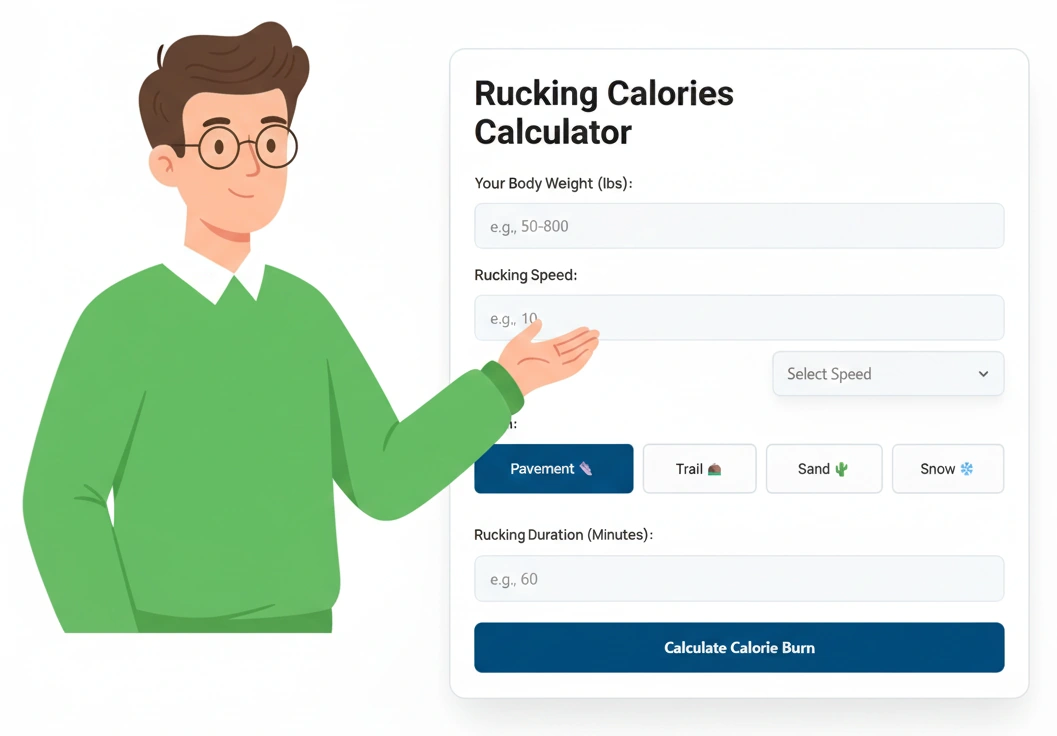
Quick example to check the math
Input: You weigh 180 lbs and carry a 30 lbs pack. You ruck on Sand at a Brisk Pace (3.0 mph) for 60 minutes.
Calculated Output: You burn approximately 725 Calories.
Analysis: The sand terrain creates significant resistance. It uses a 1.3 multiplier in the formula. Consequently, the calorie burn jumps dramatically. You would burn far less energy on flat pavement with the same load.
Explore More Calculators
Grams to calories isn't one number. 100g of oil is 884 cal, rice is 130. Use the free grams to calories calculator to get…
Try calculatorUse our Steps to Calories Calculator to convert steps to calories instantly. This walking calorie calculator adjusts for height and speed to ensure accuracy.
Try calculatorUse our Cycling Calorie Calculator to estimate your energy burn. Get accurate results based on weight, speed, and bike type for your fitness goals.
Try calculatorUse our Keto-Mojo GKI Calculator to find your metabolic state. Get accurate results based on glucose and ketone levels for your health goals today.
Try calculatorUse our Reverse Diet Calculator to plan your metabolic recovery. Get a custom weekly calorie schedule to eat more food without gaining fat today.
Try calculatorUse our expert Snowboard Size Calculator to find your ideal board length and waist width. Get custom results based on weight and boot size…
Try calculatorHow to Use the Rucking Calories Calculator
You can get precise results by following these five steps. Our tool uses advanced logic to calculate your burn. Follow the instructions below to ensure accuracy.
Input Body Weight
First, start with your body weight. Locate the field labeled "Your Body Weight (lbs)." Type your current weight in pounds. Scientific accuracy requires a precise number. The calculator uses this figure as the baseline. Consequently, accurate input prevents calculation errors. You must include your clothing weight for the best result.
Add Pack Load
Next, measure your pack load. Weigh your fully loaded rucksack on a scale. Include all water bottles, weights, and gear. Enter the total in the "Pack/Ruck Weight" field. Gravity acts on this extra mass instantly. Therefore, a heavier pack demands more energy from your legs. Your shoulders also work harder to stabilize the load.
Select Pace
Then, determine your moving pace. Click the "Rucking Speed" dropdown menu. Select the option that matches your average speed. We provide four distinct presets. Beginners should choose "Slow Pace" at 2.0 mph. Conversely, fit athletes often select "Fast Pace" at 3.5 mph. Speed drives your heart rate up significantly.
Choose Terrain
Afterward, identify the ground type. Use the "Terrain" radio buttons. You can choose Pavement, Trail, Sand, or Snow. Pavement offers standard resistance. However, soft sand forces your legs to push harder. The tool adjusts the math for these conditions automatically. Most calculators ignore this vital variable.
Calculate
Finally, set the time limit. Type the total minutes in the "Rucking Duration" box. Click the "Calculate Calorie Burn" button. The engine processes your data instantly. You will see the estimated Kcal count immediately. Review the detailed breakdown to understand your performance.
Example for testing
Try these sample numbers:
- You weigh 150
- carry a 10
- maintain 4
- for 30 minutes.
Result → You burned approx. 280 text Kcal.
This session gives you a moderate aerobic workout. You successfully focus on maintaining a faster pace. You use lighter resistance in this workout. This burn easily exceeds most standard cardiovascular machine workouts for the same time duration.
Now, enter your own numbers and check how close you are to your goal.
How the Rucking Calories Calculator Formula Works (Complete Breakdown)
Understanding the calculation helps you control your fitness progress. The formula provides a clear picture of your energy output. You can see exactly how weight and terrain affect your results. We base the math on bio-energetic standards used by the US Military. Therefore, the results are practical and accurate for every user.
Rucking Calories Formula
We believe in complete transparency. Our calculator uses a scientifically validated equation. The formula relies on the metabolic cost of physical activity. It adjusts specifically for load carriage and terrain resistance.
Formula:
Calories = Base MET x Terrain Factor) x Total Weight kg x Duration hours
The equation multiplies your metabolic effort by your total mass. Then, it multiplies that result by the duration in hours. Finally, the terrain factor scales the total up or down based on ground resistance.
Example:
If you ruck with a total weight of 200 (91 kg) for exactly one hour on pavement,6.0 (MET) times 91 kg times 1 hour = 546 Kcal
Your total burn is 546 Calories. Fitness experts consider this a high-intensity output for a low-impact exercise.
Micro Note:
Rucking typically burns 2 times to 3 times more calories than regular walking. Most US health guidelines recommend 150 minutes of moderate activity weekly. Rucking helps you hit that calorie goal in half the time compared to unweighted walking.
Key Inputs Used in the Rucking Calculator
Every calorie calculation depends on four specific inputs. These inputs help you measure your intensity accurately. You can plan your training effectively by entering real numbers for weight, speed, and terrain. The US Army uses similar variables to estimate energy needs for soldiers during marches.
Base MET (Metabolic Equivalent)
Base MET represents the energy cost of your speed. Walking fast burns more fuel than walking slowly. For example, a “Brisk Pace” of 3.0 mph creates a Base MET of roughly 6.0. We assign this value automatically when you select your speed. A higher MET value means your body is working harder.
Terrain Factor
Terrain Factor acts as a difficulty multiplier. Ground surface changes the energy requirement drastically. Pavement offers a baseline factor of 1.0. However, loose sand requires 30% more energy. Therefore, we apply a 1.3 multiplier for sand. Snow adds a 1.2 multiplier due to drag. Correct terrain selection guarantees precision.
Total Weight (Body + Pack)
Total Weight combines your body mass and your ruck load. Gravity acts on the total weight you move. A 180 lb person with a 30 lb pack moves 210 lbs total. The formula converts this to kilograms for scientific accuracy. Heavier loads force your muscles to generate more power.
Another Example Calculation (Step-by-Step)
Let’s see how the rucking calculator works using a real example. The breakdown shows how each number affects your final calorie count. The logic follows standard physics principles used in exercise physiology labs across the USA.
Given:
- Total Weight: 210 lbs (95.25 kg)
- Speed: Brisk (3.0 mph = MET 6.0)
- Terrain: Sand (Factor 1.3)
- Duration: 1 Hour
Calculation:
					First, we adjust the MET for the terrain.
6.0 (Base) x 1.3 (Sand) = 7.8 (Adjusted MET)
Next, we multiply by weight and time.
7.8 x 95.25 kg x 1 hour = 743 Kcal
Result:
- Total Burn: 743 Calories
- Intensity: High
Meaning:
You burn a significant amount of energy due to the sand. For comparison, pavement would only result in about 570 Calories. Therefore, choosing the right terrain increases your workout efficiency by 30%. You can reach your fat-loss goals faster by adding difficult terrain to your weekly routine.
Result Benchmarks and Ranges
Your attendance percentage isn’t just a number. It helps you understand where you stand and what actions you should take to maintain eligibility. Institutions in the U.S. and India follow similar rules, but the acceptable range often varies. Here’s a quick breakdown to help you evaluate your score and make a plan.
| Terrain Type | Multiplier | Burn vs. Pavement | Why It Happens |
|---|---|---|---|
| Pavement 👟 | 1.00x | Baseline | Standard friction. No energy loss. |
| Trail ⛰️ | 1.10x | +10% Increase | Uneven ground engages core muscles. |
| Snow ❄️ | 1.20x | +20% Increase | Resistance creates drag on boots. |
| Sand 🌵 | 1.30x | +30% Increase | Soft surface absorbs your push-off. |
Note: Multipliers come from bio-energetic research. Actual burn varies based on sand depth or snow density.
Beach Rucking (High Resistance)
Consequently, our calculator selects the Sand setting. It applies a massive 1.3times multiplier to the formula. The sand absorbs energy with every step. Therefore, the final calorie burn ends up 30% higher than a street ruck. Standard calculators often miss this extra effort completely.
Winter Tactical Training
Consider a soldier training in February. She rucks through six inches of fresh snow. She selects the Snow terrain option on the tool. Walking through drifts requires high knee lifts.
Tips & Planning Based on Your Result
You can maximize your calorie burn safely. Follow these expert tips to get the best results. Innovative training prevents injury and keeps you consistent.
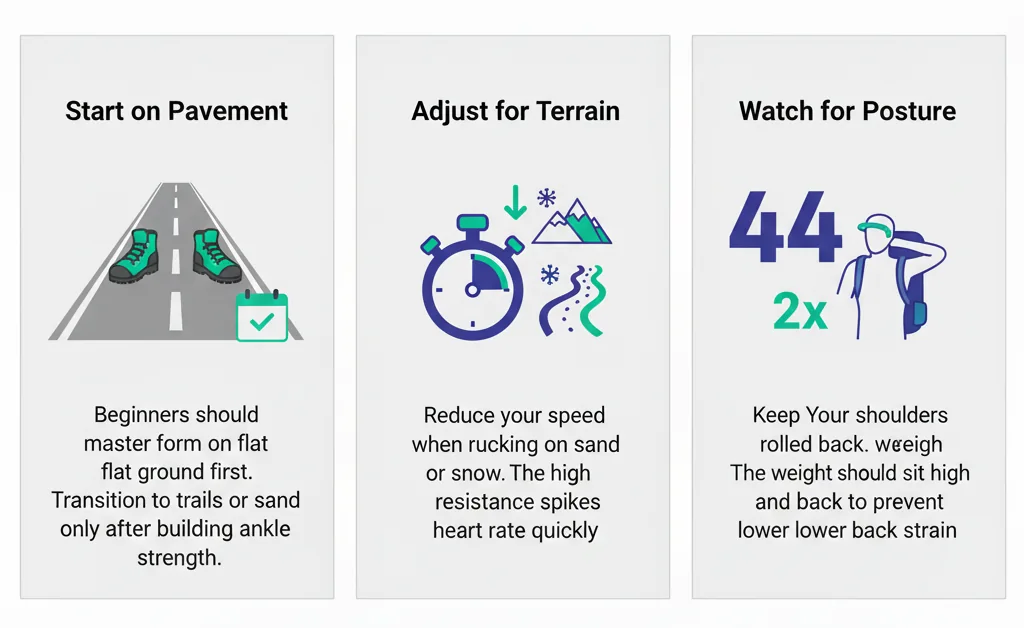
Start on the Pavement
Beginners should always start on pavement. You must master your walking form on flat ground first. Uneven trails require significant ankle strength. Therefore, rushing into rough terrain causes injuries. Build your stability on the street for two weeks. Afterward, you can transition to trails or sand safely.
Adjust for Terrain
You must change your speed based on the ground. Reduce your pace significantly when rucking on sand or snow. The high resistance spikes your heart rate instantly. Consequently, trying to maintain a “Fast” pace on soft ground leads to burnout. Listen to your body. Slow down to keep your effort sustainable.
Watch Your Posture
Keep your shoulders rolled back and down. The weight should sit high on your upper back. A low pack pulls on your spine. Therefore, adjust your straps to keep the load high. Gravity naturally pulls you backward. You should lean forward slightly at the ankles to compensate. Proper alignment prevents lower back strain effectively.
You Might Also Find These Helpful
Fitness 7
Convert steps to miles instantly with our calculator. This steps to distance converter uses your height and gender for precise walking distance results.
Try calculatorRelated Tools People Use Next
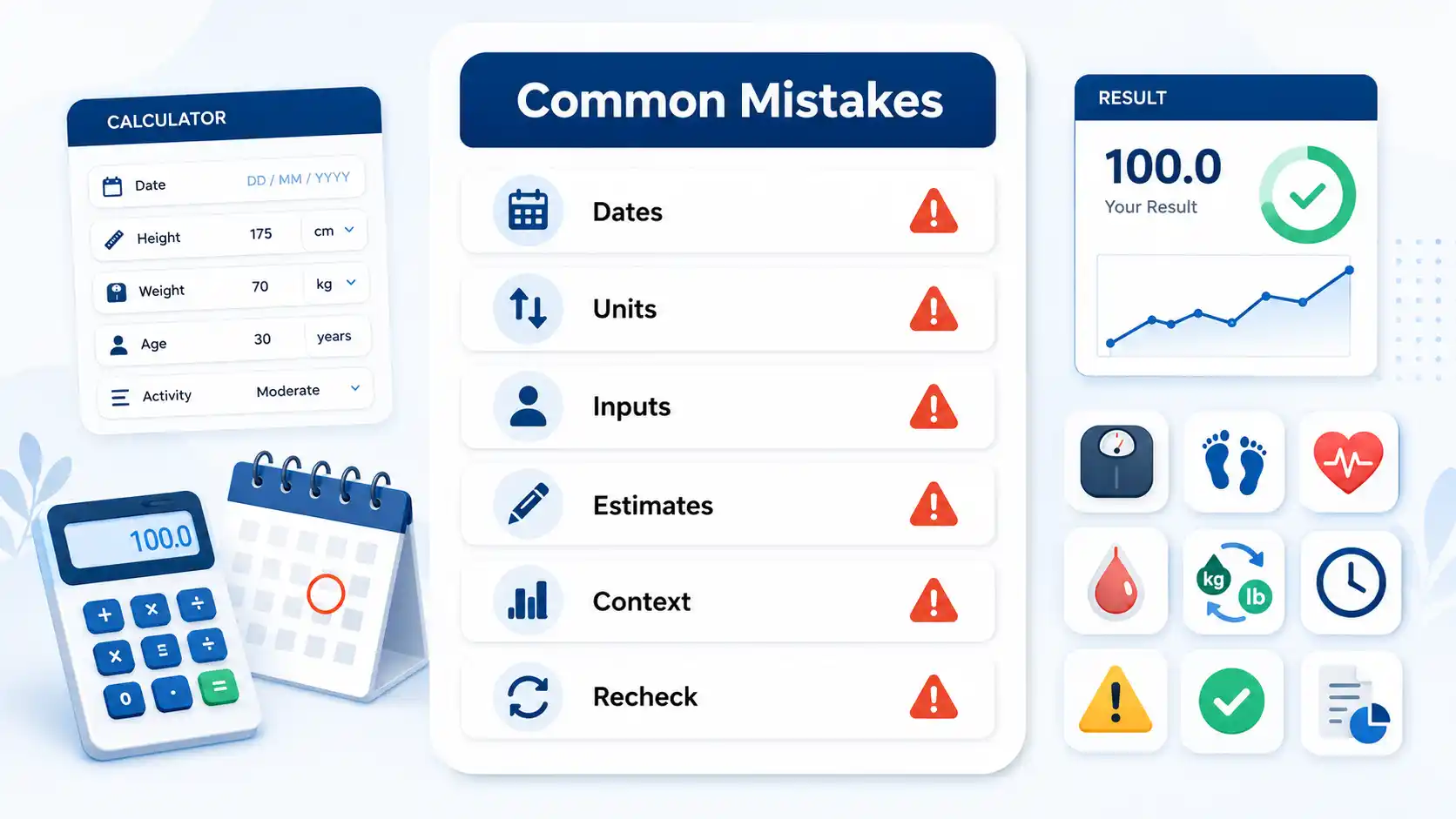
Common Mistakes to Avoid When Calculating
You can get the most accurate results by avoiding these errors. Small details often change the calculation significantly. Pay attention to the following points.
- Guessing your body weight instead of using a scale.
- Forgetting to weigh the fully loaded rucksack including water.
- Overestimating your average walking speed on technical trails.
- Ignoring the terrain difficulty multiplier for sand or snow.
- Including rest breaks in your total active duration.
- Using rough estimates instead of precise GPS tracking data.
Frequently Asked Questions (FAQs)
Is rucking better than running for fat loss?
Rucking vs walking calories is a common comparison. Rucking offers a much higher rucking calorie burn because of the added weight. It places much lower impact on your joints compared to running. Consequently, it serves as an excellent alternative for sustainable fat loss.
How many calories does 1 hour of rucking burn?
An average person burns roughly 400 to 600 calories per hour rucking. Your exact number depends on your pack weight and speed. Rucking burns up to 3 times more calories than regular walking. Therefore, it is one of the most efficient low-impact exercises available.
Does rucking burn belly fat?
Yes, rucking burns belly fat effectively. The activity combines cardiovascular effort with resistance training. Therefore, it builds muscle while shedding fat simultaneously. Consistent rucking increases your daily metabolic rate. Higher muscle mass helps your body burn more fat at rest.
How heavy should my ruck be for beginners?
Start with a weight equal to 10% of your body weight. For example, a 200 text lbs person should carry 20 text lbs. You can gradually increase the load over several weeks. Carrying too much weight too soon often leads to injury. Your body needs time to adapt to the new stress.
Can I ruck every day?
You can ruck every day with light weights. However, heavy rucking requires rest days. Your muscles need time to recover from the strain. We suggest three to four heavy sessions per week for the best results. Alternating heavy days with light days prevents burnout.
Does walking on sand increase the calorie burn?
Yes, walking on sand increases the burn significantly. Our calculator uses a 1.3 times multiplier for sand. The soft surface forces your legs to work harder. Consequently, you burn roughly 30% more calories than on pavement. Always account for the terrain to get an accurate number.
Questions?
We had love to hear from you! Whether you are reporting an issue, suggesting a new calculator, or exploring collaboration opportunities — we are here to help. Every message helps us make 100calc smarter, faster, and more helpful for everyone.
Why People Trust 100calc
At 100calc.com, we focus on accuracy, speed, and trust. Every calculator we create is designed to give reliable, instant, and easy-to-understand results you can truly depend on.