
Late Period Probability Calculator: Am I Pregnant or Just Late?
The Late Period Probability Calculator estimates when your period was expected and shows how many days early or late you are. It also uses your reported pregnancy test status and test date to guide the result. It does not turn lateness into a pregnancy percentage, because cycle timing alone cannot tell whether you are pregnant.
Late by 2, 3, 4, or 7 days and unsure what it means? Enter your last period or ovulation date, cycle length, and test status. See your expected period date, timing status, when to test or retest, and what an early negative result may mean.
Quick Facts
- Two calculation methods: Last period or known/estimated ovulation.
- Cycle range: Enter an average cycle length from 20 to 45 days.
- Ovulation method: Uses a 14-day luteal-phase estimate.
- Negative test: The date you tested changes the interpretation.
- Result: Shows period timing and test guidance, not a pregnancy percentage.
- Updated Aug 23, 2026
- Reviewed by 100Calc Research Team
Menstrual Cycle & Conception Tracker
Late Period Probability Calculator: Am I Pregnant?
Estimate how many days past your expected period date you are and get pregnancy test timing guidance based on your cycle dates and reported test result. Lateness alone cannot determine a clinically validated pregnancy percentage.
Use Last Period if you do not track your ovulation day.
What you need to enter first
Pick your tracking method above and select your current pregnancy test status. The calculator estimates your expected period date, days past that date, and appropriate pregnancy test timing; it does not diagnose pregnancy or the cause of a late period.
What this late period calculator can and cannot tell you
It can estimate your expected period date, count days past that date, interpret reported pregnancy test timing, and estimate pregnancy dating after a reported positive test. It cannot confirm pregnancy, calculate a clinically validated pregnancy percentage from lateness alone, or diagnose why a period is late or missed.
Late Period Timing Status
—
Your timing-based pregnancy assessment will appear here.
Your Action Plan
Your action plan based on your expected period timing and reported pregnancy test status will appear here.
Understanding Your Result
Context about pregnancy test timing, hCG detection, cycle variation, delayed ovulation, and other reasons for a late or missed period will appear here.
Quick Answer
A direct, snippet-style answer based on your inputs will appear here.
How late is my period before I should be worried?
Your first dynamic answer will appear here after calculation.
Can I be late and get a negative test?
Your second dynamic answer will appear here after calculation.
When to seek urgent medical care
Seek urgent medical care if a late or missed period is accompanied by severe or one-sided pelvic or abdominal pain, shoulder pain, heavy bleeding, weakness, dizziness, or fainting—especially if pregnancy is possible.
Explore More Calculators
Use the Chinese Gender Calculator for a traditional boy-or-girl prediction from lunar age and conception month. Enter conception date, due date, or LMP.
Try calculatorUse this fetal growth calculator to check baby weight percentile from ultrasound data in grams, kg, or cm and see what the result means…
Try calculatorEnter gestational sac measurements in mm or cm to calculate mean sac diameter, estimate early gestational age, compare week-by-week milestones, and see when follow-up…
Try calculatorMissed a birth control pill? Check pregnancy risk, protection status, backup contraception needs, and what to do next with our missed pill calculator.
Try calculatorUse our Pregnancy Chance Calculator to estimate your odds. Enter your cycle day, age, and method. Find out if you are in the high-risk…
Try calculatorUse our pregnancy due date calculator to find your exact Baby Due date. IVF, conception, ovulation, and ultrasound methods with weeks and timeline.
Try calculator
Micro Insight
The label “late” isn’t the trigger for worry. The gap between your usual pattern and your current one is. Someone with irregular cycles hitting day 33 has a very different story than someone with rock-solid 28-day cycles hitting that same day. Your calculator result above reflects this: the further past your personal expected date you go, the more the probability shifts, but your own cycle history is what makes any single day meaningful or not.
What Counts as a Late Period?
A period is generally considered late once it passes 5 to 7 days beyond your expected date. Normal cycles run anywhere from 21 to 35 days, so a shift of a day or two most months is common. What counts as “late” depends heavily on your usual pattern, not a fixed number.
If your cycles run like clockwork at 28 days, hitting day 32 already feels off. If your cycles naturally swing between 26 and 33 days, that same day 32 is just another normal month. Your baseline matters more than any single date on a calendar.
Take someone with a 30-day average cycle who’s now on day 33. That’s 3 days past expected. Doctors would call this normal variation, not a red flag. Push that same person to day 37 or beyond, and it shifts into the range where a test and a second look make sense.
Age and life stage change this too. Teens can run cycles up to 45 days without concern. People approaching perimenopause often see wider swings for months at a time. A late period at 19 and a late period at 46 don’t carry the same weight.
What Does Your Late Period Calculator Result Mean?
Your result shows how far you are from your expected period date and how your reported pregnancy test fits that timing. Days late measure menstrual timing, not your percentage chance of pregnancy.
The most useful part is the combination of days late, test status, and test date. A negative test taken early does not carry the same meaning as one taken after your expected period.
How Should I Understand My Late Period Result?
Your timing status tells you whether your expected period date has arrived or passed. Your pregnancy assessment is shown separately because being late alone cannot tell whether pregnancy occurred.
Not Late Yet
Your expected period date has not arrived. Pregnancy cannot be judged from calendar timing alone.
- Your result may show Due in X days.
- An early pregnancy test may be less informative.
- Follow the instructions for the test you use.
Expected Today
Your period is expected today, so you are 0 days late. If bleeding does not start and pregnancy is possible, a home pregnancy test is reasonable.
- Timing status: Expected Today
- Pregnancy is not determined by the date alone.
- Testing can give a clearer answer.
Slightly Past Expected
This means you are 1 to 3 days past your expected period date. A short delay can happen even when your cycles are usually regular.
- 1 day late: Slightly Past Expected
- 2 days late: Slightly Past Expected
- 3 days late: Slightly Past Expected
- Testing is reasonable if pregnancy is possible.
Several Days Late
This means you are 4 to 6 days late based on the dates entered. The delay is longer, but it still does not create a pregnancy percentage.
- 4 days late: Several Days Late
- 5 days late: Several Days Late
- 6 days late: Several Days Late
- Test if you have not already done so.
One Week or More Late
This means your period is 7 or more days past its expected date. It is the calculator’s highest timing category, not a high pregnancy probability score.
A seven-day delay can still have causes other than pregnancy. Pregnancy testing gives more useful information than days late alone.
What Does My Pregnancy Assessment Mean?
The pregnancy assessment uses your reported test status alongside period timing. Negative test results also depend on whether testing happened before or after the expected period.
- No test: Pregnancy is possible only if conception could have occurred.
- Negative before expected period: The test may have been taken too early.
- Negative on or after expected date: Pregnancy becomes less likely, but retesting may still be useful.
- Positive test reported: Pregnancy is very likely. Appropriate pregnancy care should follow.

Is My Late Period Result Good or Bad?
A late-period timing category is not a good or bad score. It only describes how many days have passed since your estimated period date.
| Timing | Status | What It Means | Pregnancy Context | What to Do |
|---|---|---|---|---|
| Before expected date | Not Late Yet | Your expected period date has not arrived. | Pregnancy cannot be determined from timing alone. | Follow your pregnancy test instructions if testing early. |
| 0 days | Expected Today | Your period is expected today. | The date alone does not confirm or rule out pregnancy. | Test if pregnancy is possible and your period does not start. |
| 1 to 3 days late | Slightly Past Expected | Your period is a few days past its estimated start date. | Short cycle variation is possible. Lateness is not a pregnancy percentage. | Take a home pregnancy test if pregnancy is possible. |
| 4 to 6 days late | Several Days Late | Your period is further beyond its expected date. | Pregnancy is possible only if conception could have occurred. | Test if you have not already. Retest later after an early negative. |
| 7+ days late | One Week or More Late | Your period is at least one week past its estimated date. | This is a timing category, not a high pregnancy probability score. | Test or retest. Seek medical advice if the delay continues. |
Heads-up: These are 100Calc timing categories. They describe how far you are from your expected period date. They do not measure pregnancy probability or diagnose the cause of a late period.
What Should I Do After Seeing My Result?
Your next move depends on where you are in the cycle and whether you tested. Do not treat the number of days late as proof of pregnancy.
- Not late yet: Wait for your expected date or follow your test’s early-testing instructions.
- Period due or late: Take a home pregnancy test if pregnancy is possible.
- Early negative test: Repeat it on or after your expected period date.
- Negative after your expected date: Retest after a few days if your period still has not started.
- Positive test: Contact a healthcare professional for appropriate pregnancy care.
Seek urgent medical care for severe one-sided pelvic pain, heavy bleeding, shoulder pain, fainting, or severe dizziness when pregnancy is possible.
What Does a 3 Days Late Period Result Look Like?
A three-day delay falls into Slightly Past Expected. If a negative pregnancy test was taken after the expected date, the calculator reports pregnancy as less likely and recommends retesting if the period still does not start.
Example inputs
- Today: August 22, 2026
- First day of last period: July 22, 2026
- Average cycle length: 28 days
- Pregnancy test: Negative
- Test date: August 20, 2026
Expected period date
July 22 + 28 days = August 19, 2026
Days late
August 22 minus August 19 = 3 days late
Calculator output
- Timing Status: Slightly Past Expected
- Pregnancy Assessment: Negative Test Reported. Pregnancy Less Likely
- Recommended Test Timing: Repeat in a few days if no period
The negative test was taken one day after the expected period date. That makes it more useful than a test taken before the period was due, but continued absence may still justify another test.
How to Use the Late Period Probability Calculator
The calculator follows your cycle timing from the date you provide. It then checks your expected period timing, reported pregnancy test status, and test date when relevant.

Choose Your Calculation Method
Select Last Period if you know when your most recent period started. Choose Known/Estimated Ovulation if you tracked ovulation using body signs, a fertility tracker, or an ovulation test. The selected method changes how your expected period date is estimated.
Enter Your Cycle Date
Add the first day of your last period or your known or estimated ovulation date. Use the date that best matches the method you selected. Future dates are not accepted because the calculator compares your cycle date with today's date.
Add Your Average Cycle Length
Enter your usual cycle length when using the Last Period method. The calculator accepts 20 to 45 days and uses this value to estimate when your next period was expected. Ovulation mode skips this field and uses its built-in luteal-phase estimate.
Select Your Pregnancy Test Status
Choose not tested, negative, or positive based on your current result. If you select negative, enter the date you took the test. This lets the calculator tell whether the negative result happened before or after your expected period date.
Check Your Timing and Test Guidance
Run the calculation to see your expected period date and current timing status. The result also combines your cycle timing with the pregnancy test information you entered. This produces your pregnancy assessment, recommended testing guidance, and estimated pregnancy dating after a reported positive test.
Quick Example to Test
Try these values in the calculator using August 23, 2026 as today:
- Calculation Method: By Last Period
- First Day of Last Period: July 23, 2026
- Average Cycle Length: 28 days
- Pregnancy Test Status: No, I have not tested yet
Result:
Your expected period date is August 20, 2026.
That makes you 3 days late, so the calculator places your timing in the Slightly Past Expected category.
Your pregnancy assessment is Pregnancy Possible if Conception Could Have Occurred. The calculator does not turn three days late into a pregnancy percentage.
Recommended Test Timing: You can test now.
A three-day delay can still happen with normal cycle variation. If pregnancy is possible, a home pregnancy test can give you more useful information than the number of days late.
Now enter your own cycle dates and test status to check how late your period is and what testing step makes sense.
How Accurate Is the Late Period Probability Calculator?
The Late Period Probability Calculator is reliable for date-based timing when your inputs are correct. Expected period dates remain estimates because cycle length and ovulation can shift. Pregnancy-test timing carries more weight than days late alone, so the calculator separates timing status from pregnancy assessment rather than treating lateness as a pregnancy percentage.
Key Features & Benefits
- Tracks days around your expected period so you can see whether you are early, due today, or late.
- Supports last-period and ovulation timing so you can use the cycle information you actually track.
- Separates lateness from pregnancy assessment to avoid turning days late into a misleading pregnancy percentage.
- Checks when a negative test was taken so early testing receives different guidance from later testing.
- Adds estimated pregnancy dating after a positive test while keeping the result clearly separate from medical confirmation.
Technical Process
Date Validation
The system checks required dates, future entries, and allowed cycle-length values. Invalid information is stopped before the timing assessment runs.
Timing Calculation
Entered dates are turned into an estimated period date and compared with today. The system then assigns the matching late-period timing status.
Test Interpretation
Reported test status is assessed separately from period timing. A negative test date helps distinguish early testing from testing on or after the expected period.
How the Late Period Probability Calculator Formula Works (Complete Breakdown)
The Late Period Probability Calculator uses date arithmetic, not a pregnancy-percentage formula. It estimates the expected period date, measures how far today is from that date, checks when a reported negative test was taken, and calculates estimated pregnancy dating after a reported positive test.
Formula:
Last Period Method
Expected Period Date = LMP Date + Average Cycle Length
This path uses the first day of the last menstrual period and the entered cycle length. The calculator accepts whole-number cycle lengths from 20 to 45 days.
Ovulation Method
Expected Period Date = Known or Estimated Ovulation Date + 14 days
This path does not use the cycle-length field. It applies a fixed 14-day luteal-phase estimate to the ovulation date entered.
Days Late
Days Late = Today's Date - Expected Period Date
The result can be negative, zero, or positive.
					Days Late < 0 = Period is still that many days away

Days Late = 0 = Period is expected today

Days Late > 0 = Period is that many days past expected
A positive number measures lateness only. It does not represent pregnancy probability.
Negative Test Timing
Test Timing = Negative Test Date - Expected Period Date
The calculator uses this value only when the user reports a negative pregnancy test.
					Test Timing < 0
= Negative test was taken before the expected period date

Test Timing >= 0
= Negative test was taken on or after the expected period date
This distinction changes the pregnancy assessment and recommended test timing.
Estimated Due Date
For Last Period mode:
Estimated Due Date = LMP Date + 280 days
For Ovulation mode:
					Estimated LMP = Ovulation Date - 14 days

Estimated Due Date = Estimated LMP + 280 days
The same ovulation calculation can also be written as:
Estimated Due Date = Ovulation Date + 266 days
Pregnancy dating appears after a reported positive pregnancy test. It remains an estimate rather than a confirmed clinical due date.
What Does the Formula Actually Calculate?
The formula builds one estimated point first: when the next period was expected. Today’s date is then compared with that point to measure how early, due, or late the period is.
Pregnancy-test information runs through a separate check. A negative result taken before the expected period is treated differently from one taken later. No part of the formula turns 2, 3, 4, or 7 days late into a pregnancy percentage.
What Do the Variables in the Formula Mean?
LMP
LMP means the first day of the last menstrual period. It is the starting date for the Last Period method and also forms the base for estimated pregnancy dating after a reported positive test.
Average Cycle Length
Average cycle length is the usual number of days from one period start to the next. The calculator accepts 20 to 45 days and adds this value to the LMP date to estimate the next period.
Expected Period Date
The expected period date is the estimated day the next period should begin. It becomes the reference point for measuring days late and checking whether a negative pregnancy test was taken early.
Today's Date
Today’s date comes from the user’s device when the calculation runs. It is compared with the expected period date to determine whether the period is still approaching, expected today, or late.
Days Late
Days late is the difference between today and the expected period date. Negative values mean the period is not due yet. Zero means expected today. Positive values show how many days have passed.
Test Date
The test date is required when a negative pregnancy test is reported. The calculator compares it with the expected period date to see whether testing happened before, on, or after that date.
Luteal Estimate
The luteal estimate is a fixed 14-day value used only in Ovulation mode. It is not entered by the user. The calculator adds it to the known or estimated ovulation date.
EDD
EDD means estimated due date. The calculator derives it from the LMP date, or from an estimated LMP created from the ovulation date. It appears as pregnancy dating after a reported positive test.
hCG
hCG means human chorionic gonadotropin. It is not a number used in the calculator formula. The term appears in the result guidance because pregnancy tests detect hCG, which helps explain why test timing matters.
Another Example Calculation
Here is a new example using the calculator’s Known/Estimated Ovulation mode.
Given:
- Today’s Date: August 23, 2026
- Calculation Method: Known/Estimated Ovulation
- Ovulation Date: August 9, 2026
- Pregnancy Test Status: Positive
Calculation:
Expected period date:
					August 9, 2026 + 14 days
= August 23, 2026
Days late:
					August 23, 2026 - August 23, 2026
= 0 days late
Estimated LMP for pregnancy dating:
					August 9, 2026 - 14 days
= July 26, 2026
Estimated due date:
					August 9, 2026 - 14 days
= July 26, 2026July 26, 2026 + 280 days
= May 2, 2027
Result:
- Expected Period: August 23, 2026
- Current Timing: Expected Today
- Days Late: 0
- Pregnancy Assessment: Positive Test Reported. Pregnancy Very Likely
- Estimated Gestational Age: 4 weeks 0 days
- Estimated Due Date: May 2, 2027
- Test Guidance: No further home test timing needed
Meaning:
The period is expected today, so the timing result is Expected Today, not late. The positive test is interpreted separately and triggers estimated pregnancy dating.
The due date and gestational age are planning estimates based on the entered ovulation date. They are not a clinical confirmation.
How Do You Calculate If Your Period Is Late?
To check if your period is late, add your average cycle length to the first day of your last period. Compare that expected date with today. The Late Period Probability Calculator also checks your pregnancy test status and, for negative results, when the test was taken.

What Does a 2 Days Late Period Result Look Like?
A two-day delay is a common search point because the expected period has passed, but only by a short time.
Input
- Today’s Date: August 23, 2026
- Calculation Method: Last Period
- First Day of Last Period: July 24, 2026
- Average Cycle Length: 28 days
- Pregnancy Test Status: Not tested
Process
July 24, 2026 + 28 days
= August 21, 2026
August 23, 2026 – August 21, 2026
= 2 days late
Result
- Expected Period: August 21, 2026
- Days Late: 2
- Timing Status: Slightly Past Expected
- Pregnancy Assessment: Pregnancy Possible if Conception Could Have Occurred
- Recommended Test Timing: You can test now
Meaning
Two days late falls inside the calculator’s 1 to 3 days late timing band. The result shows lateness, not a pregnancy percentage.
What Does a 4 Days Late Period Result Look Like With an Early Negative Test?
This case shows why the date of a negative pregnancy test matters. Being four days late today does not mean a test taken earlier had the same value.
Input
- Today’s Date: August 23, 2026
- Calculation Method: Last Period
- First Day of Last Period: July 21, 2026
- Average Cycle Length: 29 days
- Pregnancy Test Status: Negative
- Negative Test Date: August 17, 2026
Process
July 21, 2026 + 29 days
= August 19, 2026
August 23, 2026 – August 19, 2026
= 4 days late
August 17, 2026 – August 19, 2026
= 2 days before expected period
Result
- Expected Period: August 19, 2026
- Days Late: 4
- Timing Status: Several Days Late
- Pregnancy Assessment: Negative Test Reported. Taken Before Expected Period
- Recommended Test Timing: Repeat on or after August 19, 2026
Meaning
The period is now four days late, but the negative test happened before the expected period date. The calculator treats that as an early negative result.
What Does a 7 Days Late Period Result Look Like With a Negative Test?
A seven-day delay is another common concern, especially when cycles are usually regular. This example uses a negative test taken after the expected period date.
Input
- Today’s Date: August 23, 2026
- Calculation Method: Last Period
- First Day of Last Period: July 19, 2026
- Average Cycle Length: 28 days
- Pregnancy Test Status: Negative
- Negative Test Date: August 21, 2026
Process
July 19, 2026 + 28 days
= August 16, 2026
August 23, 2026 – August 16, 2026
= 7 days late
August 21, 2026 – August 16, 2026
= 5 days after expected period
Result
- Expected Period: August 16, 2026
- Days Late: 7
- Timing Status: One Week or More Late
- Pregnancy Assessment: Negative Test Reported. Pregnancy Less Likely
- Recommended Test Timing: Repeat in a few days if no period
Meaning
Seven days late places the result in One Week or More Late. The negative test was taken after the expected period, so the calculator treats pregnancy as less likely rather than assigning a pregnancy percentage.
What If My Period App Says I Am Late but I Tracked Ovulation?
Tracked ovulation can shift the estimated period date compared with a calendar app. This example shows how the calculator handles a later ovulation date.
Input
- Today’s Date: August 23, 2026
- Calculation Method: Known/Estimated Ovulation
- Ovulation Date: August 11, 2026
- Pregnancy Test Status: Not tested
Process
August 11, 2026 + 14 days
= August 25, 2026
August 23, 2026 – August 25, 2026
= 2 days before expected period
Result
- Expected Period: August 25, 2026
- Current Timing: Due in 2 days
- Timing Status: Not Late Yet
- Pregnancy Assessment: Pregnancy Cannot Be Determined From Timing Alone
- Recommended Test Timing: From August 25, 2026
Meaning
Based on the entered ovulation date, the period is not late yet. The calculator uses a 14-day luteal estimate instead of relying on an earlier app prediction.
What Should You Remember Before Using Your Own Dates?
Use the cycle dates that best match your real tracking history. Pay close attention to the date of a negative test, since testing before or after the expected period changes how the calculator interprets the result.
Late Period Probability Calculator Result Benchmarks
The Late Period Probability Calculator uses timing bands to show how far you are from your estimated period date. These ranges describe menstrual timing only. They do not rank pregnancy risk. Your reported pregnancy test and test date provide separate context for what to do next.
| Timing | Status | What It Means | Pregnancy Test Context | What to Do |
|---|---|---|---|---|
| Before expected date | Not Late Yet | Your estimated period date has not arrived. | Calendar timing alone cannot tell whether pregnancy occurred. | Follow your test instructions if you choose to test early. |
| 0 days | Expected Today | Your period is expected to start today. | If pregnancy is possible, testing gives more useful information than timing alone. | Take a pregnancy test if your period does not start as expected. |
| 1 to 3 days late | Slightly Past Expected | Your period is a few days beyond its estimated start date. | Short cycle shifts can happen. This range is not a pregnancy percentage. | Test if pregnancy is possible and you have not tested yet. |
| 4 to 6 days late | Several Days Late | Your period is further beyond its estimated date. | A negative test needs context because the date it was taken matters. | Test if needed. Repeat later if an earlier negative test may have been too soon. |
| 7+ days late | One Week or More Late | Your period is at least one week past its estimated date. | This is the highest timing band, not a high pregnancy probability score. | Test or retest if pregnancy is possible. Seek medical advice if the delay continues. |
Heads-up: These are 100Calc timing categories, not medical risk levels. Cycle timing can shift, and pregnancy cannot be confirmed from the number of days late alone.
Interpretation
A result moving from Slightly Past Expected to One Week or More Late only means more time has passed since the estimated period date. It does not mean pregnancy probability rises by the same amount. Test status and test timing should be read separately.
Pro Tip
Pay closest attention to when a negative pregnancy test was taken. A negative result before the expected period date is handled differently from one taken on or after that date.
What to Do After Using the Late Period Probability Calculator
Your Late Period Probability Calculator result tells you where you are compared with your estimated period date. The next step depends on that timing and your pregnancy test status. Use the result to decide whether to wait, test, retest, or contact a healthcare professional if your period remains absent.

If Your Result Says Not Late Yet
Your expected period date has not arrived. Keep tracking your cycle and wait for the estimated date if you have not tested.
If you choose to test early, follow the instructions for your specific pregnancy test. An early negative result may need to be repeated on or after your expected period date because hCG may still be too low to detect.
If Your Result Says Expected Today
Your period is due today, so you are not yet past the estimated start date. If pregnancy is possible, you can take a home pregnancy test now or wait until the period is clearly missed.
Record the test date if the result is negative. If bleeding does not start, repeat the test after a few days rather than treating one early negative as final.
If Your Result Says Slightly Past Expected
Being 1 to 3 days late means your estimated period date has recently passed. If pregnancy is possible and you have not tested, a home pregnancy test can now give more useful information than the number of days late.
After a negative result, give hCG time to rise before testing again. Keep your cycle dates accurate and watch whether the period starts over the next few days.
If Your Result Says Several Days Late
At 4 to 6 days late, take a pregnancy test if pregnancy is possible and you have not already done so. Check the test instructions carefully and note when the test was taken.
A negative result lowers the likelihood of pregnancy but does not explain why the period is late. Retest after a few days if bleeding still has not started. Continued delays can have several causes, so avoid assuming delayed ovulation is the only explanation.
If Your Result Says One Week or More Late
At 7 or more days late, pregnancy testing should guide your next step more than the timing category itself. If you have not tested, take a home test. If previous results were negative, repeat testing according to the test instructions.
Contact a healthcare professional if repeated tests remain negative and your period still does not start. Seek urgent medical care sooner if pregnancy is possible and you develop severe or one-sided pelvic pain, heavy bleeding, shoulder pain, fainting, weakness, or severe dizziness.
You Might Also Find These Helpful
Pregnancy & Fertility 45
Use this Pregnancy Risk Calculator to check age, BMI, health history, bleeding, and twins. See if closer prenatal monitoring may be worth asking about.
Try calculatorOne Time Pregnancy Calculator estimates pregnancy odds from one encounter, plus fertile window timing, test date, due date, and 21-day testing guidance.
Try calculatorUse the AMH Calculator to convert ng/mL or pmol/L, compare your result with age-based data, and see what it may mean for IVF, fertility,…
Try calculatorUse the Baby Eye Color Calculator with parents, grandparents, or sibling context to compare Brown, Green/Hazel, and Blue/Grey model estimates instantly.
Try calculatorBasal Body Temperature Calculator checks reading conditions and analyzes your temperature pattern for a sustained shift that may be consistent with ovulation.
Try calculatorBPD gestational age calculator: estimate fetal age from BPD, compare your week, check normal BPD ranges, and understand ahead or behind results.
Try calculatorCalculate odds with the Chance of Twins Calculator. Enter maternal age and history. Find your probability instantly. See if you will conceive multiples now.
Try calculatorFind out exactly when you conceived. Our free Conception Calculator uses your Due Date, LMP, or Ultrasound to estimate your fertilization date and fertile…
Try calculatorUse our Conception Date Due Date Calculator to find your baby's arrival date. Enter your conception or intercourse date for clinical 40-week results.
Try calculatorContraceptive effectiveness calculator to compare birth control methods, typical vs perfect use, backup protection, and 5-year pregnancy risk.
Try calculatorUse this CRL calculator to estimate gestational age and due date from crown-rump length in mm or cm. Compare CRL, LMP, and IVF dating…
Try calculatorEstimate your monthly and 12-month pregnancy odds by age, partner age, and cycle dates. See your fertile window and when to seek fertility help.
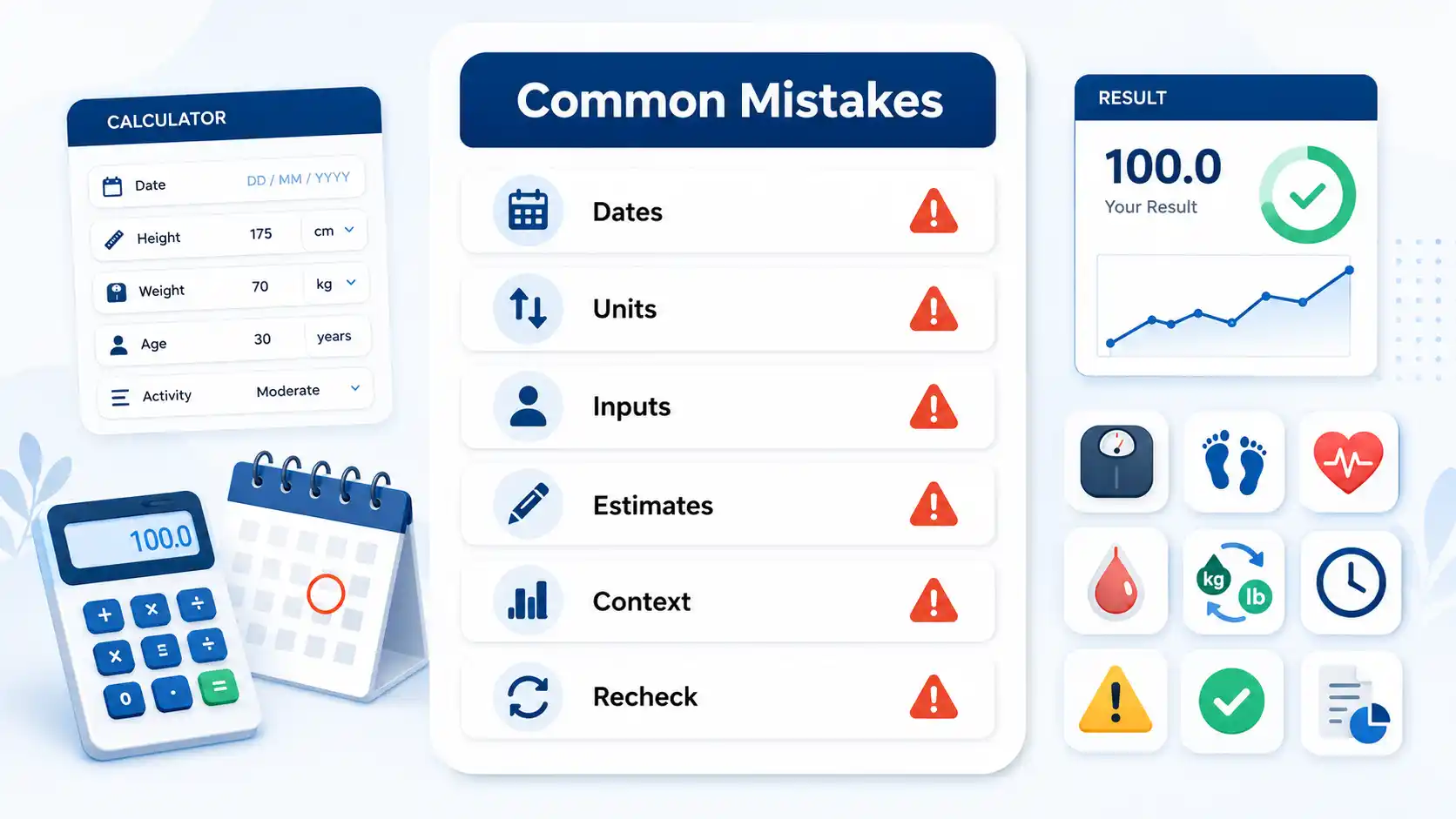
Try calculatorCommon Mistakes When Using the Late Period Probability Calculator
Small input errors change your entire result. Most inaccurate readings come down to guessed dates, rushed testing, or ignoring what your test result actually overrides. Here’s what throws off your late period probability the most.
- Testing the same day your period is due, then treating a negative result as final
- Guessing your cycle length instead of averaging your last 3 to 6 cycles
- Assuming one negative test rules out pregnancy for good instead of retesting in 48 to 72 hours
- Blaming pregnancy for every delay while ignoring stress, PCOS, thyroid shifts, or recent birth control changes
- Panicking at 1 to 2 days late, which sits well inside normal cycle variation
Frequently Asked Questions (FAQs)
Can I use the Late Period Probability Calculator if my periods are irregular?
Yes, but the expected period date may be less reliable when your cycle length changes often. Enter the cycle length that best reflects your recent pattern. If you tracked ovulation, that method may offer another timing estimate. Pregnancy testing still gives stronger evidence than calendar prediction alone.
What if I do not know when my next period is due?
If you cannot estimate your next period date, the calculator may have limited value because it needs cycle timing. For pregnancy testing, a useful fallback is to test at least 21 days after the last unprotected sex when you do not know when your period is due.
Does spotting count as the first day of my period in the calculator?
Usually, enter the first day of your actual menstrual flow rather than light spotting. Cycle Day 1 is commonly counted from the start of full flow. Using spotting as the LMP date can shift the calculator’s expected period date and change the number of days late.
Can I still be pregnant if my test is negative and my period has not started?
Yes. A negative pregnancy test can happen when testing is too early or when hCG has not risen enough for that test to detect it. If your period still does not start, repeat the test after a few days and seek medical advice after another negative result.
Why is my period suddenly late if my cycles are usually regular?
A normally regular cycle can still shift for one month. Stress, illness, weight changes, travel, exercise changes, hormonal changes, or later ovulation can affect menstrual timing. Pregnancy is another possibility when conception could have occurred, so a test gives more useful information than timing alone.
How far along could I be if I just missed my period?
With a typical 28-day cycle, someone who has just reached the expected period date would be about 4 weeks pregnant by LMP dating if pregnancy occurred. Pregnancy dating starts from the first day of the last menstrual period, not from conception itself.
Can emergency contraception make my period late?
Yes. Emergency contraception such as Plan B or ella can make the next period arrive earlier or later than usual. Bleeding may also be lighter, heavier, or more spotty. If no period arrives within about three weeks after taking emergency contraception, take a pregnancy test.
Can birth control change my late period calculator result?
Yes. Hormonal birth control can change bleeding patterns, cycle timing, or whether you bleed regularly at all. That can make an LMP-based expected period less useful. If pregnancy is possible because doses were missed or contraception was late, pregnancy-test timing matters more than the calculated late-period category.
Can I use the calculator after stopping birth control?
You can enter your dates, but the estimate may be less dependable while your natural cycle is settling into a new pattern. Recent cycle lengths may not predict the next period well. If pregnancy is possible, use testing rather than relying only on an expected period date.
Does the Late Period Probability Calculator use pregnancy symptoms?
No. The calculator does not use nausea, breast tenderness, fatigue, spotting, cramps, or other symptoms to estimate pregnancy. These signs can overlap with premenstrual changes and other conditions. The tool relies on cycle dates, period timing, and the pregnancy test information you report.
Can a positive pregnancy test happen before my period is officially late?
Yes. Some pregnancy tests can detect hCG before the expected period, although early results depend on the test and individual timing. In the calculator, a reported positive test is handled separately from the late-period category, so pregnancy dating can appear even when you are not yet late.
What if my ovulation date came from an LH test?
Treat it as an estimated ovulation date, not an exact one. An LH test detects the hormone surge linked with approaching ovulation, while the calculator still uses a fixed 14-day luteal estimate afterward. Your actual luteal-phase length can differ, so the expected period remains an estimate.
Questions?
We had love to hear from you! Whether you are reporting an issue, suggesting a new calculator, or exploring collaboration opportunities — we are here to help. Every message helps us make 100calc smarter, faster, and more helpful for everyone.
Why People Trust 100calc
At 100calc.com, we focus on accuracy, speed, and trust. Every calculator we create is designed to give reliable, instant, and easy-to-understand results you can truly depend on.