
Semen Analysis Calculator: Turn Your Lab Report Into a Real Answer
A semen analysis calculator reads your lab numbers and tells you what they mean. Enter your volume, concentration, motility, and morphology. The calculator combines volume, concentration, and motility into Total Motile Sperm Count, or TMSC, while morphology is evaluated separately. This single number predicts your fertility path better than any single lab value alone.
Your lab report has four numbers on it. None of them tell the full story alone.
A man can have a normal sperm count and still struggle to conceive. Another man can have a “low” result and father a child within months. The report alone does not explain why.
TMSC helps combine semen volume, sperm concentration, and motility into one useful measure. Fertility specialists may consider TMSC alongside the rest of the semen analysis, medical history, repeat testing, and factors affecting both partners when evaluating fertility options.
Quick Facts
- WHO 6th Edition lower reference value for semen volume: 1.4 mL
- WHO 6th Edition lower reference value for sperm concentration: 16 million/mL
- WHO 6th Edition lower reference value for total motility: 42%
- Higher TMSC means more motile sperm are present in the ejaculate, but it does not guarantee natural conception.
- A low TMSC may warrant further fertility evaluation, especially when abnormalities are seen on repeat semen analyses.
- Updated Aug 10, 2026
- Reviewed by 100Calc Research Team
Fertility & Lab Diagnostics
Semen Analysis & Sperm Count Calculator
Instantly interpret your semen analysis results using WHO 6th Edition semen reference values (2021), or switch to Lab Mode to calculate raw hemocytometer concentrations.
Enter your lab report numbers to calculate your Total Motile Sperm Count (TMSC) and compare your values with WHO 6th Edition reference values.
Total Motile Sperm Count
--
Your reference-value interpretation will appear here.
WHO 6th Edition Reference-Value Comparison
Your entered values compared with the WHO 6th Edition semen reference values used by this calculator.
TMSC Fertility Context
Biological Context
Short answer
A direct interpretation of your entered semen-analysis values will appear here.
How do I interpret my semen analysis results?
Your TMSC and reference-value interpretation will appear here.
How long does sperm fully refill?
While seminal fluid volume recovers in just 24 to 48 hours, complete sperm development (spermatogenesis) takes roughly 74 days to mature from germ cell to fully formed sperm.
Explore More Calculators
Use the Chinese Gender Calculator for a traditional boy-or-girl prediction from lunar age and conception month. Enter conception date, due date, or LMP.
Try calculatorUse this fetal growth calculator to check baby weight percentile from ultrasound data in grams, kg, or cm and see what the result means…
Try calculatorEnter gestational sac measurements in mm or cm to calculate mean sac diameter, estimate early gestational age, compare week-by-week milestones, and see when follow-up…
Try calculatorMissed a birth control pill? Check pregnancy risk, protection status, backup contraception needs, and what to do next with our missed pill calculator.
Try calculatorUse our Pregnancy Chance Calculator to estimate your odds. Enter your cycle day, age, and method. Find out if you are in the high-risk…
Try calculatorUse our pregnancy due date calculator to find your exact Baby Due date. IVF, conception, ovulation, and ultrasound methods with weeks and timeline.
Try calculator
Micro Insight
Your semen analysis result is a data point, not a verdict. It shapes the next decision, whether that’s trying naturally a bit longer, moving to IUI, or exploring IVF. It doesn’t decide your future on its own.
What Is Semen Analysis?
A semen analysis is a lab test that checks the health of a man’s sperm and semen. It measures how much fluid you produce, how many sperm are in it, how well they move, and how many are shaped normally. Doctors use it as the first step in checking male fertility.
Doctors order this test when a couple has trouble conceiving. It also confirms whether a vasectomy worked. A lab technician looks at your sample under a microscope and counts what they see.
Here’s something most pages skip. A normal result does not guarantee fertility. A below average result does not mean you can’t have kids either. Semen analysis measures potential, not certainty.
Think of it like a car inspection. A mechanic checks the engine, tires, and brakes. Nothing guarantees the car won’t break down next week. It just tells you the odds are better or worse.
Fertility works the same way. Male factors cause or contribute to close to half of all infertility cases. But sperm quality is only one piece. Timing, egg health, and reproductive anatomy all play a role too.
What Your TMSC Score Means
Your Total Motile Sperm Count score is the main output of this calculator. It tells you how many healthy, swimming sperm you actually have to work with.
Understanding Your Result
TMSC combines three things into one number. Volume, concentration, and motility all get multiplied together.
This matters because a high sperm count means little if most sperm can’t swim. A large volume means little if sperm density is low. TMSC catches what a single number on your lab report can’t show alone.
Fertility clinics lean on this score more than any other single value. It reflects your real chances better than concentration or motility checked separately.
Is Your Result Good or Bad?
A TMSC above 20 million sits in the strong range. Natural conception is realistic at this level.
A score between 5 and 20 million is moderate. Pregnancy can still happen naturally, but many doctors start discussing IUI at this stage.
Below 5 million is considered low. This range often calls for IVF with ICSI, since natural conception odds drop sharply here.
None of these numbers are a guarantee. Couples with low TMSC have conceived naturally. Couples with high TMSC have needed fertility treatment. Your score shifts the odds, it doesn’t lock in the outcome.

What You Should Do Next
Retest before making any big decision. One low score is common, and sperm regenerates roughly every 74 days.
Check your individual flags too. A normal TMSC with one failed parameter, like morphology, still deserves attention from a doctor.
Bring your printed result to a fertility specialist if your score falls below 20 million. They can order more testing and rule out treatable causes.
Avoid changing your diet, supplements, or habits based on one test alone. Wait for a second result before making changes.
Quick Example to Test
Try these numbers in the calculator: Volume 2.5 mL, Concentration 12 million/mL, Motility 38%, Morphology 3%.
TMSC comes out to 11.4 million. Concentration and morphology both fall below WHO minimums, while motility just misses the 42% mark too.
The diagnosis reads Oligoasthenoteratozoospermia. That sounds severe, but the TMSC score of 11.4 million still sits in the moderate range. This profile usually points toward IUI as a first step, not straight to IVF.
How to Use the Semen Analysis Calculator
The calculator turns four lab values into one clear fertility score. Here’s what happens at each step, and why it matters.
Pick Your Mode
Choose Patient Mode if you have a completed lab report and want it explained. Choose Lab Mode if you're counting cells yourself and only need the raw concentration number. Each mode runs different math behind the scenes.
Enter Your Lab Numbers
Type in your volume, concentration, motility, and morphology exactly as they appear on your report. Volume, concentration, and motility feed directly into the TMSC formula. Morphology is evaluated separately against the reference value. Nothing gets calculated until all four are filled in.
Let the Calculator Run TMSC
The tool multiplies volume by concentration, then multiplies that by your motility percentage. This single pass builds your Total Motile Sperm Count in seconds. No manual math needed on your end.
Check Each Parameter Flag
Every value gets compared with the WHO 6th Edition reference values on its own. Volume, concentration, motility, and morphology each show whether the entered value is at/above or below the reference value. This step catches issues a single TMSC number could hide.
See Your Fertility Pathway
The calculator shows your Total Motile Sperm Count and places it alongside your other semen-analysis values. Use the result as general fertility context rather than a treatment recommendation, since fertility decisions depend on more than TMSC alone.
Quick Example:
Try this: Volume 4 mL, Concentration 55 million/mL, Motility 38%, Morphology 6%.
TMSC comes out to 83.6 million, well above the 20 million mark. But motility sits below the 42% WHO minimum, so that flag reads below reference even with a strong overall score.
The TMSC is 83.6 million, while motility still falls below the 42% reference value used by the calculator. This shows why TMSC and the individual semen parameters should be reviewed together rather than treating one number as the complete fertility picture.
How the Semen Analysis Calculator Stays Accurate
This tool runs on the WHO 6th edition laboratory manual, the same reference clinics use worldwide. Every threshold matches published medical standards, not guesswork. The Neubauer formula in Lab Mode is the same one real fertility labs use to count cells under a microscope.
Key Features & Benefits
- Matches WHO 6th edition reference limits exactly
- Calculates TMSC the same way fertility clinics do
- Flags each of the 4 key parameters individually
- Converts your diagnosis into plain English
- Switches between patient and lab math instantly
Technical Process
Input Check
Validates every number falls in a realistic clinical range before calculating.
Formula Run
Multiplies volume, concentration, and motility to produce your TMSC score.
Reference Comparison
Compares each entered parameter with the WHO 6th Edition reference values used by the calculator and highlights values that fall below them.
How the Semen Analysis Calculator Formula Works (Complete Breakdown)
This calculator runs two formulas depending on your mode. Patient Mode builds your Total Motile Sperm Count. Lab Mode converts raw hemocytometer counts into concentration using the Neubauer method. Here’s the exact math behind each result.
Semen Analysis Calculator Formula
Formula:
TMSC = Volume (mL) × Concentration (million/mL) × (Motility % ÷ 100)
What These Formulas Do
The TMSC formula stacks three numbers on top of each other. Volume tells you how much fluid you have. Concentration tells you how packed it is with sperm. Motility tells you how many of those sperm can actually swim.
Multiply all three and you get the real, usable sperm count in your sample. Not a theoretical number, a functional one.
The Neubauer formula works differently. It takes a raw cell count from a microscope grid, corrects for dilution, and converts it into a concentration per milliliter. Labs have used this exact method for decades.
Understanding the Formula Variables
Volume
Volume measures the total fluid your body released in one sample. This calculator accepts anywhere from 0.1 to 20 mL, though most samples fall between 1.5 and 5 mL.
Concentration
Concentration counts sperm cells packed into each milliliter of fluid. A high volume with low concentration still produces a weak TMSC, since both numbers carry equal weight in the formula.
Motility
Motility is the percentage of sperm actually moving under the microscope. Sperm that sit still can’t reach an egg, so this number gets converted to a decimal and multiplied straight into your score.
Dilution Factor
Labs dilute semen samples before counting, since raw samples are too dense to count accurately under a microscope. Common ratios run from 1:10 to 1:100, and this factor corrects the final math back to the original sample strength.
Squares Counted
This refers to how many grid squares on the Neubauer chamber got counted under the microscope. More squares counted usually means a more reliable average, especially in low count samples.
Another Example Calculation (Step-by-Step)
Let’s run a different set of Lab Mode numbers. This shows how dilution and square count both shape the final concentration.
Given:
- Sperm Counted: 200
- Dilution Factor: 1:50
- Squares Counted: 10
Calculation:
					Concentration = (200 × 50) ÷ (10 × 100)
Concentration = 10,000 ÷ 1,000
Concentration = 10.0 Million/mL
Result:
- Concentration: 10.0 Million/mL
- Status: Below the WHO minimum of 16 Million/mL
Meaning:
This sample lands just under the WHO reference limit for normal concentration. A higher dilution factor pulled more weight into the final number, while counting across 10 squares kept the average steady.
This is a raw lab value only. Lab Mode stops here on purpose. Patient Mode is where this same concentration would feed into a full TMSC score and WHO diagnosis.
How Do I Check My Sperm Count at Home?
You can check your sperm count at home with an at-home sperm test or semen analysis kit. Most home tests use a semen sample collected by ejaculation into a clean collection cup and estimate whether sperm are present or whether the sperm concentration is above or below a set level. Some advanced home tests also measure sperm motility.
How to Check Sperm Count at Home
- Choose an at-home sperm test. Check which semen parameters the test actually measures. Some only screen sperm concentration, while others may also report motility.
- Follow the test’s preparation instructions. Avoid changing the recommended abstinence period or sample-collection method because this can affect the result.
- Collect the entire semen sample. Ejaculate directly into the collection container supplied or recommended by the test.
- Test the sample as instructed. Depending on the kit, you may use a test device, smartphone-based analyzer, or mail the sample to a laboratory.
- Read the reported sperm result. The test may show sperm concentration, whether your count is above a specified threshold, motility, or other parameters depending on the product.

What Can an At-Home Sperm Test Measure?
| Semen Parameter | Home Test | Full Lab Semen Analysis |
|---|---|---|
| Sperm presence | Often | Yes |
| Sperm concentration | Many tests | Yes |
| Motility | Some tests | Yes |
| Semen volume | Sometimes | Yes |
| Morphology | Usually limited or unavailable | Yes |
| Vitality | Usually unavailable | Yes |
Important: A home sperm test is a screening tool, not a complete fertility evaluation. A normal-looking home result does not prove fertility, and an abnormal result does not prove infertility. Laboratory semen analysis provides a more complete assessment of sperm concentration, movement, shape, vitality, semen volume, and other characteristics.
If an at-home test shows a low result, if results vary between tests, or if you have concerns about fertility, consider a formal semen analysis and discuss the results with a healthcare professional.
How Do You Calculate Semen Analysis Results?
You calculate semen analysis results by multiplying volume, concentration, and motility together to get your Total Motile Sperm Count. The calculator then checks each value against WHO 6th edition minimums and builds your diagnosis from whichever ones fall short.

What happens if your morphology is low but everything else is normal?
This is one of the most common worries after getting a lab report back.
Input
- Volume: 3.5 mL
- Concentration: 45 million/mL
- Motility: 50%
- Morphology: 2%
Process
- TMSC = 3.5 × 45 × 0.50 = 78.75 million. Volume, concentration, and motility all pass WHO thresholds. Morphology alone falls below the 4% minimum.
Result
- TMSC: 78.75 million
- Diagnosis: Teratozoospermia
- Pathway: Natural conception, TMSC is well above 20 million
Meaning
A TMSC this high keeps natural conception realistic even with low morphology. Research on IUI outcomes shows low morphology mainly matters when TMSC also drops below 5 million. One weak parameter with a strong overall score usually isn’t a dealbreaker.
How do you check semen analysis after a vasectomy?
Post vasectomy checks use the same formula, but the goal flips. You’re looking for zero, not a high number.
Input
- Volume: 2.8 mL
- Concentration: 0.1 million/mL
- Motility: 5%
- Morphology: 1%
Process
- TMSC = 2.8 × 0.1 × 0.05 = 0.014 million. Every parameter reads far below WHO minimums, which is the expected outcome here.
Result
- TMSC: 0.01 million
- Diagnosis: Severe Oligoasthenoteratozoospermia
- Pathway: Consistent with successful vasectomy
Meaning
A near-zero TMSC after vasectomy confirms the procedure worked. Doctors usually test 8 to 16 weeks post surgery, since sperm already in the tubes takes time to clear out.
What does a low volume result mean if the sperm count is fine?
Low volume alone throws people off, since the other three numbers can look completely normal.
Input
- Volume: 0.9 mL
- Concentration: 60 million/mL
- Motility: 48%
- Morphology: 6%
Process
- TMSC = 0.9 × 60 × 0.48 = 25.92 million. Concentration, motility, and morphology all pass. Volume falls under the 1.4 mL WHO minimum.
Result
- TMSC: 25.92 million
- Diagnosis: Hypospermia
- Pathway: Natural conception, TMSC above 20 million
Meaning
Low volume alone rarely tanks your TMSC if sperm density is strong. Short abstinence time or incomplete collection are common, harmless causes worth ruling out before assuming a bigger issue.
How do labs calculate a raw sperm count under the microscope?
Lab techs use a different formula entirely, built for hemocytometer counting instead of full lab reports.
Input
- Sperm Counted: 85
- Dilution Factor: 1:20
- Squares Counted: 5
Process
- Concentration = (85 × 20) ÷ (5 × 100) = 1700 ÷ 500 = 3.4 million/mL
Result
- Concentration: 3.4 million/mL
- Status: Below the WHO minimum of 16 million/mL
Meaning
This raw count method skips diagnosis and pathway entirely. It’s built for lab staff who need a fast, accurate number straight from the counting chamber.
Quick Rules to Remember
These examples follow the same math the calculator runs behind every result. Volume, concentration, and motility drive TMSC. Concentration and dilution drive raw counts in Lab Mode.
Enter your own numbers from your lab report to get a matching breakdown for your exact situation. One low parameter rarely tells the full story on its own.
Semen Analysis Result Benchmarks Explained
Your TMSC score only means something once you compare it against real ranges. This semen analysis calculator sorts your result into three clear bands, matching what fertility clinics use to plan treatment. Here’s how your number stacks up.
| TMSC Range | Label | US Clinical Practice | WHO Global Standard | Notes |
|---|---|---|---|---|
| 20M and above | Optimal | Strong candidate for natural conception at most US fertility clinics. | Meets WHO 6th edition reference limits across all parameters. | Keep trying naturally, retest if 12 months pass without pregnancy. |
| 5M – 19.9M | Moderate | IUI is commonly discussed as a next step after 6 months of trying. | Falls in a range where WHO notes contextual interpretation matters. | Bring results to a fertility specialist sooner rather than later. |
| Below 5M | Low | IVF with ICSI usually gives better success rates than IUI. | Below common lower reference thresholds used worldwide. | Schedule a consultation and consider a repeat test first. |
Heads-up: These bands are educational estimates, not a diagnosis. Clinics may use slightly different cutoffs. Always confirm with a fertility specialist.
| Parameter | Label | US Clinical Practice | WHO Global Standard | Notes |
|---|---|---|---|---|
| Volume (below 1.4 mL) | Hypospermia | Often linked to short abstinence or incomplete collection. | WHO 6th edition lower reference limit is 1.4 mL. | Recheck after 2 to 5 days of abstinence before retesting. |
| Concentration (below 16 million/mL) | Oligozoospermia | One of the most common flags in US fertility workups. | WHO 6th edition lower reference limit is 16 million/mL. | Diet, sleep, and heat exposure can affect this over time. |
| Motility (below 42%) | Asthenozoospermia | Frequently paired with lifestyle factors like smoking. | WHO 6th edition lower reference limit is 42% total motility. | Collection delays over an hour can lower this reading. |
| Morphology (below 4%) | Teratozoospermia | Matters most when TMSC also falls below 5 million. | WHO 6th edition lower reference limit is 4% normal forms. | Often the least predictive flag on its own. |
Heads-up: One flagged parameter rarely tells the full story. Doctors look at your full profile, not a single low number.
Interpretation
A TMSC above 20 million puts you in the strongest position for natural conception. Between 5 and 20 million, most couples still have options, but a conversation with a specialist saves time. Below 5 million, treatment usually moves faster toward IVF.
Individual parameter flags matter too. A normal TMSC with one low flag, like morphology, carries far less weight than multiple flags stacking together.
Pro Tip
One test rarely tells the full story. Sperm regenerates roughly every 74 days, so retesting 2 to 3 months later often gives a clearer, more stable picture before making any treatment decision.
What to Do After Using the Semen Analysis Calculator
Your TMSC result points to one of three paths. What you do next depends on which band your number landed in and how confident that result really is. Here’s how to act on each outcome without guessing.

For Optimal Results (20 Million and Above)
A strong TMSC score doesn’t mean you’re done paying attention. Keep habits steady rather than changing anything that’s clearly working. If you and your partner haven’t conceived after 12 months of trying, a strong sperm result shifts the focus toward female fertility factors instead, since male causes become less likely at this level. Retest yearly if pregnancy attempts continue without success, since sperm quality naturally shifts over time even when starting numbers look great.
For Moderate Results (5 Million to 19.9 Million)
This range deserves action, not panic. Retest in 2 to 3 months before making any big decisions, since one sample rarely tells the full story and sperm regenerates on roughly a 74 day cycle. Bring both results to a fertility specialist rather than just one, since a pattern across two tests carries far more weight than a single number.
Diet changes matter here too. Research links higher intake of milk, eggs, and whole foods to better concentration and motility, while diets heavy in processed food and sugar tend to pull numbers down. Smoking and heavy drinking are two of the most consistent factors tied to lower scores, so cutting back gives your next test a fairer read.
For Low Results (Below 5 Million)
A low score changes the timeline, not the plan. Don’t wait months on your own before seeing a specialist. Low TMSC results usually call for a fertility consult sooner, since the treatment options widen the earlier they’re explored.
Ask about a hormone panel too, since low testosterone or other hormonal issues sometimes sit behind a low count and are often treatable on their own. Retesting still matters here, but pair it with a doctor’s visit instead of waiting for a second number alone.
A Note on Individual Parameter Flags
TMSC matters more than any single flag on your report. A man can pass three of four parameters and still land in the moderate range, since the combined score is what actually drives treatment decisions. Don’t fixate on one red flag, like morphology, if your overall TMSC still reads strong. Look at the full picture the calculator gives you, not just the piece that looks alarming.
These pathway suggestions aren’t a prescription. They reflect what the numbers are typically associated with, not a fixed treatment plan. Bring your results to a fertility specialist before choosing between IUI and IVF, since your specific history and your partner’s fertility factors shape that decision just as much as this one test does.
You Might Also Find These Helpful
Pregnancy & Fertility 45
Use this Pregnancy Risk Calculator to check age, BMI, health history, bleeding, and twins. See if closer prenatal monitoring may be worth asking about.
Try calculatorOne Time Pregnancy Calculator estimates pregnancy odds from one encounter, plus fertile window timing, test date, due date, and 21-day testing guidance.
Try calculatorUse the AMH Calculator to convert ng/mL or pmol/L, compare your result with age-based data, and see what it may mean for IVF, fertility,…
Try calculatorUse the Baby Eye Color Calculator with parents, grandparents, or sibling context to compare Brown, Green/Hazel, and Blue/Grey model estimates instantly.
Try calculatorBasal Body Temperature Calculator checks reading conditions and analyzes your temperature pattern for a sustained shift that may be consistent with ovulation.
Try calculatorBPD gestational age calculator: estimate fetal age from BPD, compare your week, check normal BPD ranges, and understand ahead or behind results.
Try calculatorCalculate odds with the Chance of Twins Calculator. Enter maternal age and history. Find your probability instantly. See if you will conceive multiples now.
Try calculatorFind out exactly when you conceived. Our free Conception Calculator uses your Due Date, LMP, or Ultrasound to estimate your fertilization date and fertile…
Try calculatorUse our Conception Date Due Date Calculator to find your baby's arrival date. Enter your conception or intercourse date for clinical 40-week results.
Try calculatorContraceptive effectiveness calculator to compare birth control methods, typical vs perfect use, backup protection, and 5-year pregnancy risk.
Try calculatorUse this CRL calculator to estimate gestational age and due date from crown-rump length in mm or cm. Compare CRL, LMP, and IVF dating…
Try calculatorEstimate your monthly and 12-month pregnancy odds by age, partner age, and cycle dates. See your fertile window and when to seek fertility help.
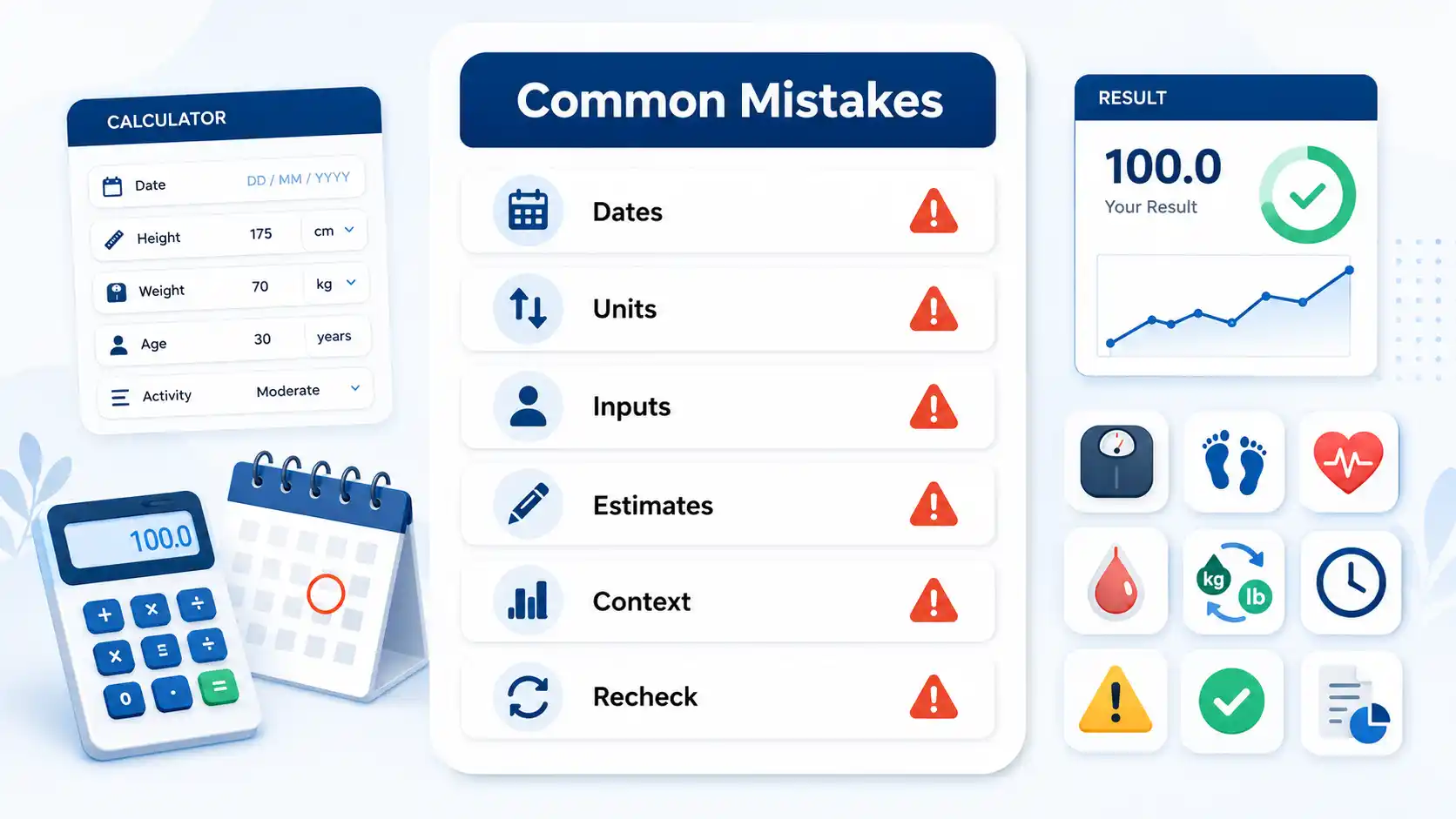
Try calculatorCommon Mistakes When Using the Semen Analysis Calculator
Small input errors throw off your entire TMSC score. Most confusion comes from mixing up lab report terms or skipping context your result actually needs. Here’s what trips people up most.
- Entering total sperm count instead of concentration, since some labs report both numbers separately
- Testing after too short or too long abstinence, when 2 to 5 days gives the most accurate reading
- Panicking over one low result instead of retesting 2 to 3 months later
- Ignoring morphology while focused only on count, when a high count with poor shape still limits fertility
- Using Lab Mode for personal interpretation, when Patient Mode is built for that instead
Frequently Asked Questions (FAQs)
What is a normal sperm count on a semen analysis?
WHO considers 16 million/mL or higher normal, with a total count above 39 million per ejaculate. Concentration alone doesn’t tell the full story though. TMSC combines concentration with volume and motility for a clearer picture.
How is sperm count calculated from a lab report?
Labs count cells in a hemocytometer, then multiply by the dilution factor and divide by the squares counted to get concentration per mL. This calculator’s Lab Mode runs that exact same math.
How long does a semen analysis take?
The lab test itself takes 30 to 60 minutes. Full results with morphology staining often take 1 to 3 days. At-home kits can process faster, sometimes within an hour.
What is total motile sperm count and why does it matter?
TMSC multiplies volume, concentration, and motility into one score. Fertility clinics rely on it more than any single parameter to plan treatment, since it reflects how many sperm can actually reach an egg.
What does a low sperm count mean for fertility?
A low TMSC lowers the odds of natural conception but doesn’t rule it out. Many men with moderate counts still conceive, often with IUI support rather than more intensive treatment.
Can sperm count improve over time?
Yes. Sperm regenerates roughly every 74 days. Diet, sleep, heat exposure, and smoking all affect the next cycle’s quality, which is why doctors often recommend lifestyle changes before retesting.
What's the difference between IUI and IVF based on sperm count?
Total motile sperm count can influence fertility-treatment planning, but it is not the only factor. AUA/ASRM guidance notes that IUI success may be lower when total motile sperm counts are low on repeated semen analyses, and fewer than 5 million motile sperm after semen processing is associated with limited IUI pregnancy chances.
A fertility specialist considers this alongside female-partner factors, medical history, repeat testing, and other semen parameters before discussing IUI, IVF, or ICSI.
How many days should I abstain before a semen analysis?
Most labs recommend 2 to 5 days of abstinence before testing. Less than 2 days can lower volume and concentration, while more than 7 days can reduce motility and skew your result.
How much does a semen analysis cost?
Self-pay rates typically run $100 to $300 at US clinics, though prices range from as low as $18 through discount programs to $500 at full-service fertility centers. At-home kits often cost $50 to $225.
What does azoospermia mean on a semen analysis?
Azoospermia means no sperm cells were found in the sample at all. This differs from a low count, since a low count still shows some sperm present, just below WHO reference thresholds.
How soon after a vasectomy should I get a semen analysis?
Most doctors recommend testing 8 to 16 weeks after a vasectomy. The goal is confirming zero or very few nonmotile sperm before stopping other forms of birth control.
Questions?
We had love to hear from you! Whether you are reporting an issue, suggesting a new calculator, or exploring collaboration opportunities — we are here to help. Every message helps us make 100calc smarter, faster, and more helpful for everyone.
Why People Trust 100calc
At 100calc.com, we focus on accuracy, speed, and trust. Every calculator we create is designed to give reliable, instant, and easy-to-understand results you can truly depend on.