
Stillbirth Risk Calculator: Check Week, Age, and Warning Signs
A Stillbirth Risk Calculator checks pregnancy factors linked with closer monitoring. It reviews your week of pregnancy, age, BMI, smoking, IVF, chronic conditions, and previous stillbirth or late loss. It gives a monitoring score, not a prediction. If your baby’s movement has decreased, stop here and contact maternity care now.
That score can feel scary without context. Is 40 weeks different from 42 weeks? Does age matter? What if you had a previous loss? This tool helps sort the noise from the signals, so you know what to ask your doctor or midwife.
Enter your details to see your monitoring score, your main risk factors, and a simple script for your next care conversation.
Quick Facts
- Reviews pregnancy risk factors from 20 to 43 weeks.
- Includes maternal age, BMI, smoking, IVF, and medical history.
- Flags reduced fetal movement as an urgent concern.
- Scores below 25 indicate fewer recognized risk factors.
- Scores of 50 or higher suggest closer specialist review may be appropriate.
- This tool measures relative monitoring needs, not stillbirth probability.
- Updated Jul 3, 2026
- Reviewed by 100Calc Research Team
Clinical Risk & Advocacy Tool
Stillbirth Risk & Advocacy Calculator
Evaluate your specific maternal factors, understand post-term induction guidelines, and generate a personalized clinical script to advocate for your baby's health.
Medical Alert: Contact Triage Immediately
Because you reported a decrease in your baby's movements, do not wait until your next appointment. Decreased fetal movement is a primary warning sign of fetal distress. Please contact your maternity unit, midwife, or local OB triage immediately for a heartbeat and movement check (CTG/NST).
Relative Risk Index
—
Your clinical assessment description will appear here.
Post-Term Placental Risk Visualizer
According to RCOG/ACOG guidelines, placental efficiency begins to decrease as you reach 40+ weeks, gradually elevating the baseline risk.
Your Clinical Advocacy Script
Feel free to read this directly to your OB/GYN or midwife. Using standard medical phrasing helps ensure your concerns are officially noted in your chart.
Your personalized script will generate here.
What is the risk of stillbirth after 41 weeks?
Your dynamic answer will appear here.
Do my specific health factors increase the risk?
Your second dynamic answer will appear here.
This tool gives a monitoring score, not stillbirth odds or a medical diagnosis. If your baby’s movement has reduced, changed, or feels unusual, contact your maternity unit, OB/GYN, midwife, or emergency care now.
What Is the Risk of Stillbirth by Week?
Stillbirth risk is usually low at term, but it can rise as pregnancy continues past the due date, especially from 41 weeks onward. This calculator reflects that pattern by adding week-based monitoring points at 40, 41, and 42+ weeks, but it does not calculate your personal stillbirth odds.
The week number matters most when it appears with other factors, such as age over 35, smoking, chronic hypertension, diabetes, IVF, obesity, or previous stillbirth. Reduced fetal movement is different. It needs urgent care at any week.
| Pregnancy Week | Label | Calculator Points | Care Discussion | Notes |
|---|---|---|---|---|
| 20 to 36 weeks | Earlier Monitoring | 0 week points | Keep routine prenatal care unless symptoms change. | Call care now for reduced movement, bleeding, pain, or major concern. |
| 37 to 39 weeks | Term Pregnancy | 0 week points | Ask about routine checks if other risk factors are present. | Week alone does not raise the score in this calculator. |
| 40 weeks | Due Date Review | +10 points | Ask what happens if labor does not start soon. | This is a small timing increase, not a prediction. |
| 41 weeks | Closer Monitoring | +25 points | Discuss extra checks, induction timing, and movement concerns. | Many care plans become more active around this stage. |
| 42 weeks or later | Post-Term Review | +40 points | Ask for a clear plan for fetal checks and delivery timing. | This is the highest week-based score in the calculator. |
| Any week with reduced movement | Urgent Assessment | Score stops | Contact maternity care, OB/GYN, midwife, or emergency care now. | Movement changes override every calculator score. |
Heads-up: This table shows how pregnancy week affects the calculator’s monitoring score. It does not show your personal stillbirth odds. Reduced fetal movement should be checked by maternity care right away.
Why 41 and 42 Weeks Matter More
Many searches around this topic ask about 40, 41, and 42 weeks because that is when due-date decisions become more real. The key point is simple. The absolute risk may still be low, but the need for a care plan often increases.
This is why the calculator does not treat every week the same. Week 40 adds a small score increase. Week 41 adds more. Week 42 or later adds the highest week-based increase.
How to Read This Week-by-Week Score
Do not read the week score as a percentage. A 42-week pregnancy does not mean a 40% chance of stillbirth.
It means the calculator found a timing factor that may deserve closer review. The final score becomes more important when week-based points combine with age, smoking, obesity, diabetes, hypertension, IVF, or previous late loss.
What to Ask Your Provider Based on Your Week
At 40 weeks, ask what the next care plan looks like if labor does not start soon.
Around 41 weeks, discuss whether extra monitoring, fetal testing, or induction timing should be reviewed.
At 42 weeks or later, request a clear plan for fetal checks and delivery timing.
A change in baby movement should not wait for the next appointment. Call your OB/GYN, midwife, labor and delivery unit, or maternity care team now.
Explore More Calculators
Use the Chinese Gender Calculator for a traditional boy-or-girl prediction from lunar age and conception month. Enter conception date, due date, or LMP.
Try calculatorUse this fetal growth calculator to check baby weight percentile from ultrasound data in grams, kg, or cm and see what the result means…
Try calculatorEnter gestational sac measurements in mm or cm to calculate mean sac diameter, estimate early gestational age, compare week-by-week milestones, and see when follow-up…
Try calculatorMissed a birth control pill? Check pregnancy risk, protection status, backup contraception needs, and what to do next with our missed pill calculator.
Try calculatorUse our Pregnancy Chance Calculator to estimate your odds. Enter your cycle day, age, and method. Find out if you are in the high-risk…
Try calculatorUse our pregnancy due date calculator to find your exact Baby Due date. IVF, conception, ovulation, and ultrasound methods with weeks and timeline.
Try calculator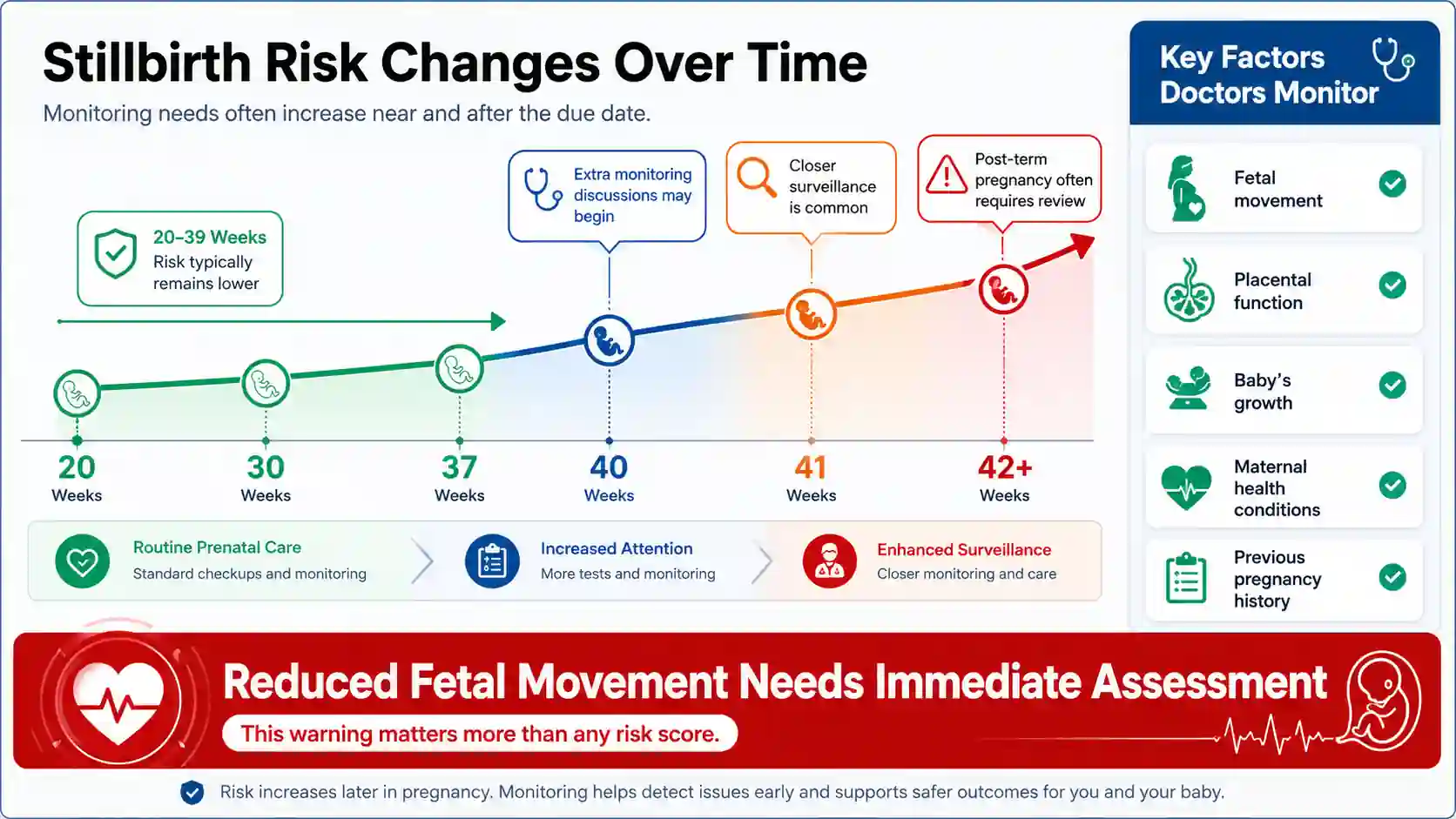
Micro Insight
Stillbirth risk matters because it helps determine the level of care a pregnancy may need. The most important warning sign is often reduced fetal movement. A risk score can support discussion, but changes in movement should always prompt immediate medical assessment.
What Is Stillbirth Risk?
Stillbirth risk changes throughout pregnancy. Risk often stays low during most weeks and rises near or after the due date. That is why healthcare providers pay closer attention to pregnancies that continue beyond 40 weeks.
Many factors can affect risk. Some relate to the mother’s health. Others involve the placenta, baby’s growth, or pregnancy history. A person with chronic hypertension may need extra monitoring. Someone with a previous stillbirth may receive more scans and specialist care.
Risk assessment helps guide decisions. A provider may suggest more frequent appointments, fetal monitoring, growth ultrasounds, or discussions about delivery timing. The goal is to identify concerns early and support a safer pregnancy.
What Your Stillbirth Monitoring Score Means
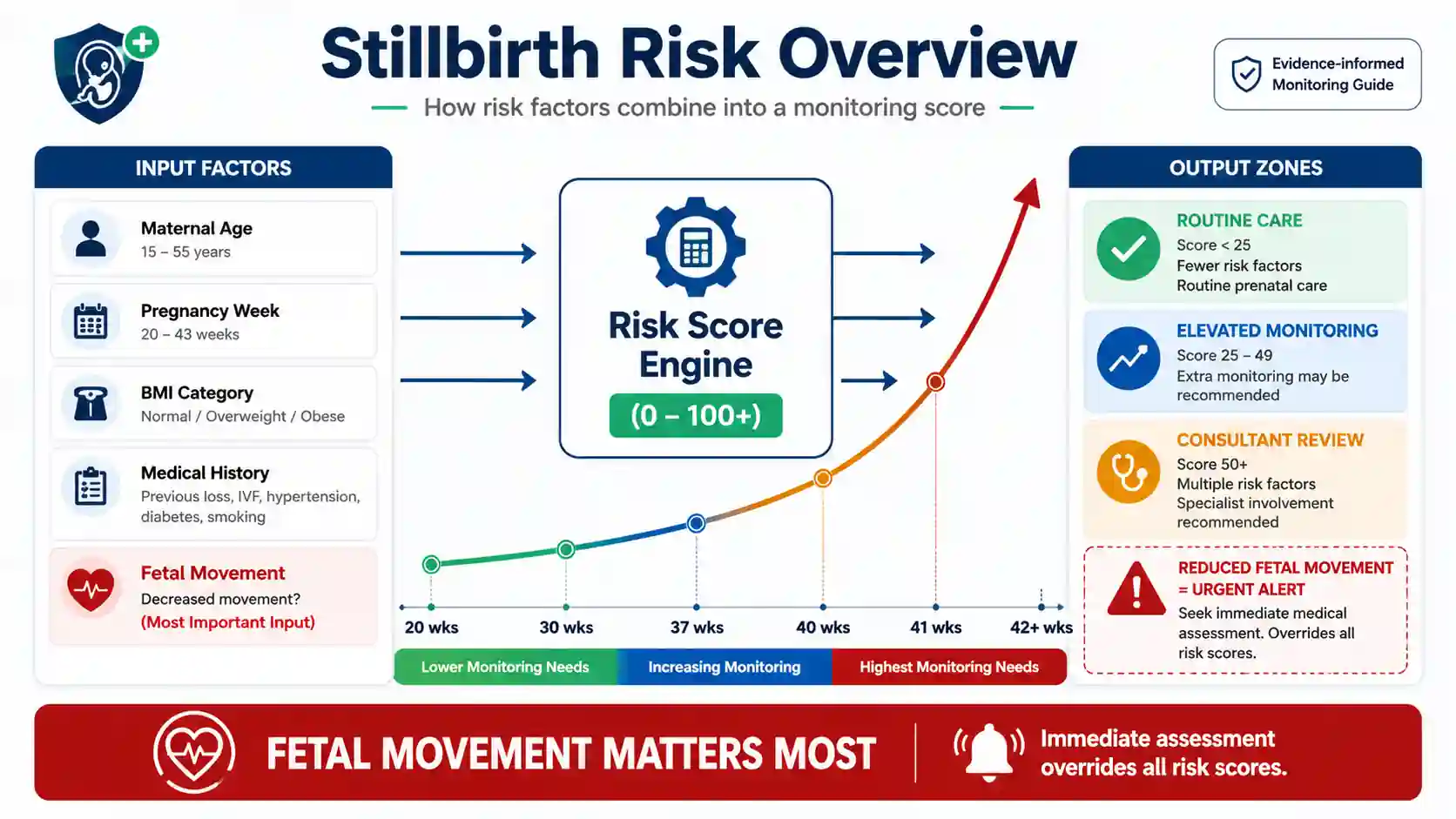
Your result shows how many stillbirth risk factors were selected in your pregnancy profile. It is a monitoring score, not a stillbirth prediction.
A higher score means more factors may be worth discussing with your doctor or midwife. Reduced fetal movement is different. That needs urgent care now, no matter what the score says.
Understanding Your Result
The score looks at your pregnancy week, age, BMI, smoking, IVF, chronic conditions, and previous stillbirth or late loss.
A low number means fewer selected risk factors. A higher number means more overlap between factors that may need closer review.
This score does not tell you the chance of stillbirth. It helps you decide what to ask about during care.
Is Your Result Good or Bad?
Results are best viewed as monitoring categories rather than good or bad outcomes.
Score Below 25
- Routine Care (Baseline)
- Few recognized risk factors detected
- Routine prenatal care is usually appropriate
Score 25 to 49
- Elevated Monitoring
- Several risk factors are present
- Extra surveillance or provider discussions may be helpful
Score 50 or Higher
- Consultant-Led Care Recommended
- Multiple significant risk factors identified
- Specialist involvement and closer monitoring may be appropriate
A higher score does not mean stillbirth will occur. It signals that more attention and monitoring may be needed.
What You Should Do Next
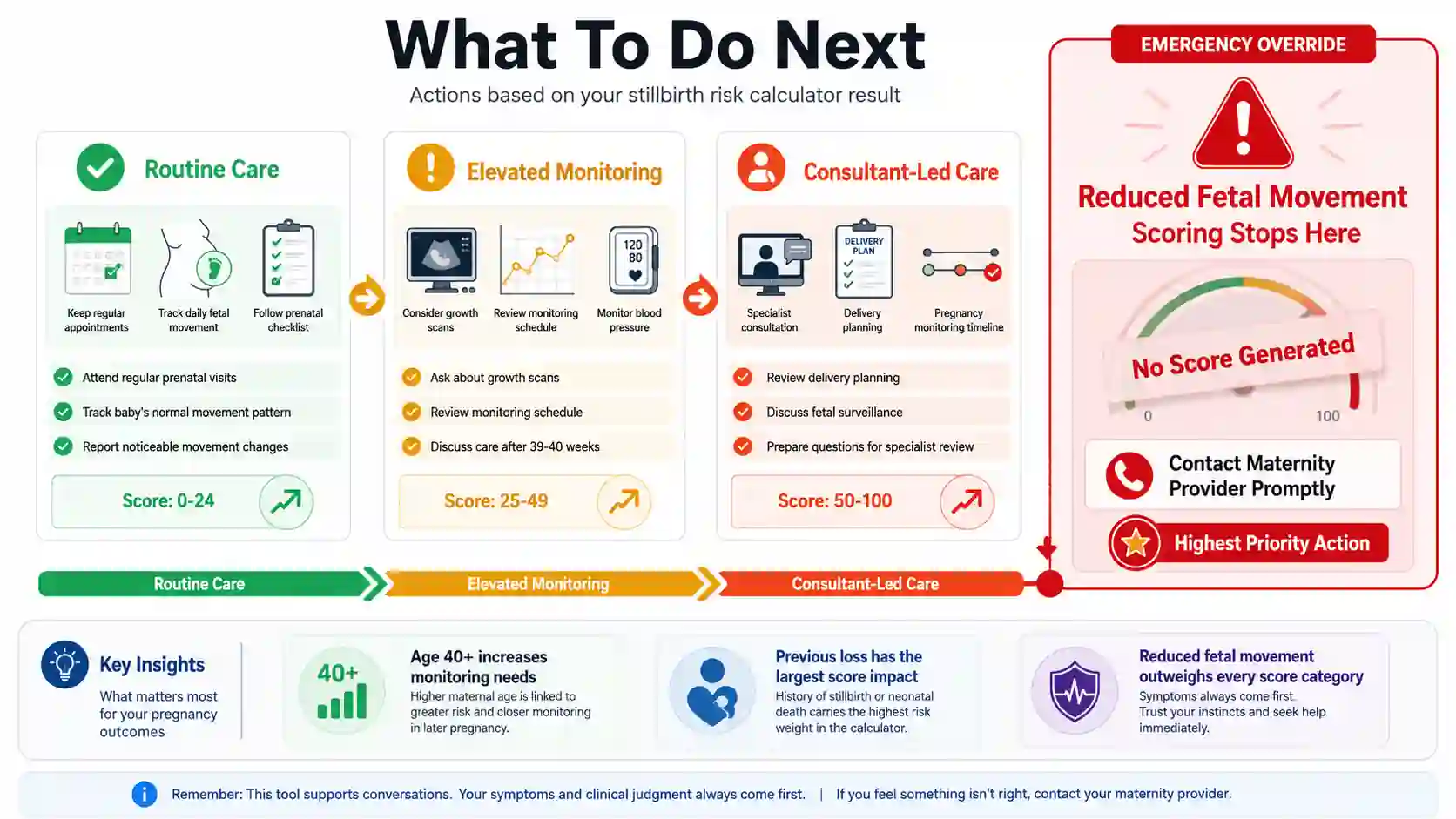
- Keep your regular prenatal visits if your score is low and movement feels normal.
- Ask your provider if extra monitoring makes sense if your score is 25 or higher.
- Discuss growth checks, blood pressure, diabetes control, or delivery planning if your score is 50 or higher.
- Call maternity care now if baby movement has reduced, changed, or feels unusual.
Quick Example to Test
A 36-year-old user enters:
- Baby movement: Normal
- Weeks pregnant: 40
- BMI: Overweight
- History: Current smoker
- No IVF
- No chronic hypertension or diabetes
- No previous stillbirth or late loss
Her score is 45/100.
Age 36 adds 10 points. Week 40 adds 10 points. Smoking adds 25 points. Overweight adds no points in this tool.
A score of 45 falls in Elevated Monitoring. This does not predict stillbirth. It means she should discuss smoking support, fetal movement tracking, and whether any extra monitoring is needed.
How to Use the Stillbirth Risk Calculator
This tool checks your pregnancy details and turns them into a monitoring score. It does not give stillbirth odds. It shows which factors may need a care conversation.
Check Baby Movement First
Start with the movement question. Choose “Yes” if your baby’s normal movement has decreased, changed, or feels unusual today.If you choose “Yes,” the calculator stops scoring. It shows an urgent triage message instead. Movement concerns matter more than any number.
Enter Your Age and Pregnancy Week
Add your age and current week of pregnancy. The tool accepts age from 15 to 55 and pregnancy weeks from 20 to 43.Age starts adding points at 35. Pregnancy week starts adding points at 40. A post-term view appears from 39 weeks onward.
Choose Your BMI Category
Select the BMI group that fits your pre-pregnancy weight range. The options are normal or underweight, overweight, and obese.Only obese BMI adds points in this tool. Overweight is shown for context, but it does not change the score.
Add Your Pregnancy and Health History
Select any history that applies. This includes previous stillbirth or late loss, IVF, chronic hypertension or diabetes, and current smoking.Choose “None of the above” if none apply. That option clears the other history choices so the score stays clean.
Review Your Score and Care Script
Press the result button to see your monitoring score. The tool also shows a short message you can use during your next care visit.The score is capped at 100 on screen. A higher score means more selected factors overlap. It does not mean a stillbirth will happen.
Quick Example to Test
Try these sample values:
Input Values
- Baby movement: Normal
- Age: 39
- Weeks pregnant: 42
- BMI: Normal or underweight
- History: IVF only
Result
Score: 60/100
Result: Discuss Specialist Review
Age 39 adds 10 points. Week 42 adds 40 points. IVF adds 10 points. Normal BMI adds no points.
This score means several monitoring factors overlap. It is a prompt to discuss care planning, not a stillbirth prediction.
How the Stillbirth Risk Calculator System Works
The Stillbirth Risk Calculator uses a weighted monitoring model based on pregnancy factors commonly linked to closer prenatal surveillance. Its purpose is to identify situations that may warrant more attention or discussion with a maternity provider. The score reflects relative monitoring needs, not the chance of stillbirth or a medical diagnosis.
Key Features & Benefits
- Prioritizes reduced fetal movement with an immediate safety alert.
- Evaluates key maternal and pregnancy factors in one assessment.
- Highlights increasing monitoring needs during post term pregnancy.
- Creates personalized discussion prompts for provider appointments.
- Separates risk awareness from probability estimates to reduce confusion.
Technical Process
Risk Inputs
Collects maternal characteristics and pregnancy factors used in monitoring decisions.
Score Assignment
Applies weighted values to each factor using predefined system rules.
Risk Classification
Groups results into monitoring categories and generates guidance prompts.
How the Stillbirth Risk Calculator Formula Works (Complete Breakdown)
The Stillbirth Risk Calculator uses a weighted monitoring model to combine maternal age, pregnancy history, health factors, BMI category, and gestational age into one relative risk index. The score helps identify pregnancies that may benefit from closer monitoring. It does not estimate the chance of stillbirth or predict pregnancy outcomes.
Pregnancy Risk Score Formula
Formula:
					Risk Score =
Age Points
+ BMI Points
+ Pregnancy History Points
+ Medical Condition Points
+ Gestational Age Points

Displayed Score = Min(Risk Score, 100)
What These Formulas Do
This formula adds points from pregnancy factors that are commonly linked to increased monitoring needs. Each factor contributes a weighted value based on its potential impact on prenatal care planning. Higher scores indicate that more recognized risk factors are present and may support discussions about additional monitoring or specialist involvement.
Understanding the Formula Variables
Age Points
Age Points reflect the mother’s age at the time of pregnancy. Pregnancies at age 35 and older often receive closer observation because certain complications become more common with advancing maternal age.
BMI Points
BMI Points measure the contribution of pre pregnancy weight status. Only the obese category receives additional points because obesity can affect placental function, fetal growth, and pregnancy management decisions.
Pregnancy History Points
Pregnancy History Points account for previous stillbirth, late pregnancy loss, or conception through IVF. Past pregnancy experiences often influence monitoring plans and may lead to more frequent clinical assessments.
Medical Condition Points
Medical Condition Points include factors such as smoking, chronic hypertension, or diabetes. These conditions can affect pregnancy health and are commonly considered when determining the need for additional surveillance.
Gestational Age Points
Gestational Age Points increase as pregnancy continues beyond the estimated due date. Monitoring often becomes more frequent after 40 weeks because placental efficiency may gradually decline as pregnancy progresses.
Another Example Calculation (Step-by-Step)
This example shows how the stillbirth risk calculator combines several monitoring factors into one relative risk index. The same scoring method applies to every calculation unless reduced fetal movement triggers the emergency alert pathway.
Given:
Maternal Age = 38 years
BMI Category = Obese
IVF Pregnancy = Yes
Chronic Hypertension = Yes
Smoking = No
Previous Stillbirth = No
Gestational Age = 40 Weeks
Reduced Fetal Movement = No
Calculation:
					Risk Score =
10 (Age 35–39)
+ 15 (Obesity)
+ 10 (IVF)
+ 20 (Chronic Hypertension)
+ 10 (40 Weeks)

Risk Score = 65

Displayed Score = 65/100
The calculator combines all assigned points into one clinical score. Since the total exceeds 50, the pregnancy falls into the highest monitoring category.
Result:
- Relative Risk Index: 65
- Displayed Score: 65/100
- Monitoring Category:
- Consultant-Led Care
- Recommended
Meaning
This result shows several monitoring factors working together. Age 38, obesity, IVF, chronic hypertension, and 40 weeks all add points. The score does not mean stillbirth will happen. It means this pregnancy profile may need closer review.
A provider may discuss blood pressure control, diabetes screening if relevant, fetal growth checks, movement tracking, and delivery planning. The most important next step is to review the result with an OB/GYN, midwife, or maternity care team.
How do you calculate stillbirth risk?
A stillbirth risk calculator creates a relative monitoring score by adding points from maternal age, BMI category, pregnancy history, medical conditions, and gestational age. The final score helps identify whether routine care, elevated monitoring, or consultant-led review may be appropriate. It does not estimate the chance of stillbirth.
What is an example of a low-risk pregnancy profile?
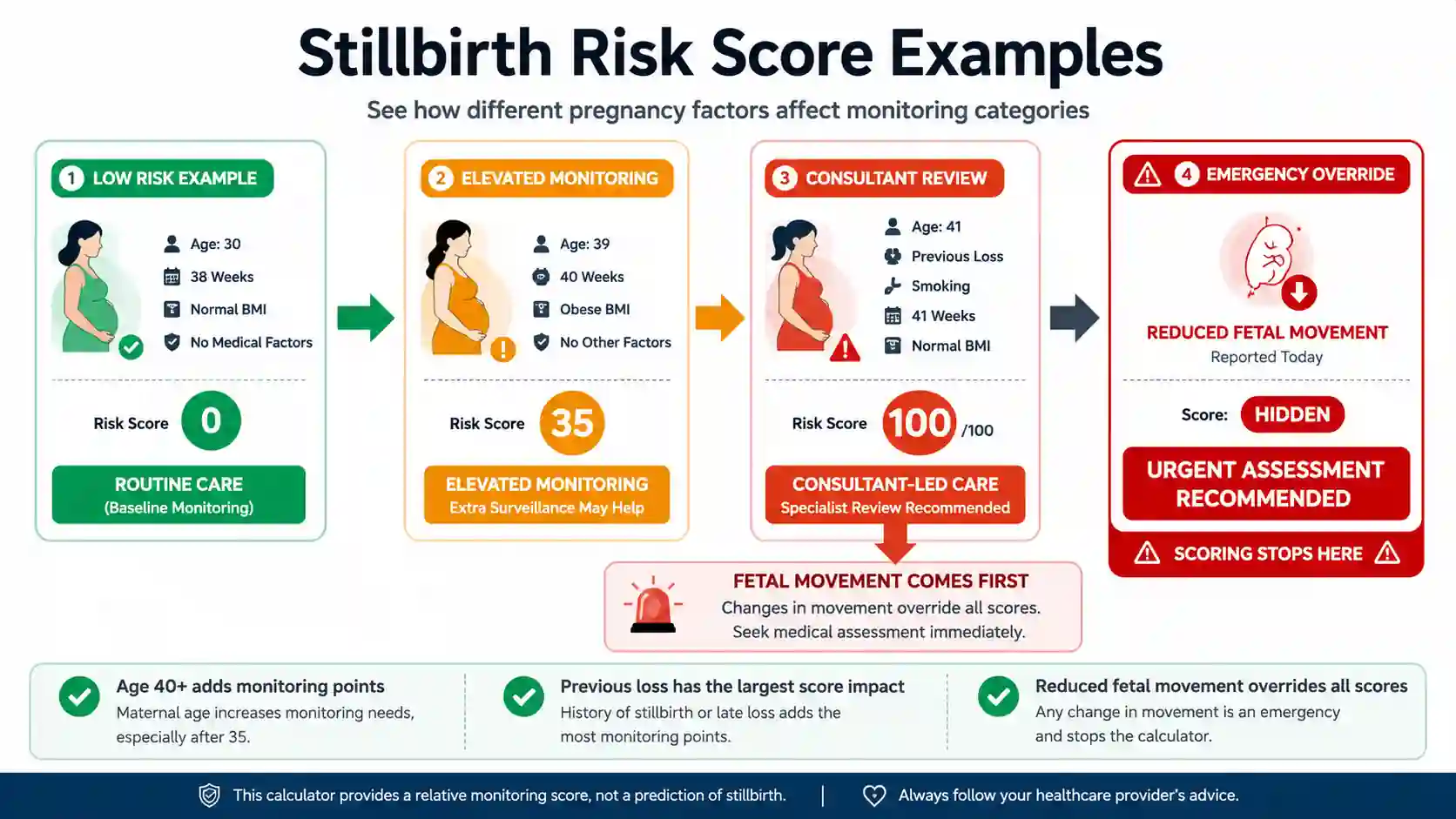
This example reflects a pregnancy with no major monitoring factors identified.
Input
- Age: 30
- Weeks Pregnant: 38
- BMI Category: Normal
- Previous Stillbirth: No
- IVF Pregnancy: No
- Chronic Hypertension or Diabetes: No
- Smoking: No
- Reduced Fetal Movement: No
Process
- Age Points = 0
- BMI Points = 0
- History Points = 0
- Medical Points = 0
- Gestational Age Points = 0
Result
- Risk Score: 0
- Category: Routine Care (Baseline)
Meaning
Few recognized monitoring factors are present, so the calculator places this profile in the routine care category.
Does maternal age increase pregnancy monitoring needs?
Many parents search for this question after age 35, especially near their due date.
Input
- Age: 39
- Weeks Pregnant: 40
- BMI Category: Obese
- Previous Stillbirth: No
- IVF Pregnancy: No
- Chronic Hypertension or Diabetes: No
- Smoking: No
- Reduced Fetal Movement: No
Process
- Age 35 to 39 = +10
- Obesity = +15
- 40 Weeks = +10
Result
- Risk Score: 35
- Category: Elevated Monitoring
Meaning
Age, obesity, and reaching 40 weeks combine to increase monitoring needs. Discussions about induction timing and fetal surveillance may become more relevant.
What is an example of a high-risk monitoring score?
This scenario includes several factors that commonly lead to specialist review during late pregnancy.
Input
- Age: 41
- Weeks Pregnant: 41
- BMI Category: Normal
- Previous Stillbirth: Yes
- Smoking: Yes
- Chronic Hypertension or Diabetes: No
- IVF Pregnancy: No
- Reduced Fetal Movement: No
Process
- Age 40+ = +20
- Previous Stillbirth = +40
- Smoking = +25
- 41 Weeks = +25
Calculation
- Total Score = 20 + 40 + 25 + 25
- Internal Score = 110
- Displayed Score = 100/100
Result
- Risk Score: 100
- Category: Consultant-Led Care Recommended
Meaning
Multiple significant monitoring factors are present. Delivery planning, fetal assessment, and specialist involvement may become important discussion topics.
What happens if fetal movement decreases?
Reduced fetal movement is treated differently from every other factor in the calculator.
Input
- Age: 28
- Weeks Pregnant: 36
- BMI Category: Normal
- Medical History: None
- Reduced Fetal Movement Today: Yes
Process
- Emergency override activates
- Standard scoring stops immediately
- No risk score is calculated
Result
- Urgent Medical Assessment Alert
- Score Not Generated
Meaning
Changes in fetal movement take priority over all point totals. The calculator directs users toward prompt medical assessment instead of continuing with score calculations.
Quick Rules to Remember
A higher score reflects more monitoring factors, not a stillbirth prediction.
Reduced fetal movement overrides every score and triggers an urgent alert.
Previous stillbirth history carries the largest single score increase.
Monitoring points rise after 40 weeks because post-term pregnancies often require closer observation.
Low scores do not guarantee a complication-free pregnancy.
High scores do not diagnose a problem. They help identify when provider discussions may be more important.
Enter your own pregnancy details into the Stillbirth Risk Calculator to see how different factors affect your monitoring category and provider discussion recommendations.
What Your Stillbirth Risk Calculator Result Means by Range
A stillbirth risk calculator score helps organize pregnancy monitoring factors into easy-to-understand categories. The result does not estimate the chance of stillbirth. Instead, it highlights whether routine care, closer observation, or a consultant-led discussion may be appropriate based on the factors entered into the calculator.
| Range | Label | USA Guideline | UK Guideline | Notes |
|---|---|---|---|---|
| 0–24 | Routine Care | Few recognized monitoring factors identified. | Typically aligns with standard maternity follow-up. | Continue routine appointments and monitor fetal movement. |
| 25–49 | Elevated Monitoring | Additional surveillance may be discussed. | Extra assessment or review may be considered. | Ask about growth scans, monitoring plans, and delivery timing. |
| 50–100 | Consultant-Led Care | Multiple risk factors support specialist review. | Consultant involvement is often appropriate. | Discuss fetal monitoring, induction options, and care planning. |
| Any Score + Reduced Movement | Urgent Assessment | Prompt contact with a maternity provider is advised. | Urgent clinical assessment takes priority. | Score calculation stops and emergency guidance is shown. |
Important: This calculator provides a relative monitoring index, not a stillbirth prediction. Reduced fetal movement overrides all score ranges and should be assessed promptly by a maternity provider.
Interpretation
Lower scores suggest fewer recognized monitoring factors are present. Mid-range scores indicate that extra surveillance or provider discussions may be helpful. Higher scores point to multiple factors that often lead to specialist involvement. Reduced fetal movement remains the highest-priority finding and takes precedence over every score category.
Pro Tip
Do not focus only on the number. Changes in fetal movement, reaching 40 weeks or beyond, a previous stillbirth, and smoking status often have a larger impact on care decisions than the final score alone. Use the result as a conversation starter with your maternity provider, not as a diagnosis or prediction.
What to Do After Using the Stillbirth Risk Calculator
A stillbirth risk calculator is most helpful when it guides your next conversation and monitoring decisions. Many parents want to know whether they should ask for extra checks, review their pregnancy plan, or seek care right away. Your result reflects monitoring factors, not the likelihood of stillbirth.
For Routine Care Results
A routine care result means the calculator found few recognized factors linked to increased monitoring needs. Continue attending prenatal appointments and keep tracking fetal movement every day. Regular checkups remain important because pregnancy circumstances can change as the due date approaches.
Reaching the final weeks of pregnancy is a good time to learn your baby’s normal movement pattern. Contact your maternity provider if movements become noticeably different, even when your score remains low. Daily awareness is often more valuable than focusing on the number alone.
For Elevated Monitoring Results
An elevated monitoring result suggests one or more factors may benefit from closer observation. Schedule time to review your score with your OB-GYN, midwife, or maternity team. Questions about growth scans, fetal well-being checks, and monitoring frequency often become more relevant in this range.
Pregnancies approaching 40 weeks deserve extra attention. Ask whether additional surveillance, induction discussions, or follow-up visits are appropriate for your situation. Reviewing blood pressure readings and diabetes management plans can also help support ongoing pregnancy care.
For Consultant-Led Care Results
A higher score indicates several monitoring factors are present at the same time. Bringing your result to a specialist appointment can help focus discussions around delivery planning, fetal monitoring, and late-pregnancy management.
Previous stillbirth history, smoking, chronic medical conditions, and post-term pregnancy often require more individualized care. Preparing a list of symptoms, medications, and recent concerns before your appointment can make conversations with your maternity team more productive.
For Reduced Fetal Movement Alerts
Reduced fetal movement is treated differently from every other result category. When movement decreases, the calculator stops scoring because immediate assessment becomes the priority. This is the most important action point in the entire tool.
Do not wait for the score to improve or for new symptoms to appear. Contact your maternity provider, labor and delivery unit, or emergency pregnancy assessment service as soon as possible. Prompt evaluation is recommended regardless of age, BMI, pregnancy history, or previous calculator results.
You Might Also Find These Helpful
Pregnancy & Fertility 45
Use this Pregnancy Risk Calculator to check age, BMI, health history, bleeding, and twins. See if closer prenatal monitoring may be worth asking about.
Try calculatorOne Time Pregnancy Calculator estimates pregnancy odds from one encounter, plus fertile window timing, test date, due date, and 21-day testing guidance.
Try calculatorUse the AMH Calculator to convert ng/mL or pmol/L, compare your result with age-based data, and see what it may mean for IVF, fertility,…
Try calculatorUse the Baby Eye Color Calculator with parents, grandparents, or sibling context to compare Brown, Green/Hazel, and Blue/Grey model estimates instantly.
Try calculatorBasal Body Temperature Calculator checks reading conditions and analyzes your temperature pattern for a sustained shift that may be consistent with ovulation.
Try calculatorBPD gestational age calculator: estimate fetal age from BPD, compare your week, check normal BPD ranges, and understand ahead or behind results.
Try calculatorCalculate odds with the Chance of Twins Calculator. Enter maternal age and history. Find your probability instantly. See if you will conceive multiples now.
Try calculatorFind out exactly when you conceived. Our free Conception Calculator uses your Due Date, LMP, or Ultrasound to estimate your fertilization date and fertile…
Try calculatorUse our Conception Date Due Date Calculator to find your baby's arrival date. Enter your conception or intercourse date for clinical 40-week results.
Try calculatorContraceptive effectiveness calculator to compare birth control methods, typical vs perfect use, backup protection, and 5-year pregnancy risk.
Try calculatorUse this CRL calculator to estimate gestational age and due date from crown-rump length in mm or cm. Compare CRL, LMP, and IVF dating…
Try calculatorEstimate your monthly and 12-month pregnancy odds by age, partner age, and cycle dates. See your fertile window and when to seek fertility help.
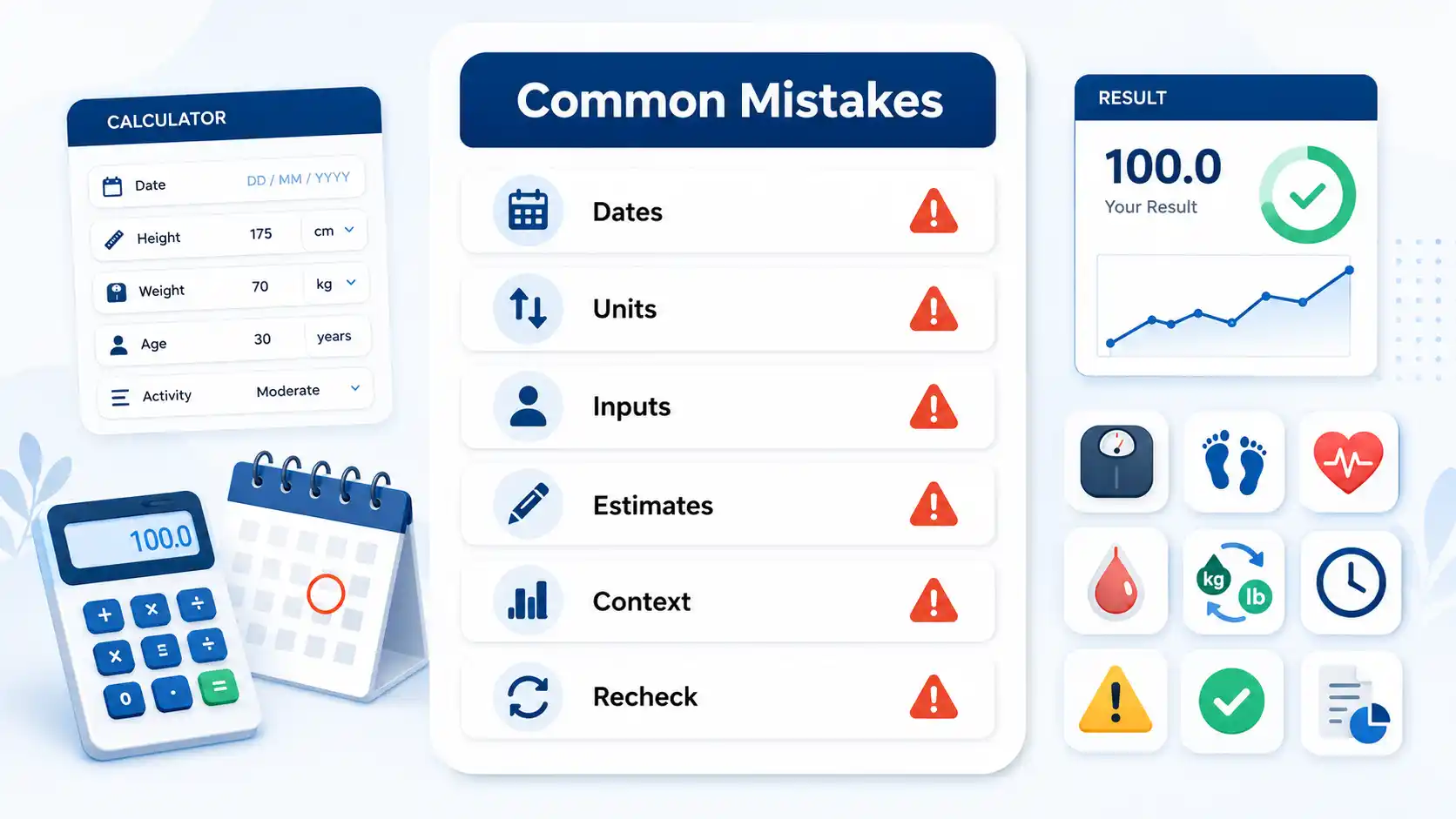
Try calculatorCommon Mistakes When Using a Stillbirth Risk Calculator
Common mistakes happen when using a stillbirth risk calculator because users misread results or enter wrong details. This can affect pregnancy monitoring decisions and fetal movement awareness. Understanding these errors helps improve accuracy and supports better conversations with your healthcare provider and trust in your result.
- Treating the score as percentage risk instead of a screening indicator
- Ignoring reduced fetal movement even when score looks normal
- Assuming a low score means zero risk in pregnancy monitoring
- Forgetting to include smoking history when entering calculator inputs
- Using pre pregnancy BMI incorrectly or outdated weight values
Frequently Asked Questions (FAQs)
Can a Stillbirth Risk Calculator predict what will happen?
No. A Stillbirth Risk Calculator cannot predict stillbirth. It checks selected risk factors and turns them into a monitoring score. That score helps you see what may be worth discussing with your doctor, midwife, or maternity care team.
A low score still needs normal prenatal care. A high score needs a calm care conversation, not panic.
Why does the calculator ask about baby movement first?
Baby movement can change before other warning signs appear. If movement is reduced, weaker, or stops, the calculator should not keep scoring. It should point you toward urgent maternity care, because movement concerns need direct assessment.
This is why movement overrides the score.
What week has the highest stillbirth risk?
Risk tends to rise as pregnancy continues past the due date, especially around 41 weeks and later. The absolute risk is still low for many pregnancies, but providers often discuss monitoring, induction, or delivery planning near this stage.
This calculator adds week-based points at 40, 41, and 42+ weeks.
Why does the score change after 40 weeks?
The calculator adds points after 40 weeks because post-term pregnancy can change monitoring decisions. Week 40 adds fewer points. Week 41 adds more. Week 42 or later adds the most week-based points in this tool.
This does not mean danger is certain. It means the timing deserves review.
Is pregnancy after stillbirth high risk?
Pregnancy after stillbirth often gets closer monitoring, especially if the cause is known or risk factors are still present. Care may include more visits, growth checks, movement tracking, and planning around delivery timing.
The calculator gives previous stillbirth or late loss a high score weight.
Why does maternal age affect the score?
Maternal age can affect pregnancy monitoring because stillbirth risk tends to rise with age, especially after 35 and more after 40. Age alone does not predict stillbirth. It is one factor among many.
This tool adds 10 points at 35 and 20 points at 40.
Why does overweight BMI not add points here?
Overweight BMI is included for context, but it does not add points in this calculator. Only obese BMI adds points. This keeps the score aligned with the current tool logic and avoids making the result look higher than the calculator actually calculates.
Use the BMI choice carefully. It affects the final score only at BMI 30+.
Should I use a miscarriage risk calculator instead?
Use a miscarriage risk calculator only for pregnancy loss before 20 weeks. This stillbirth tool accepts weeks 20 to 43 because it focuses on later pregnancy monitoring. Miscarriage and stillbirth are not scored the same way.
Pick the calculator that matches your pregnancy week.
Can this tool replace a high risk pregnancy calculator?
No. A high risk pregnancy calculator may cover broader issues like preterm birth, multiples, blood pressure, gestational diabetes, and past complications. This tool is narrower. It focuses on stillbirth-related monitoring factors and fetal movement warnings.
Use it as one check, not your full pregnancy risk review.
Does IVF increase the stillbirth monitoring score?
Yes. IVF or assisted conception adds points in this calculator. It does not mean IVF causes stillbirth. It means IVF pregnancies may have factors that providers watch more closely, especially when other risks also appear.
The score rises more when IVF overlaps with age, BMI, or medical history.
Should I ask about induction if I am past 40 weeks?
Ask your provider what monitoring or delivery plan fits your pregnancy. Many care teams discuss induction or closer checks after the due date, especially near 41 weeks or later. Your age, health history, scans, and baby’s movement all matter.
Do not decide from the score alone.
Why does the calculator cap the score at 100?
The calculator can add more than 100 points in the background, but the screen shows a maximum of 100. This keeps the result easy to read. It does not turn the score into a percentage.
A score of 100 does not mean 100% risk. It means many selected monitoring factors overlap.
Questions?
We had love to hear from you! Whether you are reporting an issue, suggesting a new calculator, or exploring collaboration opportunities — we are here to help. Every message helps us make 100calc smarter, faster, and more helpful for everyone.
Why People Trust 100calc
At 100calc.com, we focus on accuracy, speed, and trust. Every calculator we create is designed to give reliable, instant, and easy-to-understand results you can truly depend on.